
Easy Withdrawal Casinos in Australia: What Fast Payouts Actually Cost (2026)
The promise of an “easy withdrawal casino” sits in the same place every affiliate page wants it: at the top, in bold, next to a number. Minutes, not days. PayID in, PayID out. The promise is not wrong — and that is exactly why it needs unpicking. The casino controls approval timing. The rails that carry the money run on a schedule nobody in marketing wants to dwell on. And the operator sitting behind the cash button is, in every case on this page, an offshore business with no Australian licence.

This page ranks ten of those operators by tested payout speed and walks through what that ranking does and does not tell you. The verdict is not flattering to the marketing. There is no Australian licence to apply for, no regulator floors how fast a withdrawal must be, and the bonus on the welcome page will, almost certainly, decide whether the player can withdraw anything at all.
Data current as of 23 November 2026. Withdrawal times reflect third-party tests against operator payment pages; licence status checked against the ACMA register and the Interactive Gambling Act 2001.
Table of Contents
- What “easy withdrawal” means: instant, same-day or fast
- How to spot a fast-paying site before you deposit
- The speed promise is operator-set, not a guarantee
- Matching a casino to your payout intent
- Offshore casinos ranked by tested withdrawal speed
- The method is rarely the bottleneck — approval time is
- Wagering is where “easy” withdrawals stall
- There is no legal online casino in Australia — here’s what that means
- Fast payouts come with a harm bill — and where to get help
- How we chose and ranked these casinos
- What to actually do before you deposit offshore
- Frequently asked questions about easy withdrawal casinos in Australia
What “easy withdrawal” means: instant, same-day or fast
Three speed bands cover what an Australian player meets offshore. “Instant” sits under fifteen minutes, and it almost always means crypto — the casino approves the payout, the chain settles the transfer, and the wallet shows a balance before the page refreshes. “Same-day” runs under twenty-four hours, and it covers PayID and most e-wallets once the casino’s queue has cleared. “Fast payout” is the umbrella term that operators use, and it covers anything inside the same-day window, sometimes stretching into the next business morning.
The bands are useful only as a rough map. The actual time spent waiting depends on the casino’s approval queue, the payment rail, and whether the player’s KYC is already cleared. Speed is not one thing. It is a small relay race: the casino hands the money off, then the rail carries it.
For an Australian player the practical question is which rail carries it. PayID is the fastest AUD fiat option, moving funds in minutes via the Osko rail on the New Payments Platform. Crypto is faster on paper — USDT TRC20 settles on-chain in roughly ten seconds — but the casino’s approval step stretches the total to a few hours. E-wallets come in once approved. Bank transfers run three to five business days and never claim otherwise.
How to spot a fast-paying site before you deposit
The fastest-paying casino is the one that has already done the verification work on you. Before any first deposit, four signals predict whether the first cashout will be quick or a multi-day friction event. Look for PayID support, as it is the fastest AUD fiat rail available, moving funds in minutes via Osko/NPP with no bank-batch delays. Check for a published payout window rather than generic marketing; operators printing 0–24 hours are usually reliable. Verify the withdrawal minimum, as the market floor sits at A$20, and ensure you can complete the KYC policy before depositing to avoid the industry’s most common delay cause.
That last point is the one operators do not market, because there is no margin in telling a player to do paperwork. Incomplete KYC is the number one cause of withdrawal delays. The player who waits until the win is sitting in the cashier to upload a driver’s licence will wait longer than the player who did it on day one.
The speed promise is operator-set, not a guarantee
The speed advantage of crypto and PayID is real. The marketing that surrounds it is not. “Instant withdrawal” is a casino’s own claim about its own queue, and there is no Australian regulator with a floor on how long a payout can take — because there is no Australian regulator for online casino at all. The Interactive Gambling Act 2001 makes the product illegal, which means there is also no minimum service standard for it.
Approval windows at offshore operators vary significantly, often spanning from a few hours to 48 hours. The first withdrawal is almost always slower than later ones because KYC triggers. Bigger wins trigger again, sometimes under “enhanced review” with no defined end. The promise on the marketing page describes the ceiling the casino hopes to hit, not the floor the player can demand.
The reader looking for a guaranteed fast payout has, in practice, three options. They can pick the operator with the shortest published window. They can clear KYC before depositing. They can keep their bankroll small enough to stay under any payout cap. None of those is a guarantee, and that is the gap between “easy withdrawal” as a phrase and as an outcome.
Matching a casino to your payout intent
Different players want different things out of a fast payout. A pokies player running a small bankroll through high-volatility slots wants the lowest minimum and the widest choice of AUD methods. A live-casino player wants e-wallets that do not break the table flow, and is less price-sensitive on minimums because their wins come in bursts. A real-money player chasing a large one-off payout cares about caps — daily, weekly, monthly — and about whether VIP status lifts them.
The bonus question sits on top of all three. A real-money player who never takes a welcome bonus has no playthrough to clear, and is therefore the player most likely to see a fast first payout. A bonus-funded player, regardless of intent, has wagering requirements gating the withdrawal — and the wagering is where “easy” most often stalls.
That distinction is the spine of this page. The ten operators below are ranked by what they pay when the bonus paperwork is out of the way. Whether the reader can reach that payout at all depends on the welcome terms they sign up under, which the section on wagering covers in detail.
Offshore casinos ranked by tested withdrawal speed
Every operator on this page is offshore. None holds an Australian licence, because no licence for online casino exists anywhere in Australia — the Interactive Gambling Act 2001 makes providing the product an offence, and the ACMA has had 1,564 illegal gambling and affiliate sites blocked since November 2019. The table below ranks by what each operator publishes about its payouts and what third-party tests have measured. Empty cells reflect operators for whom no verified speed data is on the public record.
| Operator | Legal status in Australia | Fastest withdrawal method with tested time |
|---|---|---|
| SkyCrown | Offshore, no Australian licence | PayID — 11 min (A$920 tested) |
| Rocket Play | Offshore, no Australian licence | E-wallets/crypto — same day once approved |
| Royal Reels | Offshore, no Australian licence | PayID — 5–24 hours |
| Stake | Offshore, no Australian licence | Crypto — 1–4 hours |
| WinSpirit | Offshore, no Australian licence | E-wallet/crypto — 1–24 hours |
| FairGO | Offshore, no Australian licence | — |
| Bizzo Casino | Offshore, no Australian licence | — |
| Scream Casino | Offshore, no Australian licence | — |
| Rainbet | Offshore, no Australian licence | — |
| Rocket Casino | Offshore, no Australian licence | — |
SkyCrown — PayID payouts tested in 11 minutes
SkyCrown is the only operator on this list with a third-party test timestamp worth quoting. A PayID withdrawal of A$920 was processed and received in eleven minutes. The longest PayID test logged at the brand sat at eighteen minutes, which means the rail, not the operator, is what the test was really measuring — the approval step was nearly instant.
Standard SkyCrown approvals run 0–24 hours; VIP Platinum and Diamond tiers are processed within thirty minutes regardless of method, which is one of the faster VIP promises in this market. The welcome package runs up to A$4,000 plus 350 free spins, with 40x wagering on pokies and 400x on live tables at 5% contribution. That contribution rate is the silent cost of any live-table play funded by the bonus — every dollar staked on live only counts as five cents against the playthrough.
The verdict is straightforward for the pokies player funding in AUD via PayID. The speed is real, the VIP promise is real, and the bonus is heavy enough that the playthrough will decide whether the player sees any of it in cash. A player skipping the welcome package sees the brand’s best behaviour on the first withdrawal.
Rocket Play — same-day e-wallets behind a 48-hour approval
Rocket Play runs on the standard pattern at this end of the market: a fast payout channel behind a slow approval queue. The published processing window runs up to forty-eight business hours from the moment of request. E-wallets and crypto land same-day once the approval is in, while bank transfers and cards stretch to three to seven business days. The bank rail is the bottleneck, not the casino.
The published limits sit at A$2,500 a day, A$7,500 a week and A$15,000 a month, with reports of higher limits for top VIP tiers. For a regular bankroll the daily and weekly caps are not a problem. For a player chasing a five-figure win they are, and the monthly ceiling is the one to watch.
The welcome package is a 100% match up to A$200 plus 50 free spins, with 30x wagering on the bonus and a separate 5x on the deposit. That deposit wagering is the less common of the two terms in this market, and it means the playthrough requirement stretches across the deposited cash as well as the bonus. A player depositing A$200 to clear A$200 of bonus money has, in practice, A$7,000 of wagering to clear before any withdrawal.
The verdict sits with the patient player. The approval window is generous to the operator and the bonus carries a real multiplier. For a small bankroll on e-wallets it works. For a big withdrawal it does not, and the monthly cap is the reason.
Royal Reels — PayID from A$10 in, A$50 out
Royal Reels runs a lower entry floor than most of the set. PayID deposits start at A$10, which is the kind of detail a small-bankroll player notices first. The fiat withdrawal floor sits at A$50, with crypto withdrawals starting at A$30 and a standard weekly cap of A$10,000. The PayID ceiling on a single withdrawal sits around A$9,000, well above the typical win, and so does not bite under normal play.
PayID payouts run five to twenty-four hours after account checks, with KYC triggering on the first payout, on larger cashouts, and on any win paid out of bonus funds. Once cleared, the second and third payouts tend to be quicker — the operator’s first-payout queue is where the day goes, not the rail.
The welcome package details are thin in the public record, and so is the wagering structure. What is on the page is the low entry point and the moderate cashout speed. A player who deposits A$20–A$50 at a time and plays through before withdrawing fits the brand’s profile. A player chasing a five-figure single payout will hit the weekly cap, and should size the bankroll accordingly.
Stake — crypto-first with 1–4 hour payouts
Stake is the operator that gives up on fiat altogether. The brand runs crypto-native, and the raw withdrawal speed at verified accounts runs one to four hours. That range is the casino-side approval step; the on-chain leg of a USDT TRC20 transfer is, on its own, closer to ten seconds. Stake’s appeal to an Australian player is the absence of any AUD rail — there is no PayID, no BPAY, and no bank transfer — which is also the reason the brand asks the player to hold crypto.
The published limits, welcome bonus and wagering structure are not in the public record at the level of detail this page requires. What is on the page is the speed promise: crypto, verified, and a queue that runs shorter than the fiat-led brands. That makes Stake a natural fit for an Australian player who already holds USDT and wants the shortest path between a win and a wallet.
The verdict is the cleanest of the set for the crypto-native reader. The price of admission is leaving AUD behind.
WinSpirit — e-wallet payouts in 1–24 hours
WinSpirit runs the same e-wallet-and-crypto-first pattern as Rocket Play, with a slightly tighter window. E-wallet and crypto withdrawals typically complete in one to twenty-four hours, while card and bank payouts stretch to three to five days. KYC is required on the first cashout; once cleared, the subsequent payouts move faster.
The welcome package is a 200% match — the percentage is in the public record, the dollar ceiling less so — and so any win from the bonus will be running a wagering multiplier the page cannot quote precisely. The lack of a confirmed wagering figure is, in itself, a reason to read the bonus terms carefully before claiming.
The verdict suits a player who wants the e-wallet speed without going fully crypto. The 200% match is aggressive. The speed is competitive. Reading the bonus terms carefully is the price of admission.
FairGO — an offshore brand with little published on payouts
FairGO is an offshore casino with no Australian licence and a payout angle the public record does not cover. No tested times, no published limits, and no minimum on the operator’s payment page are in the data this page is built on. What the page can say is that FairGO is an offshore casino serving Australian players, with no Australian complaints body, no BetStop coverage and the same site-blocking risk as the rest of the set.
A player who already has an account at FairGO and is happy with the cashier can keep playing there. A player choosing between FairGO and any operator above has, on this page, less information to compare on. FairGO lacks public third-party payout data, making it an inferior choice for players prioritising withdrawal speed over brand name.
Bizzo Casino — a familiar name, scarce payout specifics
Bizzo Casino is the kind of brand an Australian player has seen on another affiliate list, and that is about all the public record says with confidence. It is offshore, it has no Australian licence, and its payout specifics — speed, limits, minimums, approval window — are not in the data this page is built on.
The reader who already plays at Bizzo and is happy with the cashier can keep playing there. The reader choosing between Bizzo and any operator in the table above has no tested times to compare against, and the choice reduces to brand familiarity rather than verified payout behaviour. Bizzo Casino offers no verifiable payout metrics, so players expecting specific withdrawal speeds will find no data to justify picking this brand.
Scream Casino — payout details hard to pin down
Scream Casino is an offshore operator serving Australian players with no Australian licence. The public record on payouts, limits, and approval windows is thin. There is no third-party tested timestamp and no operator-side payment page that gives a range a reader can plan a bankroll around.
The verdict for Scream Casino mirrors the verdict for FairGO and Bizzo: a reader choosing between this brand and the five operators with tested payouts above has nothing to weigh. There is no reliable speed claim to test, and there is no BetStop, no ACMA recourse, and no Australian complaints body to fall back on if the cashier stalls.
Rainbet — little published on how fast it pays
Rainbet is offshore, no Australian licence, and the public record on payouts is thin. No tested PayID or crypto timestamps, no published approval window, no minimum on the payment page. What is on the page is the legal status: offshore, no Australian licence, no ACMA recourse, no BetStop coverage.
A player already using Rainbet has their own data. A player comparing Rainbet to the operators above is choosing brand familiarity over verified payout behaviour. Rainbet provides insufficient information for a speed-focused player, and without tested timestamps, it cannot be ranked alongside the faster operators listed.
Rocket Casino — payout speed left largely unstated
Rocket Casino is the last of the offshore names in the ranking, and the public record matches the others at the bottom of the table: offshore, no Australian licence, no tested timestamps, no published approval window. What is on the page is the legal status and the absence of data — both of which a reader weighing between this brand and the top five has to take into account.
The verdict is the same shape as the rest of the data-thin set: do not pick on the strength of its name, and do not pick on payout speed.
The method is rarely the bottleneck — approval time is
The fastest rail in the world does not save a player whose withdrawal is sitting in the operator’s queue. That is the experience most readers of this page will eventually have — a payment rail that ought to deliver in minutes, delayed by an internal review step that runs 24 hours or longer.
This section breaks down what money actually does between the cashier button and the bank account. The order matters: deposit methods shape what the operator knows about the player, payout channels decide how the rails carry the funds, the approval queue is where the time actually goes, and minimums and caps decide whether a given payout is even possible at that brand.
Deposit methods — and what a crypto or credit request tells you
An Australian player funding a casino account from a debit card or PayID is doing the standard thing. Funding it from a credit card or cryptocurrency is doing something else entirely, and the operator knows it. Since 11 June 2024, credit cards, credit-related products and cryptocurrency have been banned as payment for licensed online wagering in Australia. An operator asking for either is, by definition, not a licensed Australian operator.
PayID runs through the Osko rail on the New Payments Platform and lands within minutes of the cashier button. Crypto deposits on the major stablecoins — USDT TRC20, for instance — settle on-chain in roughly ten seconds. Cards, debit or credit, take longer to clear, and the credit-card request is itself the tell.
The two tells that matter for this page are the credit-card deposit and the crypto deposit request. Both signal an operator outside the Australian rules. Neither is illegal at the player level — the Interactive Gambling Act 2001 targets the provider, not the customer — but both are signals worth weighing before any first deposit.
Payout channels compared — PayID, crypto, e-wallets, bank
The four payout channels Australian players meet offshore differ more in their approval dependencies than in their raw speed.

| Withdrawal method | Typical arrival time | Main delay factor |
|---|---|---|
| PayID | Minutes via Osko/NPP | Casino approval queue |
| Crypto (USDT TRC20 etc.) | 0.2–8 hours (verified) | Casino approval + on-chain confirmation |
| E-wallets (Skrill, Neteller etc.) | 1–24 hours | Casino approval + e-wallet release |
| Bank transfer | 3–5 business days | Casino approval + bank batch processing |
PayID is the fastest AUD fiat rail. Crypto is faster on the on-chain leg, but the casino approval step stretches the total to a few hours. E-wallets release quickly once the casino hands the money off, and bank transfers run three to five business days subject to the receiving bank’s processing window.
The arrival times in the table are post-approval. Pre-approval, each one waits in the same queue. That is why the row that names “Casino approval” first is the row that decides how fast the cash actually moves.
Why withdrawals get delayed — KYC and approval windows
Four causes cover most of the delay a player will actually meet.

- Incomplete KYC. Uploading ID and proof of address before the first deposit is the single move that removes the most common cause. Doing it after the win is sitting in the cashier is the move that adds the most hours.
- The first-payout queue. Most operators run a longer review on the first cashout than on later ones. A 24-hour first payout is normal at brands that advertise “instant withdrawals”.
- Wagering not cleared. A bonus-funded player who has not finished the playthrough sees the withdrawal paused until the requirement is met. There is no workaround on this one — the bonus terms decide it.
- Bonus-win enhanced review. A large win paid out of bonus funds often triggers a secondary review, sometimes under “irregular play” clauses the brand keeps broad. The brand’s terms decide whether the win clears.
These are the four delays the player can plan for, and they are the four delays the operator will not warn about on the welcome page.
Withdrawal minimums and caps — the fine print on “easy”
The market floor on minimum withdrawal sits at A$20, with some operators pushing fiat floors to A$50 and crypto floors lower. A small-bankroll player notices the minimum first; a high-roller notices the cap.
The caps worth tracking are the per-day, per-week and per-month ceilings. Royal Reels sits at A$10,000 a week, with PayID payouts capping around A$9,000 per transaction. Rocket Play runs A$2,500 a day, A$7,500 a week and A$15,000 a month, with higher limits reported at the top VIP tiers. VIP status, where the brand offers it, lifts these caps, sometimes considerably — which is the trade-off a high-roller is weighing before signing up.
The fine print on “easy withdrawal” is the floor and the cap. A payout the brand refuses to process because it sits below the minimum is not an easy payout. A payout the brand queues in tranches because the weekly ceiling is below the win is also not an easy payout. Both numbers belong on the page a player reads before depositing, not the page they read after a win.
Wagering is where “easy” withdrawals stall
The phrase “easy withdrawal” survives contact with the welcome bonus only because most readers never read the bonus terms. The bonus is the marketing. The wagering requirement is the cost. The standard at AU-facing offshore casinos runs at about 40x the bonus amount — which, on a A$200 match, means A$8,000 of pokies wagering before the bonus converts to withdrawable cash. On a A$4,000 match it means A$160,000 of wagering, which is a bankroll’s worth of spins regardless of how “fast” the payout rail is.
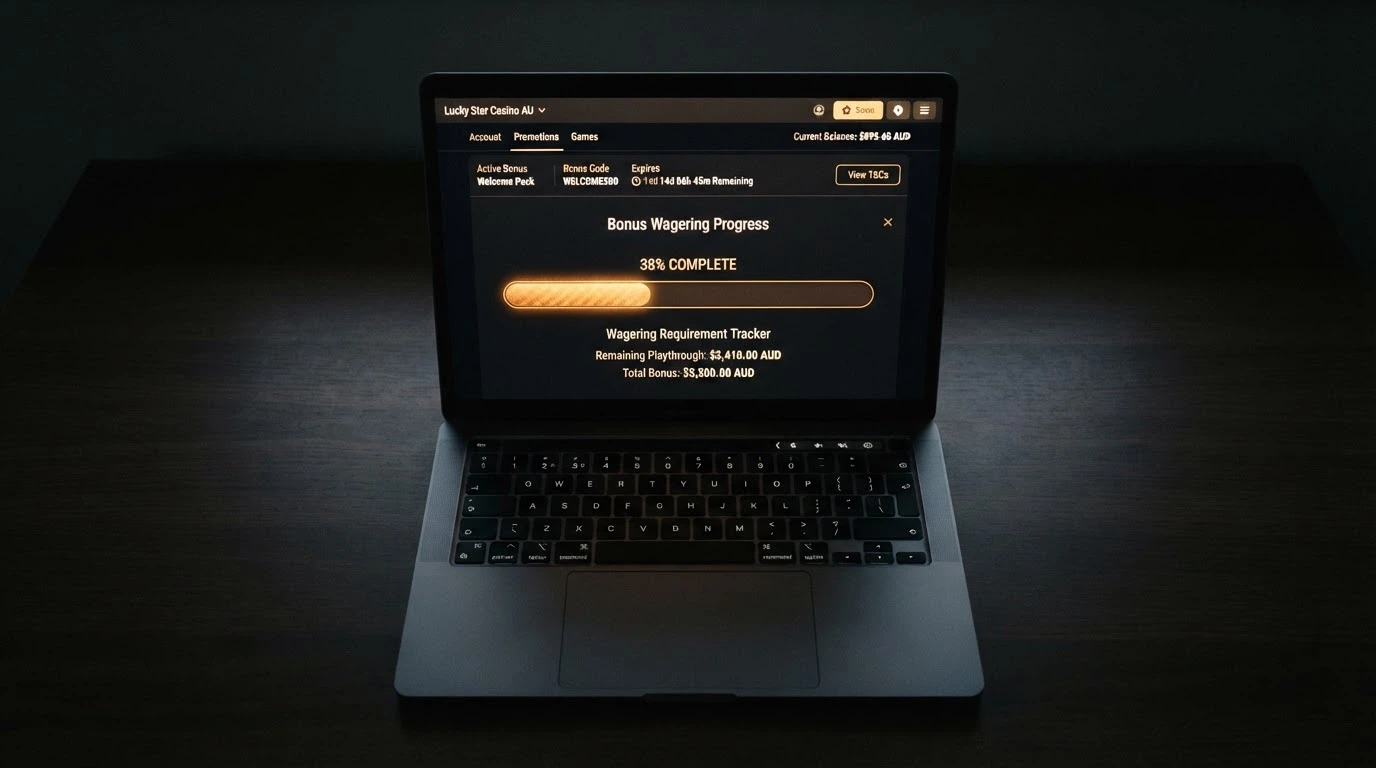
This section is about the gap between the welcome page and the cashier.
Bonus terms attached to payout-friendly sites
Two of the operators in this ranking publish bonus terms the page can quote. SkyCrown’s welcome package runs up to A$4,000 plus 350 free spins, with 40x wagering on pokies. Rocket Play’s package is a 100% match up to A$200 plus 50 free spins, with 30x on the bonus and 5x on the deposit. Royal Reels, Stake, WinSpirit and the rest of the set either do not publish welcome terms at the level of detail this page needs, or publish terms that change by region and timestamp.
The match percentage is the marketing. The multiplier is the cost. A 100% match up to A$200 at 30x bonus is a A$6,000 playthrough on the bonus alone; the same package with a 5x deposit requirement adds another A$1,000 of wagering on top. That second multiplier is the one most players do not see until they read the bonus terms, and it is the one that decides whether the bonus converts to cash at all.
Wagering requirements and bonus withdrawals
The standard AU-facing offshore wagering requirement runs around 40x the bonus amount. Live tables sit much higher — SkyCrown’s terms carry 400x on live tables, with pokies contributing only 5% toward the wagering requirement when the player is on a live-table bonus. That contribution rate is what makes a live-table bonus effectively unrewarding for live play: a A$1 live-table stake counts as A$0.05 against the playthrough, and the multiplier never closes.
The player who skips the welcome bonus sees the brand’s best payout behaviour. The player who takes the bonus sees the brand’s terms decide whether the payout happens at all. That is the wagering-as-cost line, and it is the line the marketing page never draws.
There is no legal online casino in Australia — here’s what that means
There is no Australian licence for online casino. None. The Interactive Gambling Act 2001 makes it an offence to provide online casino, online pokies or in-play betting to a person in Australia, and no state or territory has ever issued a licence for the product. The market exists because offshore operators take Australian customers. The market does not exist because Australia has decided to allow it.

This is the gap most affiliate pages leave unmentioned. The page that ranks offshore casinos by payout speed without telling the reader there is no licensed equivalent is leaving the legal context out of the comparison. The rest of this section fills it in.
Providing an online casino is a criminal offence here
The Interactive Gambling Act 2001 targets the provider, not the player. The provider commits an offence by making the product available to a person in Australia. The player is not prosecuted for playing. That distinction is the reason offshore casinos continue to advertise to Australian customers and the reason the player can sign up and deposit without anything happening to them at home.
The product itself — online casino, online pokies, in-play sports betting — is prohibited, not merely unregulated. There is no licence to obtain, no application fee to pay, no regulator to register with. A casino running on a Curaçao sub-licence is operating under a different country’s rules; it is not operating under Australian rules. The legal characterisation on this is unambiguous, and the page does not soften it.
The player side of that line matters too. The player is not the target, but the player is also without the protections an Australian consumer would normally have. ACMA cannot order a refund. ACMA cannot compel a payout. ACMA can block the site, which is sometimes what the player wants, and sometimes the opposite of what the player wants because a balance is still sitting on it.
Licensed vs offshore — and what “offshore” costs you
Licensed Australian wagering operators — sports and racing bookmakers licensed in the Northern Territory or one of the states — operate inside the Australian framework. Offshore casino operators do not. The two products are not interchangeable.
Offshore costs the player four things, and the four things are the cost of being outside the Australian framework:
- No Australian complaints body. ACMA cannot recover a refused payout. There is no ombudsman to escalate to.
- No BetStop coverage. A self-excluded player can still deposit and play at an offshore casino. The register does not reach the site.
- No recourse for a refused withdrawal. If the operator voids a win or closes an account, the player has the operator’s own terms and nothing else.
- Site-blocking risk. ACMA has had 1,564 illegal gambling and affiliate sites blocked since November 2019, with more than 225 illegal services having withdrawn from the Australian market since 2017. A block lands without notice, and any balance still on the site at the time is the player’s problem, not the ACMA’s.
The four items are not a marketing line. They are the practical gap between “the casino is licensed somewhere” and “the casino is licensed in Australia”, and they are the gap every offshore brand on this page sits inside.
The payment ban and the coming bank-blocking powers
Australia does not cap how much a player can deposit, because the product a deposit ceiling would govern is banned outright. What Australia does cap is how the player can pay. Since 11 June 2024, credit cards, credit-related products and cryptocurrency have been banned as payment for licensed online wagering, with penalties of up to A$247,500 for operators that fail to enforce the ban.
That ban only binds licensed operators. An offshore casino accepting credit-card or crypto deposits is not bound by it, which is also why asking for either of those payment methods is a tell that the operator is outside Australian rules.
The next change is more direct. The Interactive Gambling Amendment (Gambling Reform) Bill 2026 passed Parliament on 19 August 2026, with its measures commencing 1 January 2027. From that date, banks and payment providers gain express authority to block transactions to illegal gambling operators. The blocking is at the payment-rail level, not at the site level, and it does not require the player to have done anything wrong — the rail simply refuses to send the money to the merchant category that hosts the operator.
For the player at an offshore casino in 2026, the practical effect is that deposits and withdrawals may start failing at the bank end, with no advance notice from the casino. The bank’s risk team, not the casino’s terms, decides the cut-off. That is the new shape of the prohibition, and it is the one that will change the offshore market more than any single ACMA block has.
Fast payouts come with a harm bill — and where to get help
The fastest-payout page in this market is not the cheapest one to play at. Per-adult gambling losses in Australia sit at A$1,635 a year, the highest per capita in the world, and the twelve months to March 2026 saw Australians lose A$36.0 billion to gambling across all formats. The chase for the next fast payout sits inside that number.
This section is the part of the page that names the harm and points to the help, because no review of offshore casinos is complete without it.
BetStop and why it doesn’t reach offshore casinos
BetStop — the National Self-Exclusion Register — launched on 21 August 2023. A single registration excludes a person from every Australian-licensed online and phone wagering service in one step. By 31 March 2026, the register held 59,830 registrations, of which 37,247 were active exclusions.
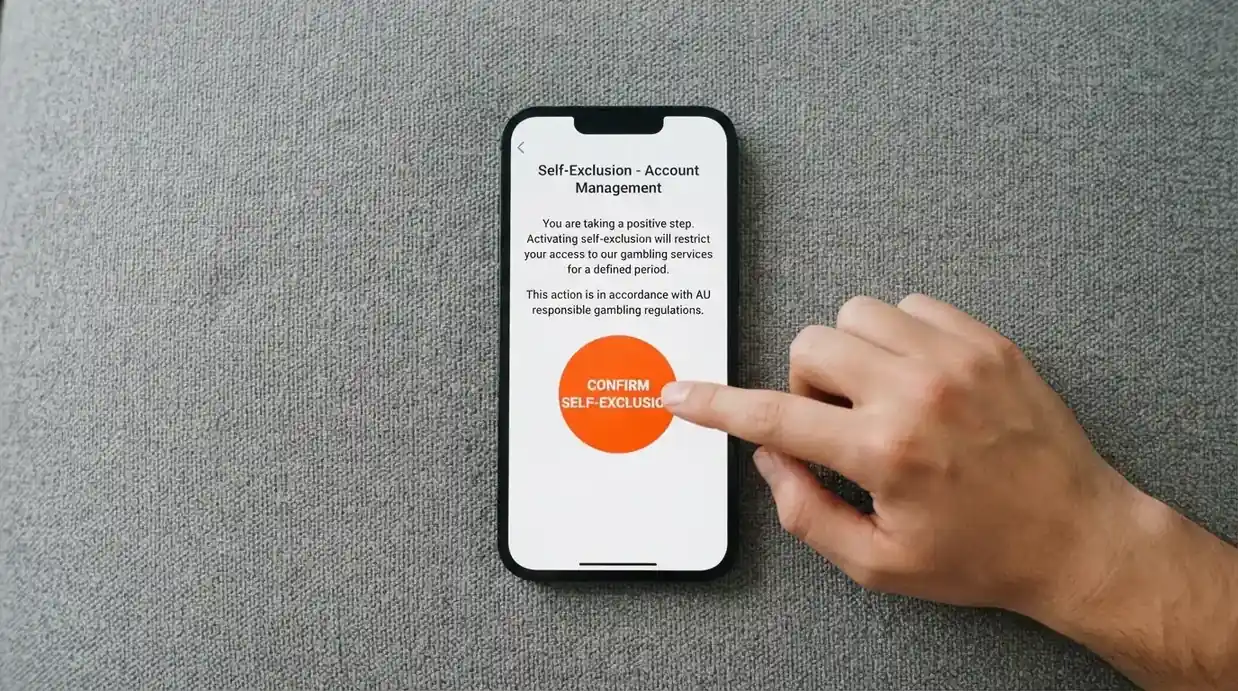
The numbers are large, and they are small at the same time. Roughly 26.5% of Australian adults know about BetStop, and only about a third of wagerers are aware of it. An estimated five million Australians wager, including 400,000 high-risk gamblers, and just 30,000 people currently hold active exclusions. The gap between the population that could benefit and the population that has registered is the reason the register matters, and it is also the reason the register does not catch everyone it should.
The structural limit on BetStop is jurisdictional. The register binds Australian-licensed services. Offshore casinos are not licensed in Australia and are not connected to the register. A person who has self-excluded at BetStop can still deposit and play at every brand on this page. Self-exclusion is the right move for the Australian-licensed market, and it is also incomplete on its own for an offshore player.
Help resources and how widespread the harm is
The National Gambling Helpline is 1800 858 858, free, confidential, and staffed 24 hours a day. Gambling Help Online runs the live chat, online counselling and self-help tools at gamblinghelponline.org.au, and it is the same network.
The harm behind the chase is larger than the helpline. As of March 2026, 15.1% of Australian adults — roughly 3.32 million people — are experiencing some form of gambling harm, either from their own or someone else’s gambling. About 2.9% of adults, or some 622,000 people, meet the PGSI threshold for problem gambling. Among regular monthly gamblers, 7.7% are classified as high-risk.
These numbers do not move with marketing. They move slowly, and the gap between “harm from my own gambling” and “harm from someone else’s gambling” sits at about two percentage points — meaning the second group is large, and the people in it are not on any casino’s player list. They are the partners, parents and flatmates of the people who are.
If any of the symptoms described in the self-assessment tools at Gambling Help Online land, the right next step is a call or a chat, not another deposit. The harm is reversible at the point of asking for help. It is less reversible a year later.
How we chose and ranked these casinos
The ranking on this page is built from third-party tested payout times where they exist, and from operator-side payment pages where they do not. The five operators at the top of the table have a measured cashout in the public record. The five at the bottom do not, and their placement is by fit to the topic rather than by verified speed.
Every operator on the list is offshore. The filter for the ranking was Australian relevance — operators an Australian player actually reaches — and licensed Australian wagering brands were excluded because licensed Australian wagering is not online casino. The page’s subject is the offshore product.
The criteria that ordered the ranking are speed of the fastest verified payout, then breadth of AUD payment methods, then published limits and minimums, then bonus terms where they are in the public record. No weighting is invented. The order follows the data the page names. The legal status — offshore, no Australian licence — is uniform across the list and is not a differentiator within the ranking.
The ACMA register and the Interactive Gambling Act 2001 are the reference points for the licence check. Where the operator’s Curaçao sub-licence is the regulator it actually sits under, that is noted in the operator write-ups. The absence of an Australian licence is not a missing fact but the shape of the market.
What to actually do before you deposit offshore
The verdict of this page, after the table and the sections above, is that “easy withdrawal” is a phrase a player earns rather than a phrase a casino grants. The casino holds the approval queue; the player holds the paperwork. The casino sets the cap; the player sets the bankroll.

Before the first deposit at any offshore brand on this page, the player who wants the closest thing to a fast payout should run four checks. First, confirm the method: PayID is best for AUD, crypto for raw speed, and e-wallets for live-casino flow; skip any site that lacks these. Second, check the minimum withdrawal, as the market floor sits at A$20, and anything higher will stifle small payouts. Third, review the withdrawal caps; A$10,000 per week is the standard, and you should ensure it fits your bankroll. Finally, verify the approval window, as a published range like 0–24 hours is a promise you can hold the casino to, whereas an unpublished window typically signals a 48-hour delay.
The paperwork side is the move most readers skip. Verifying identity and address before the first deposit is the single change that removes the most common cause of delay, and it costs the player fifteen minutes on a signup screen. Doing it after the first win costs them days.
The marketing promise of an easy withdrawal is real at the rail and operator-controlled at the queue. The player who clears KYC, picks the right method, and stays inside the cap is the player who actually sees the speed claim honoured. Everyone else waits on the casino’s terms, which is where the wait has always been.
Frequently asked questions about easy withdrawal casinos in Australia
Is it legal to play at online casinos in Australia if I can withdraw my winnings easily?
No Australian licence exists for online casino. The Interactive Gambling Act 2001 makes providing the product an offence, and the regulator is the ACMA. The player is not prosecuted, but the casino is offshore, has no Australian complaints body, and is not connected to BetStop. Speed of withdrawal does not change the legal status of the product.
What is the fastest withdrawal method for Australian online casino players — PayID, crypto or bank transfer?
PayID is the fastest AUD fiat method and lands in minutes via Osko. Crypto is faster on the on-chain leg but the casino’s approval step stretches the total to a few hours. Bank transfer is the slowest at three to five business days, regardless of operator. The bottleneck at most sites is the casino’s approval queue rather than the rail.
Why do online casino withdrawals get delayed, and how can I avoid waiting?
Incomplete KYC is the number one cause of withdrawal delays. The first-payout queue runs longer than later payouts at most brands, and bonus-funded withdrawals wait until the wagering requirement clears. Uploading ID and proof of address before depositing, picking a brand with a published approval window, and skipping the welcome bonus are the three moves that cut the wait.
Are there wagering requirements I must clear before I can withdraw bonus winnings from an Australian online casino?
Yes. The standard wagering requirement at AU-facing offshore casinos runs around 40x the bonus amount, with live-table wagering running much higher and pokies often the only game contributing in full. A bonus-funded withdrawal cannot be processed until the playthrough is complete, and the bonus terms decide what counts toward it.
What protections do I have if an offshore casino refuses my withdrawal?
None from an Australian regulator. ACMA cannot compel a payout, and there is no Australian ombudsman for offshore gambling disputes. The recourse is the operator’s own terms and the payment provider’s chargeback process, where applicable. This is one of the practical costs of playing at an unlicensed offshore casino and the reason the legal context matters as much as the payout speed.