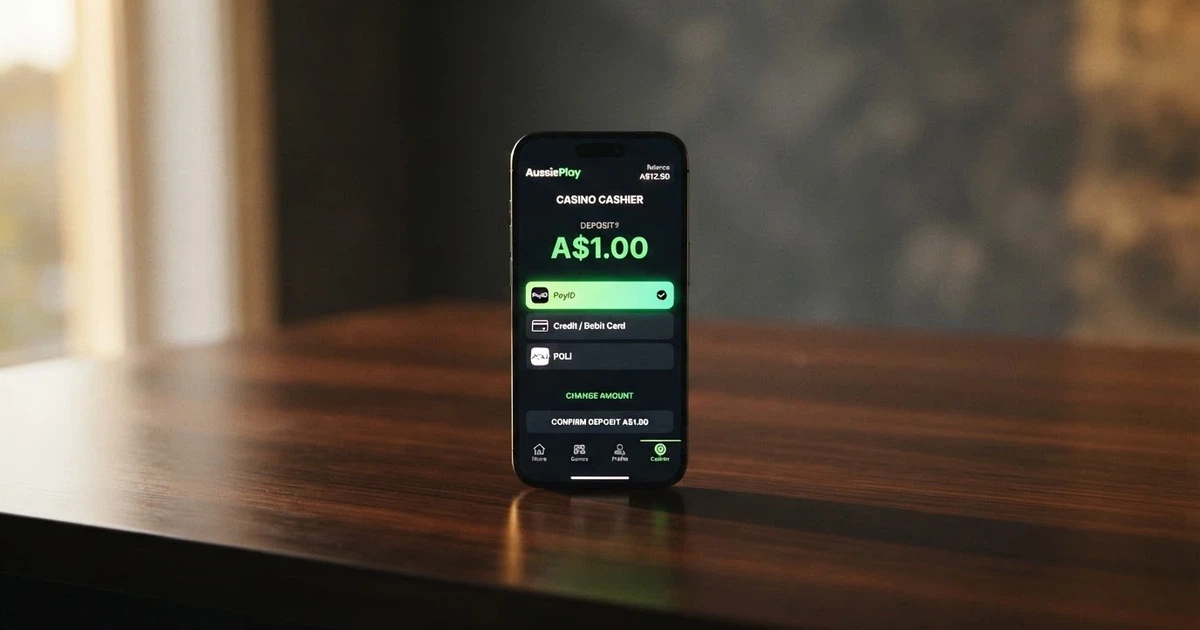
A $10 Deposit at an Australian Online Casino: The Number That Opens the Door, and the Ones Behind It
 Available in AU
A $10 minimum deposit casino sounds like the lowest-friction way to play real-money pokies from Australia. The reality sits underneath that headline. The Interactive Gambling Act 2001 makes it illegal for any operator to offer online casino games or online pokies to Australians — there is no licence for the product, anywhere in the country. Every site on this page is offshore. The Australian Communications and Media Authority has blocked 1,279 of them since November 2019. The tenner still works; what it buys is narrower than the marketing suggests.

What follows is the working-out. Payment methods that clear at A$10 and the ones that signal offshore service. Pokies that stretch a $10 balance and the volatility that decides whether that balance lasts five minutes or two hours. Ten offshore casinos ranked against each other on the data that exists, with the gaps left visible. The legal frame that the marketing copy leaves out. And the responsible-play tools that work fully only inside the licensed Australian system, which is the one these casinos do not belong to.
This page was reviewed against the ACMA register, the Interactive Gambling Act 2001, and the relevant provisions of the 2026 gambling reform as at 18 October 2026.
Table of Contents
- Why a $10 Minimum Deposit Casino Looks Cheap — and What It Actually Costs
- How Your $10 Deposit Lands: Payment Methods That Work — and the Ones That Signal Trouble
- The Best $10 Deposit Casinos for Australian Players in 2026 — Compared
- New $10 Deposit Casinos: Fresh Faces, Same Offshore Rules
- Mobile $10 Pokies: Why Your Phone Is the Smarter Way to Play on a Budget
- The Legal Reality: No Online Casino Is Licensed in Australia
- Keeping a $10 Budget a Hobby, Not a Chase: Responsible Play Tools
- How We Selected and Ranked These $10 Deposit Casinos
- Your $10, Your Call: What the Numbers Say You Should Actually Do
- Frequently Asked Questions
Why a $10 Minimum Deposit Casino Looks Cheap — and What It Actually Costs
The “$10 deposit” label is doing two jobs at once. It is a recruitment number — a low barrier that converts a person browsing into a person who has funded an account. And it is a marketing promise that the offshore casino industry uses because licensed Australian casinos do not exist. Every operator that accepts a $10 AUD deposit from an Australian is doing so from Curaçao, Kahnawake, the Philippines, or another offshore jurisdiction, with no Australian licence behind it.
That offshore status is the load-bearing fact for everything else on this page. It explains the payment bans. It explains the ACMA blocking list. It explains why a $10 deposit can fund an account but not necessarily withdraw one — minimum withdrawal thresholds at offshore casinos typically run A$25–A$100, sometimes higher, against a deposit minimum of A$5–A$10. A player who deposits A$10 and runs the balance down to A$12 may be unable to cash out below the floor.
The same offshore reality shapes the welcome offer. A “100% match up to A$10,000” headline is meaningless to the strict $10 player if the first bonus tier requires A$30 to unlock. It shapes the wagering requirement, which on combined deposit-and-bonus structures at 30x works out to 60x on the bonus alone. And it shapes the game library, because some offshore operators run a single provider (RealTime Gaming at FairGO) while others list 8,000-plus titles across 70 studios.
The sign-up flow itself is short — email, password, deposit method, first deposit, first spin — but every step sits inside a regulated vacuum. KYC is the operator’s own policy, not an Australian requirement. The bonus terms are the operator’s own, with Australian consumer law not covering disputes. The payment method is the operator’s choice, with the Australian ban on credit cards and crypto for licensed wagering meaning that any AU-facing site accepting either is sitting outside Australian rules by definition.
What “$10 minimum deposit” actually means on an AUD budget
A$10 is a deliberate number. It sits low enough that a person treats it as an impulse buy — less than a pub meal in most Australian cities, less than a tank of petrol’s worth of driving. At the same time it sits above the micro-casino floor of A$1–A$5, which the offshore market also offers, and below the standard A$20 deposit tier most operators reserve for their welcome bonus eligibility.
For a player with a small bankroll, A$10 buys a real-money session rather than a no-deposit free spin. No-deposit offers do exist (Bizzo runs ten free spins for installing its PWA app), but they carry win caps — A$75 at Bizzo — and convert to withdrawable cash only after wagering requirements are met. A tenner in hand is more flexible than ten free spins tied to a single game.
The $10 bar also lands below the A$20 minimum that several offshore operators enforce on bonus eligibility. SkyCrown requires A$30 to unlock its first bonus tier, on top of a baseline A$20 minimum across all methods. Rocket Play accepts A$10 on some methods but A$20 on others. The strict $10 player at those sites can play real money but cannot unlock the headline bonus — a meaningful gap, because the bonus is what most comparison articles rank on.
NSW regional play at the $10 level is constrained by another factor: bank transfer minimums at most offshore operators sit at A$20–A$50, which locks out a player whose only payment option is a direct bank transfer. The workarounds are PayID, POLi, Neosurf, and crypto — each of which has its own regulatory tell.
Pokies on a tenner: what you can actually play and what the RTP means for your balance
On a $10 bankroll, the pokie you pick decides how long the balance lasts. Return to Player (RTP) is the long-run percentage of every wagered dollar that the game returns to players. Volatility is how lumpy those returns arrive — low volatility means frequent small wins, high volatility means rare but larger ones. Both matter for a tenner.

| Slot Title | Provider | RTP | Volatility |
|---|---|---|---|
| Starburst | NetEnt | 96.09% | Low |
| Book of Dead | Play’n GO | 96.21% | High |
| Gonzo’s Quest | NetEnt | 95.97% | Medium |
| Gates of Olympus | Pragmatic Play | 96.50% | High |
| Sweet Bonanza | Pragmatic Play | 96.48% | High |
| Wolf Gold | Pragmatic Play | 96.01% | Medium-high |
| Thunderstruck II | Microgaming | 96.65% | Medium |
| Mega Moolah | Microgaming | 88.12% | Medium |
A few things stand out from that table. The Pragmatic Play titles cluster between 96.01% and 96.50% at the advertised RTP, but the same provider’s portfolio spans 93.5% to 99.0% depending on operator configuration — if an in-game help screen shows a figure below 96%, the player is on a reduced config, and the house edge has just widened. Pragmatic Play averages 96.2% across its catalogue, which sits inside the broader 94–97% band typical of online pokies.
Mega Moolah is the outlier. Its 88.12% base RTP is far below the field because a chunk of every wager funds the progressive jackpot pool — the trade is a lower base return for a chance at a life-changing payout. For a $10 bankroll, the trade is poor. The high-volatility titles (Book of Dead, Gates of Olympus, Sweet Bonanza) produce wins on roughly 25% of spins, but the wins are larger when they land. The low-volatility title (Starburst) produces wins on 40–55% of spins at 0.5x–3x the bet — fewer thrills, but a small balance stays alive longer.
Thunderstruck II at 96.65% RTP with a $0.30 minimum bet, 243 ways, and a 2,400x maximum win is the closest thing to a balanced option on the list for the $10 player — higher RTP than the Pragmatic Play cluster, medium volatility, and a minimum stake low enough that a tenner buys 33 spins at the floor. Starburst is the longest-session play for the same reason: minimum bets drop to A$0.10 at many operators, the low volatility keeps the balance ticking over, and the 96.09% RTP sits inside the field’s upper range.
Real-money play at $10: what your session actually costs
The arithmetic of a session is straightforward. Take the RTP, the per-spin stake and the number of spins, and the expected loss falls out.
A $10 bankroll at A$0.20 per spin is 50 spins. At 96.09% RTP (Starburst, low volatility), the expected loss across 50 spins is roughly 50 × A$0.20 × (1 − 0.9609) = A$0.39 — the long-run average. That is the statistical cost of the session, not a guaranteed outcome. On any single 50-spin run the balance could be higher or lower; the average over many sessions converges to that figure.
Bump the per-spin stake to A$0.50 and the spin count drops to 20. At 96.50% RTP (Gates of Olympus, high volatility), the expected loss on 20 spins is roughly 20 × A$0.50 × (1 − 0.9650) = A$0.35. Lower than the 50-spin Starburst run, because fewer spins carry the house edge. The trade is that high-volatility games produce wins on only ~25% of spins, so the 20-spin run is likelier to feel flat — long dry patches between the occasional larger win.
The session profile that matters for the $10 player is volatility. Low-volatility pokies at minimum stakes stretch the balance by producing frequent, small returns — the player sees the balance tick up and down rather than collapse. High-volatility pokies do the opposite: the balance erodes quickly through dry patches, then spikes occasionally. Both are running the same house edge; the difference is the player’s experience of it.
The house edge at these RTPs sits between 2.91% (Starburst) and 11.88% (Mega Moolah, base game). On a $10 session, that translates to an expected loss of roughly A$0.30 to A$1.20 depending on the title and stake. The session itself is cheap. The repetition is what makes it expensive — deposit $10 three or four times a week and the monthly outlay is A$120 to A$160, not the A$40 the deposit amounts suggest on their own.
The first-deposit flow: signing up, funding $10, and hitting spin
The mechanical steps are the same at every offshore casino in the featured set. Create an account with an email and password. Choose a payment method. Enter a deposit amount. Wait for clearance. Open a pokie. Spin.
The decisions inside those steps are where the offshore reality shows. KYC verification is the operator’s own policy — some require a driver’s licence or passport before the first withdrawal, others defer it until a larger cashout is requested. For a $10 player, the deferred-KYC model means the first deposit and first spin happen with nothing more than an email address, which is part of why the offshore model converts so easily.
The deposit method decision is the regulatory tell. PayID is the cleanest option at the A$10 level — sub-60-second clearance, zero fees, every major Australian bank. Neosurf A$10 prepaid vouchers are available from newsagents and servos nationwide and require zero personal data shared with the casino, which is the closest thing to anonymous funding the AU player has. POLi Payments processes under 2 minutes with no fees at 21 of 23 tested platforms. Bank transfer requires A$20–A$50 and locks the strict $10 player out. Visa and Mastercard carry a 2.5% fee on sub-$50 deposits at some operators, and some Australian banks block gambling-coded card transactions outright.
The bonus opt-in or opt-out decision is the one most players make without reading the terms. A 30x wagering requirement on the bonus alone is the lightest on the featured set (Rocket Play). A 60x requirement on free chip and free spin bonuses with an A$180 maximum cashout is the heaviest (FairGO). Opting in converts a $10 deposit into a balance locked behind a turnover threshold; opting out preserves the $10 as pure play money.
How Your $10 Deposit Lands: Payment Methods That Work — and the Ones That Signal Trouble
Every payment method at an offshore casino is a signal. PayID, POLi, and Neosurf are clean — they clear at A$10, charge no fee, and link to an Australian bank account or a cash purchase. Crypto is a regulatory tell. Credit cards are a tell. Bank transfer’s A$20–A$50 floor shuts the strict $10 player out entirely.
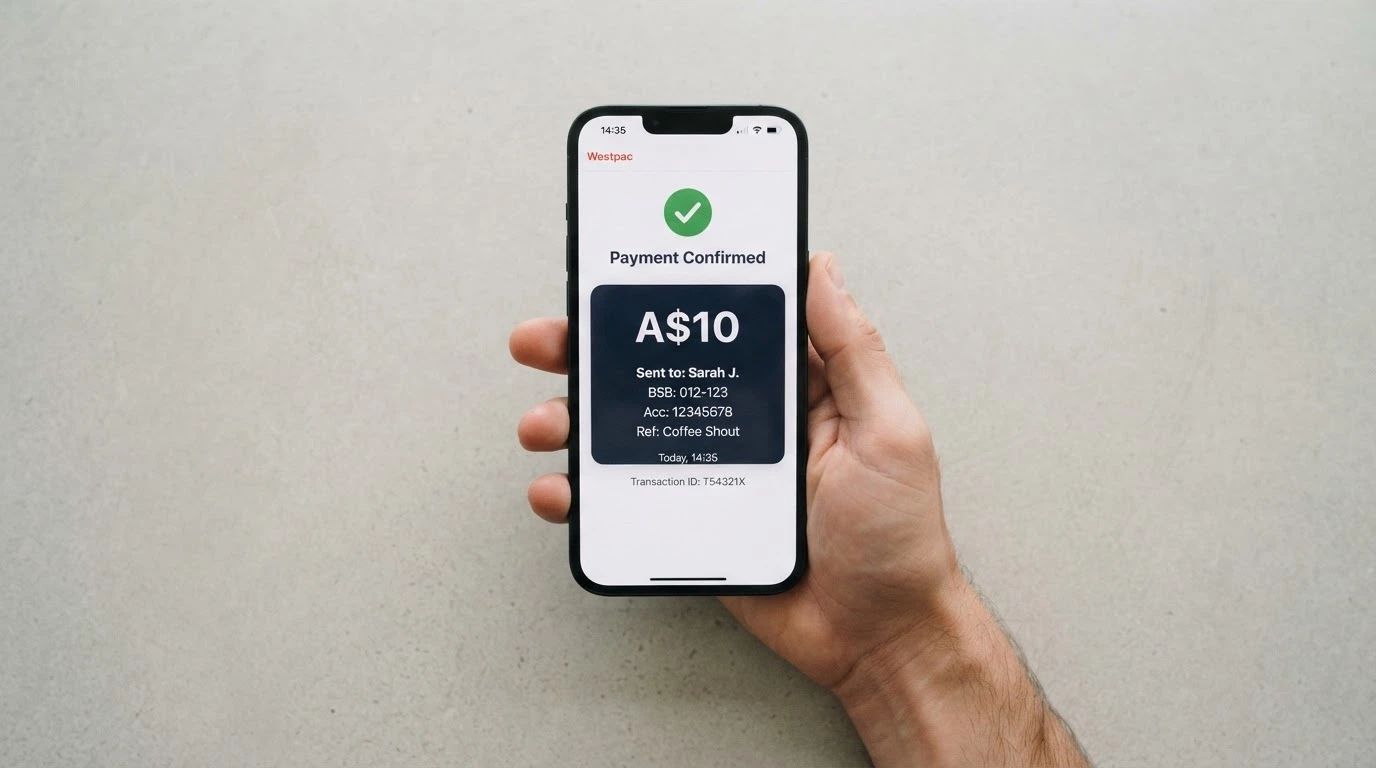
The framework that ties this together is the Interactive Gambling Amendment (Credit and Other Measures) Act 2023. Since 11 June 2024, credit cards, credit-related products, and digital currency have been banned as payment for licensed Australian wagering. The penalty for non-compliant operators is up to A$247,500. Legal deposit routes for licensed wagering are debit card, bank transfer, PayID/Osko, and BPAY.
The offshore operator accepting crypto or credit cards from an Australian is therefore operating outside Australian rules by definition. It is a one-step check: if the deposit page offers Bitcoin or a credit card field to an Australian IP, the operator is not part of the licensed system. That is a regulatory fact, not a moral judgement.
PayID: the 60-second, fee-free Australian standard at the $10 level
PayID is built on the New Payments Platform (NPP) that connects every major Australian bank. Deposits clear in under 60 seconds with zero transfer fees. The A$10 minimum is the standard at most offshore casinos in the featured set, and PayID works at that floor without surcharge or delay. The transaction links to the player’s bank account, so it appears on the statement with a description that names the recipient — useful for a player who wants to track exactly how much is moving into offshore casino accounts.
For the $10 player, PayID is the default. It is instant, it is free, it is Australian, and it leaves a paper trail. The paper trail matters because the same offshore casino may not provide one on the withdrawal side — minimum withdrawal thresholds, processing delays, and outright refusals all happen in the offshore space, and the deposit record is the player’s only anchor.
Credit and debit cards: the 2.5% bite and the AU bank block risk
Visa and Mastercard deposits at offshore casinos carry a 2.5% fee on deposits under A$50 at some operators. A$10 into a 2.5% fee structure leaves A$9.75 of playable balance — a small hit, but a structural one, because the fee is taken on every transaction, not just the first.
The deeper problem is the bank block. Some Australian banks reject gambling-coded card transactions outright. The transaction fails, the player is informed their bank declined it, and the offshore casino is the operator that flagged the merchant code in the first place. The card’s acceptance at an offshore casino is not a feature — it is a signal that the operator sits outside the licensed Australian system.
Credit cards are the sharper version of the same tell. Since 11 June 2024, credit cards have been banned for licensed Australian wagering. Any operator accepting a credit card deposit from an Australian IP is operating in violation of the regime the law was written to enforce.
Crypto and Bitcoin: convenient for deposits, illegal for licensed Australian wagering
Bitcoin, Ethereum, Litecoin, USDT, DOGE — the offshore operators in the featured set that accept crypto do so because their players want speed and privacy. Deposits confirm in minutes. Withdrawals can clear inside an hour. No Australian bank is involved, so no merchant code triggers a block.
The regulatory cost is the ban. Since 11 June 2024, digital currency has been banned for licensed Australian wagering. The penalty for non-compliant operators runs to A$247,500. An AU-facing site accepting crypto is therefore an offshore operator by definition — the law treats its payment menu as the proof.
For the $10 player, crypto carries an additional friction: most exchanges charge a network fee that can exceed the deposit amount on small transactions. Bitcoin’s on-chain fees during congested periods can run several dollars per transaction, which makes a $10 deposit uneconomic. Stablecoins (USDT) on faster networks reduce this, but the friction remains. Crypto is the offshore operator’s preferred rail; for the strict $10 player, it is rarely the cheapest one.
POLi, Neosurf and bank transfer: the rest of the $10 deposit field
POLi Payments is the second Australian-native option after PayID. Deposits process in under 2 minutes with no fees, and POLi was available at 21 of 23 tested platforms in research at the A$10 level. POLi links to the player’s bank account through a redirect flow that does not require a credit card merchant code, which keeps it inside the legal-payment routes for licensed wagering — even though the casino accepting it is still offshore.
Neosurf is the only method on this list that requires no bank account and no card. A$10 prepaid vouchers are sold at newsagents and service stations across Australia. The player buys the voucher with cash, enters the 16-digit code at the casino, and the deposit clears with zero personal data shared. For a player who wants maximum separation between the gambling transaction and their banking record, Neosurf is the closest thing to anonymous funding available at the A$10 level.
Bank transfer is the option that locks out the $10 player. Most offshore operators set a A$20–A$50 minimum for bank transfer deposits, with the higher figure at the more established brands. The clearance time runs 1–3 business days. For a strict $10 bankroll player, bank transfer is not a viable rail.
The Best $10 Deposit Casinos for Australian Players in 2026 — Compared
Ten offshore casinos ranked for the AU $10 deposit player. The table carries what research confirmed; cells without confirmation stay as em dashes rather than guesses. Every operator is offshore, every operator is unlicensed in Australia, and several are on the ACMA blocking record.
| Operator | Offshore Licence | Welcome Bonus | Wagering Requirement | Free Spins |
|---|---|---|---|---|
| FairGO | Curaçao | A$1,000 deposit match | 30x deposit + bonus (effective 60x bonus) | Included in weekly promos |
| Bizzo Casino | Curaçao (TechSolutions Group N.V., 2021) | Up to A$7,250 + 175 FS over 4 deposits | 40x, A$8 max bet | 175 + 10 no-deposit via PWA |
| Rocket Play | Curaçao (Dama N.V.) | 100% up to AU$200 + free spins | 30x bonus amount | Included in welcome |
| Skycrown | Curaçao | Up to A$4,000 + 400 FS over 5 deposits | 40x | 400 total (100/75/75/75/75) |
| Neospin | — | 100% up to A$10,000 + 100 FS | — | 100 |
| WinSpirit | — | 100% first deposit match + free spins | 20x–40x | Included in welcome |
| Stake | Curaçao | — | — | — |
| Royal Reels | — | — | — | — |
| Rainbet | — | — | — | — |
| Scream Casino | — | — | — | — |
The table’s honest gaps are themselves information. Three operators have no confirmed welcome bonus, wagering requirement, or free spin data this run (Royal Reels, Rainbet, Scream Casino). One (Stake) has a confirmed Curaçao licence but no confirmed bonus or minimum deposit. Two (Neospin, WinSpirit) have confirmed bonus structures but missing wagering or minimum deposit data. Five of ten have a confirmed offshore licence, six of ten have a confirmed welcome bonus, five of ten have a confirmed wagering requirement, and six of ten have a confirmed free spin package. The remaining cells are gaps the reader is meant to notice, not blanks the operator forgot to fill.
What the data also shows: the heaviest wagering load on the featured set is at FairGO (effective 60x on the bonus alone, plus a A$180 maximum cashout on free chip and free spin bonuses). The lightest is at Rocket Play (30x on the bonus amount, no deposit-and-bonus combined structure). SkyCrown has the largest headline bonus (A$4,000 + 400 free spins over five deposits) but the strict $10 player cannot unlock the first tier, which requires A$30.
FairGO: the first ACMA target still serving Aussie players at a confirmed A$10
FairGO is the first site the ACMA ever ordered blocked, back in November 2019. The brand has survived by cycling through mirror domains, a pattern the ACMA’s DNS-level blocking cannot fully eliminate. RealTime Gaming powers the entire library, which means a narrower selection than the multi-studio offshore brands offer — but every game carries the same RTG configuration.
The deposit side is friendly to the $10 player. A$10 minimum is confirmed. PayID deposit is supported alongside Bitcoin, USDT, and bank wire. The welcome bonus runs to A$1,000 as a deposit match.
The terms are where the cost shows. The 30x wagering requirement applies to the combined deposit and bonus — a $10 deposit plus a $10 bonus requires $600 in turnover before withdrawal, which works out to 60x on the bonus amount alone. Free chip and free spin bonuses carry a separate 60x requirement with a A$180 maximum cashout, a cap that is small enough to make a big win irrelevant.
The combination of ACMA blocking history and a tight maximum cashout on bonus-derived winnings makes FairGO a brand for the player who knows what the bonus is worth in real terms. Sixteen years in the market tells the player something about survival. The terms tell them something about cost. Both pieces matter.
Bizzo Casino: PayID withdrawals, 8,000 games, and a no-deposit free-spin entry point
Bizzo launched in 2021 under TechSolutions Group N.V. out of Curaçao, and the brand has scaled into one of the larger AU-facing offshore operators. The game library runs to 8,000-plus titles from 70-plus studios, which puts it at the top of the featured set for variety. PayID is available for both deposits and withdrawals — rare among offshore operators, where withdrawal rails are typically card or crypto.
The welcome package is structured for players who deposit more than A$10. The first tier alone requires A$250 to unlock the full 125% match, and the four-deposit total runs to A$7,250 plus 175 free spins. The 40x wagering requirement and the A$8 maximum bet during wagering are standard for the segment. For a strict $10 player, the welcome bonus is effectively inaccessible — the first tier’s A$250 floor sits well above the deposit the page is built around.
The mobile-specific entry point is more accessible. Bizzo’s PWA app install unlocks 10 no-deposit free spins at 40x wagering with an A$75 win cap. A player who installs the app, claims the free spins, and clears the wagering walks away with up to A$75 of withdrawable cash without ever making a deposit. It is the closest thing to a risk-free test drive on the featured set, and the wagering requirement is the same 40x carried on the deposit welcome. The win cap is the ceiling.
Bizzo sits on the ACMA blocked/warned record. The Casino Guru Safety Index sits at 8.4, which is above average for the offshore segment but still well below what a licensed AU wagering operator carries.
Rocket Play: Curaçao-licensed with the lowest wagering multiplier in the set
Rocket Play runs on a Dama N.V. Curaçao licence with a SOFTSWISS platform powering 3,000-plus games. The welcome bonus is a 100% match up to AU$200 plus free spins, with the wagering requirement sitting at 30x on the bonus amount — the lightest playthrough on the featured set. A 30x bonus-only wagering structure is meaningfully cheaper than the 30x-on-deposit-and-bonus setup FairGO runs, because the turnover target is half the size for the same headline match.
The minimum deposit is A$10 to A$20 depending on the payment method, which means the strict $10 player can fund an account through PayID, POLi, or crypto without hitting a method-specific floor. The maximum bet during wagering is capped at $5 per spin or game round, and no-deposit bonuses carry a maximum withdrawal limit typically in the range of $50–$100 USD.
The payment panel is broad. Visa, Mastercard, Bitcoin, Ethereum, Litecoin, DOGE, USDT, and bank transfer are all supported, with the crypto side of the menu confirming offshore status. Rocket Play is not on the ACMA blocked/warned record that FairGO, Bizzo, and SkyCrown carry, but the Curaçao licence and crypto acceptance place it firmly outside the licensed Australian system.
Skycrown: the biggest bonus package in the list — but a $10 deposit will not unlock it
SkyCrown’s headline package runs to A$4,000 in bonus funds plus 400 free spins across five deposits. The first tier alone is a 100% match up to A$300 plus 100 free spins, and it requires a A$30 minimum deposit — already above the strict $10 player’s ceiling. The remaining tiers unlock at A$30–A$50 deposit floors depending on the reload promotion, with 40x wagering and 14-day bonus validity per tier.
The minimum deposit at SkyCrown is A$20 across every payment method, regardless of bonus tier. A $10 player can fund an account and play real-money pokies, but cannot claim the welcome bonus. The bonus structure is built for a player depositing A$100 or more per tier, not a tenner.
SkyCrown sits on the ACMA blocked/warned record. The Curaçao licence and the A$20 floor together describe a brand that targets a different player than the strict $10 bankroll this page is built around. For a $10 player who values a big game library and crypto-friendly payments over bonus access, SkyCrown is a viable real-money option. For a $10 player chasing the welcome bonus, the math does not work.
Neospin: A$10 minimum deposit with a headline A$10,000 match
Neospin’s published welcome package is a 100% match up to A$10,000 plus 100 free spins, on a minimum deposit of A$10. The game library runs to 3,500-plus titles. Bitcoin, Ethereum, Litecoin, and fiat options are all supported.
The figure that matters — and that research did not confirm this run — is the wagering multiplier. A 100% match up to A$10,000 at 30x bonus-only wagering is one thing. The same headline at 50x is a different cost. The reader should treat the missing wagering figure as the single most important gap on Neospin’s profile and verify it on the operator’s own terms page before depositing.
For a $10 player, the gap cuts both ways. A A$10,000 headline is irrelevant at the $10 deposit level — the bonus is sized for high rollers, and the strict $10 player is not the target. What matters is whether the smaller deposit unlocks the same percentage match and what the wagering cost is on the smaller bonus. Without confirmation of the wagering figure, the player is buying a $10 session with no reliable read on what the bonus terms will cost.
WinSpirit: ACMA-blocked domains, variable wagering, and a first-deposit match
WinSpirit’s Australian-facing domains were blocked by ACMA as illegal gambling websites. The brand continues to operate through new domains, which is the standard offshore workaround for DNS-level blocking. A player who deposits today may find their access interrupted the next time ACMA issues a blocking request.
The welcome bonus is a 100% first deposit match plus free spins on selected slot titles, with wagering requirements reported in a 20x–40x range on bonus funds and a 7–30 day bonus validity. The spread on the wagering figure is itself a flag — without a single confirmed number, the player cannot reliably estimate the turnover cost. The minimum deposit was not confirmed this run.
For a $10 player, the variable terms and the ACMA blocking record are the headline facts. The bonus is real. The terms are imprecise. The site may be unreachable tomorrow. Those three together describe the WinSpirit profile better than any single number.
Stake: crypto-native with Curaçao roots — and no confirmed welcome offer this run
Stake is one of the better-known crypto-first casino brands globally, licensed in Curaçao and operating primarily on Bitcoin, Ethereum, Litecoin, and USDT. The library is large and the brand recognition is high. What research did not confirm this run is the welcome bonus, the minimum deposit, and the wagering structure on any deposit-based offer.
For the strict $10 player, the absence of confirmed welcome terms is the operational issue. A $10 crypto deposit at Stake lands the player in a real-money session, but without a verified bonus the player is buying that session at full cost — no matched funds, no free spins, no turnover protection. The crypto acceptance confirms offshore status. The Curaçao licence confirms jurisdiction. The missing welcome data confirms that the reader should check the operator’s own site before depositing.
Royal Reels
Royal Reels is an offshore brand with no confirmed Australian-facing data this run. The licence jurisdiction is not confirmed. The welcome bonus, wagering requirement, free spins package, bonus validity, maximum cashout, minimum deposit, and payment methods are all unverified.
The blank profile is itself the warning. A casino that cannot surface a verified licence jurisdiction, a confirmed minimum deposit, or a published welcome bonus term is one the reader should treat as unvetted. The offshore route means no AU consumer protection covers disputes at Royal Reels. A player depositing A$10 into an unverified account is doing so without the minimum data set other operators on this page carry.
Rainbet
Rainbet is an offshore operator with no confirmed data this run across any field. Licence jurisdiction, welcome bonus, wagering structure, free spins, minimum deposit, and payment methods are all unverified. The reader should verify each of these directly on the operator’s site before depositing, and the offshore reality means no Australian consumer protection covers any dispute that arises from that deposit.
Scream Casino
Scream Casino is an offshore operator with no confirmed data this run across any field. Licence jurisdiction, welcome bonus, wagering structure, free spins, minimum deposit, and payment methods are all unverified. The same caveat applies: verify directly, and accept that no Australian consumer protection covers disputes from deposits into unvetted offshore operators.
New $10 Deposit Casinos: Fresh Faces, Same Offshore Rules
A “new $10 deposit casino” in the Australian-facing market is an offshore operator that has launched recently. Bizzo launched in 2021 as a benchmark for what “new” looks like after a few years in the market — it now carries 8,000-plus games, a Curaçao licence, and an ACMA blocked/warned record. Newer operators carry none of that track record.
The regulatory framing does not change with the launch date. Every new entrant is offshore by definition, because no Australian licence for online casino exists. The deposit methods, the bonus terms, the withdrawal minimums, and the ACMA blocking risk are all inherited from the offshore model, not negotiated away by being newer.
What changes is the vetting burden. An established operator has a player complaint history, an ACMA record, and a terms page that has been tested by enough deposits to expose the edge cases. A new operator has none of those. The first A$10 deposited into a brand-new offshore casino is also the first deposit anyone has made into that brand, which means the player is the test case.
How “new” is vetted: what to check before depositing at a fresh $10 casino
The checklist for a new AU-facing offshore casino is short. Verify the licence jurisdiction on the operator’s own page — Curaçao, Kahnawake, the Philippines, or another offshore regulator. Cross-check the operator’s domain against the ACMA register of blocked services, which is publicly searchable. Read the bonus terms page directly, looking for the wagering multiplier, the maximum cashout, the bonus validity, and the game restrictions. Check the payment methods: a site accepting credit cards or crypto from an Australian is sitting outside the licensed system by definition. Search for player complaints on independent forums and complaint sites.
A new operator that fails any of those checks should not receive a $10 deposit. The cost of the deposit is the cost of discovering the gap after the money has moved.
Mobile $10 Pokies: Why Your Phone Is the Smarter Way to Play on a Budget
The mobile form factor is not just a convenience for the $10 player — it is a budget discipline tool. A phone screen shows the balance in a single glance. A session timer can be set in seconds. PayID deposits clear from the banking app to the casino in under 60 seconds, and the transaction record sits in the same place as every other banking transaction. The phone’s built-in screen-time tracking surfaces exactly how long the session has been running.

For low-volatility pokies, mobile sessions work well. The minimum bet sizes are smaller on most mobile-optimised offshore casino sites, and the short-attention-cycle gameplay of a Starburst or a Gonzo’s Quest fits the form factor. A 10-minute mobile session at A$0.20 per spin runs 30 spins, and at 96.09% RTP the expected loss is around A$0.24. The session is short enough that the player notices when it ends.
Pokies that demand longer sessions — high-volatility titles like Book of Dead or Gates of Olympus — are harder on mobile because the dry patches between wins can stretch to 30 or 40 spins. A player watching a balance erode without a return is more likely to chase on mobile than at a desktop with a full session view.
Mobile app vs browser: what changes at the $10 deposit level
A PWA app install and a mobile browser session reach the same offshore casino and the same games, but the app route sometimes unlocks extras. Bizzo’s 10 no-deposit free spins for installing the PWA app is the cleanest example: the browser player never sees the offer, the app player gets a free shot at a withdrawable balance with a 40x wagering requirement and an A$75 win cap.
PayID works identically on mobile and desktop — the deposit clears in under 60 seconds from the banking app. The transaction speed is not a function of the device; it is a function of the payment rail. What mobile adds is the session-tracking layer: a phone is more likely to have a budget app open in another window, a screen-time alert, and a balance glance every few seconds. The browser player on a desktop has none of those by default.
For the $10 player, mobile is the smarter default. The session is shorter, the balance is more visible, and the app-only bonuses are an extra option that costs nothing to unlock.
The Legal Reality: No Online Casino Is Licensed in Australia
The Interactive Gambling Act 2001 prohibits providing online casino games, online pokies, and in-play sports betting to people in Australia. There is no licence for online casino anywhere in the country — not federally, not in any state or territory. The licensed products are pre-event sports and race wagering, lotteries, and keno, through operators licensed by state and territory regulators.

Every operator on this page is offshore. Every one of them is offering a prohibited product to Australian players. The IGA targets the provider, not the punter — the individual player is not prosecuted. But the offshore route means no Australian consumer protection covers the account, no ACMA complaints mechanism is available, and the operator can be blocked at any time with a balance still on the platform.
The IGA 2001: what it prohibits and who it actually targets
The Interactive Gambling Act 2001 makes it an offence to provide online casino games, online pokies, and in-play sports betting to a person in Australia. The penalty for non-compliant providers is significant. The Act permits pre-event sports and race wagering, lotteries, and keno through state and territory-licensed operators.
The IGA targets the provider, not the punter. An Australian individual playing at an offshore casino is not prosecuted. The enforcement runs against the operator offering the prohibited service to Australians. The practical consequence for the $10 player is that the offshore operator carries the legal risk, not the player — but the player carries every other risk the offshore model creates: no AU consumer protection, no ACMA complaints recourse, no BetStop coverage, and no guaranteed withdrawal.
ACMA enforcement: 1,279 sites blocked — and what that means for your balance
The ACMA has directed Australian ISPs to block 1,279 illegal gambling and affiliate websites since November 2019. Around 220 illegal services have withdrawn from the Australian market since enforcement strengthened in 2017. FairGO was the first site ordered blocked, in November 2019, and the list has grown every year since.
Blocking is DNS-level. Australian ISPs resolve the blocked domain to a non-routable address, and the site becomes inaccessible from an Australian IP. The blocking is not perfect — operators cycle through new domains, mirror their content, and reappear under different names — but it is persistent enough that the ACMA blocking record functions as a regulatory history of the offshore operators serving Australians.
What blocking means for a player with a balance on the blocked site: the offshore casino is no longer reachable through standard Australian internet connections. The player’s account and balance are not erased, but accessing them requires a workaround. Withdrawals may still be processed through the operator’s normal channels, but the player cannot easily reach support to dispute a refused payout. FairGO, SkyCrown, Bizzo, and WinSpirit all appear on this record — and a player who deposits $10 into any of them is depositing into a brand the ACMA has already assessed as operating illegally.
Credit cards and crypto: how your payment method tells you a site is offshore
Since 11 June 2024, credit cards, credit-related products, and digital currency have been banned as payment for licensed Australian wagering. The penalty for non-compliant operators is up to A$247,500. Legal deposit routes for licensed wagering are debit card, bank transfer, PayID/Osko, and BPAY.
An AU-facing casino accepting credit cards or crypto from an Australian IP is therefore operating outside Australian rules by definition. The payment menu is the tell. It is the same logic in reverse: a licensed operator cannot accept these methods; any operator that does is not licensed.
For the $10 player, this is the most concrete single check available before depositing. If the deposit page offers a credit card field or a Bitcoin wallet address to an Australian, the site is offshore. PayID, POLi, Neosurf, and bank transfer are the methods that work across both licensed and offshore operators; credit card and crypto work only at offshore operators.
The 2026 gambling reform: what changes on 1 January 2027
The Interactive Gambling Amendment (Gambling Reform) Bill 2026 passed Parliament on 19 August 2026. Its measures commence on 1 January 2027. The reform tightens advertising, expands enforcement powers, and extends the window for ACMA infringement notices.
From 1 January 2027, wagering advertising during live sporting events is banned in the 15 minutes before to 5 minutes after the event. TV wagering ads are capped at three per hour between 5am and 8:30pm. Athletes, celebrities, and influencers are banned from promoting wagering. Direct marketing of inducements is banned for 14 days after sign-up and 3 months after BetStop deregistration, and indefinitely for at-risk customers. Online keno and foreign-matched lotteries are prohibited.
Banks and payment providers gain express authority to block transactions to illegal gambling operators from 1 January 2027. ACMA’s infringement notice window extends from 12 to 24 months. AdStop, the wagering advertising opt-out register, is funded through a levy on licensed interactive wagering service providers — the same model BetStop uses, with operators contributing in proportion to market share.
The 2027 changes do not legalise online casino in Australia. They tighten the enforcement perimeter around the offshore operators serving Australian players. The PayID deposit a $10 player makes today will still clear; the bank’s authority to block transactions to illegal operators is the new lever.
What you lose playing offshore: the protections that do not cover your account
Playing at an offshore casino means no Australian consumer protection covers the account. There is no ACMA complaints mechanism available to an Australian player at an offshore casino. BetStop — the National Self-Exclusion Register — covers approximately 150 licensed wagering providers and does not extend to offshore casinos. The site can be blocked at any time with a balance still on it. There is no guarantee the operator will honour a withdrawal request, and no Australian body will compel it to.
The legal status of gambling winnings under Australian tax law is straightforward: gambling winnings are not assessable income for ordinary punters under section 6-5 of the ITAA 1997, and gambling losses are not deductible under section 8-1, unless the person is carrying on a business of betting. The tax treatment does not change between licensed and offshore play. What changes is the protection around the play itself.
For a $10 player, the offshore gap is the single most important fact on this page. The tenner works at the deposit. The same tenner does not guarantee a withdrawal, a dispute resolution, a self-exclusion mechanism, or a stable address for the casino itself. The “low-deposit casinos that accept Australians are offshore and not licensed in Australia. ACMA restricts access to many of them under the Interactive Gambling Act 2001, you play at your own risk, and Australian consumer protection does not cover your account” — that is the line the marketing never quotes, and the line that decides the decision.
Keeping a $10 Budget a Hobby, Not a Chase: Responsible Play Tools
A $10 deposit is small enough to feel harmless. The repetition is what makes it expensive. Three or four deposits a week at A$10 each is A$120 to A$160 a month — a different proposition from the single tenner the marketing describes.
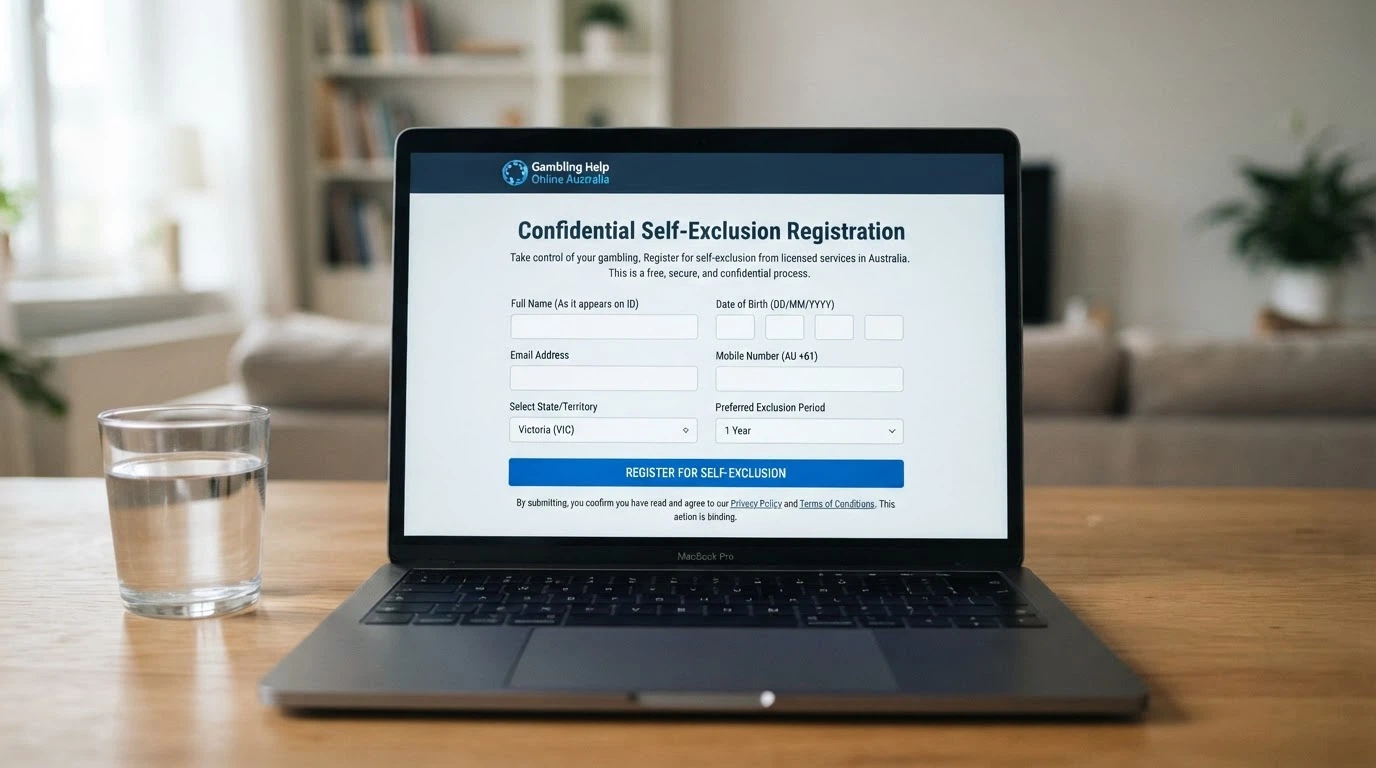
The responsible-play tools available to an Australian player split into two camps. BetStop, the National Gambling Helpline, and Gambling Help Online work fully inside the licensed Australian system. For offshore casinos, none of them apply in full: BetStop does not cover offshore operators, and the helpline is the right place to call regardless of where the play happens. The offshore gap is the one the player must manage alone.
Deposit limits and stake discipline when every spin counts
On a $10 bankroll, the session ends quickly. The discipline is in choosing minimum-stake spins and tracking the total, not the deposit. At A$0.20 per spin, a $10 bankroll is 50 spins. At A$0.30, 33 spins. At A$0.50, 20 spins. The lower the stake, the more spins, the longer the session, the more time to see whether the volatility profile of the chosen pokie matches the player’s risk tolerance.
Tracking the total is the harder discipline. If a player deposits A$10 three or four times a week without recording it, the monthly outlay is A$120 to A$160, not the A$40 the deposit amounts suggest on their own. The tenner is the unit. The total is the cost.
BetStop: what it covers — and the offshore gap it cannot close
BetStop is the National Self-Exclusion Register, live since August 2023. As at 31 July 2026, 67,480 people had registered, with 41,290 exclusions still active. 78% of registrants were under 40, and 38% chose lifetime exclusion. Registration requires a mobile phone number, an email, and one of an Australian driver’s licence, Australian passport, or Medicare card. The minimum exclusion period is three months; the maximum is lifetime. Early cancellation requires a statutory declaration confirming counselling, with a 7-day processing window.
BetStop covers approximately 150 licensed wagering providers in Australia. It does not cover offshore casinos. A person who self-excludes through BetStop and then deposits A$10 into an offshore casino the next day is not stopped by the register. The offshore operator has no obligation to check BetStop, no integration with the register, and no incentive to block a self-excluded player. BetStop binds the licensed system. The offshore gap is the player’s responsibility.
Where to get help: the 24/7 safety net every Australian player should know
The National Gambling Helpline is 1800 858 858, free, confidential, and staffed 24 hours a day, 7 days a week. Gambling Help Online (gamblinghelponline.org.au) provides online chat and counselling. BetStop (betstop.gov.au) is the National Self-Exclusion Register for licensed wagering providers. All three are free, confidential, and available to anyone in Australia regardless of whether their gambling happens at a licensed operator or an offshore casino.
The prevalence context matters. Approximately 2.1% of Australian adults — roughly 430,000 people — experience problem gambling. The Australian Institute of Health and Welfare put high-risk gambling at 1.8% in 2022. For a $10 player who notices the deposits increasing, the sessions lengthening, or the bankroll chasing losses, the helpline is the first call.
How We Selected and Ranked These $10 Deposit Casinos
The ranking is built on five evaluation criteria applied to ten offshore operators identified as serving Australian players with A$10 minimum deposits. Licence jurisdiction — every operator is offshore, and the specific jurisdiction (Curaçao, Kahnawake, or unspecified) is recorded where confirmed. Welcome bonus terms at the A$10 deposit level — match percentage, free spins, maximum cashout, and bonus validity, where research carries the data. Wagering load — the multiplier applied to deposit, bonus, or both, with the structure (bonus-only versus deposit-and-bonus combined) flagged because the effective cost differs sharply. Payment method availability to Australians — PayID, POLi, Neosurf, card, crypto, with the regulatory tells (credit card, crypto) marked. ACMA enforcement status — blocked, warned, or unrecorded.
The operator set is ten offshore casinos. Six had confirmed data on at least one field; four had no confirmed data across any field this run. The gaps are visible in the comparison table rather than filled with guesses. The honest limitation: every operator on the page is offshore and unlicensed in Australia, and the ranking does not change that fact.
The sources consulted were the ACMA’s official records on blocked services, individual operator terms pages where available, Australian-facing affiliate data, and the regulatory provisions of the Interactive Gambling Act 2001 and the 2026 reform package. Where a source could not confirm a figure, the figure was left as a gap rather than estimated.
Your $10, Your Call: What the Numbers Say You Should Actually Do
The page has laid out the operators, the costs, the legal facts, and the risks. The verdict is built from the figures already on the page.
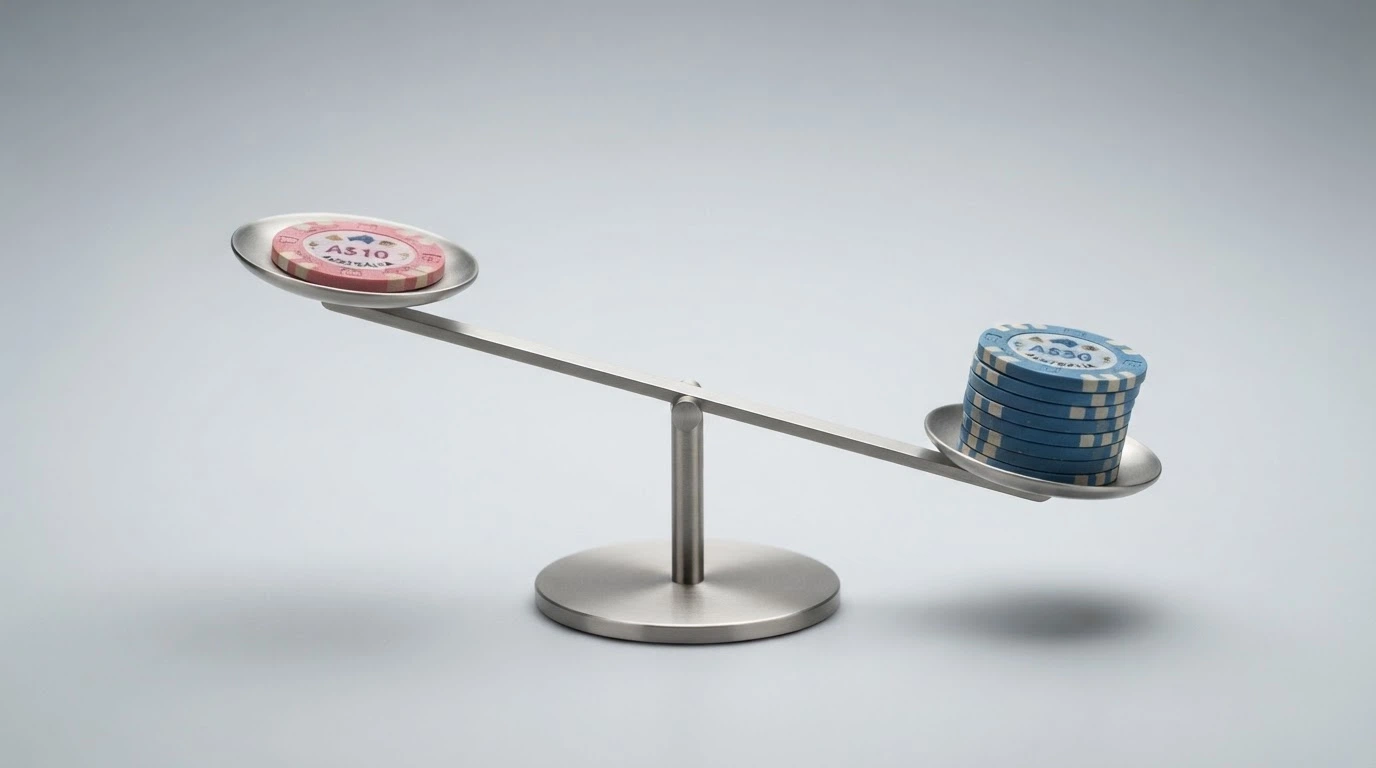
The single most important number is the deposit-withdrawal asymmetry. A$10 in, A$25 to A$100 to get out. A player who deposits A$10, plays a session, and finishes with a balance below the withdrawal floor cannot cash out — the balance sits on the platform until it accumulates above the threshold or is lost to subsequent play. The tenner is a real-money entry. It is not a real-money exit at the same threshold.
The expected session cost from the calculation section is small — roughly A$0.30 to A$1.20 across the featured pokie titles at minimum stakes. The session is cheap in dollars. The repetition is what compounds it. Three or four deposits a week at A$10 is A$120 to A$160 a month, and the monthly figure is the one a player should track, not the per-deposit number.
The offshore reality means no Australian safety net covers the play. No consumer protection applies. BetStop does not extend to the offshore casino. ACMA can block the site at any time, with the player’s balance sitting on it. The operator can refuse a withdrawal without an Australian body to appeal to. The “low-deposit casinos that accept Australians are offshore and not licensed in Australia” warning is the line the marketing copy leaves out, and it is the line that decides the cost-benefit balance.
The responsible-play tools work fully only inside the licensed Australian system. BetStop binds licensed wagering providers. The National Gambling Helpline is the right number to call regardless of where the play happens. The offshore gap is the one the player must manage alone.
The concrete decision framework: if you deposit A$10, know exactly what you are buying and what you are giving up. Treat the tenner as the full cost of the session, not an investment. Read the bonus terms before claiming any offer, because the headline match percentage hides the wagering load and the maximum cashout. Pick a payment method that fits the regulatory frame — PayID, POLi, or Neosurf at the A$10 level — and treat credit card and crypto acceptance as the tell it is. Track the total, not the deposit. And if the sessions lengthen, the stakes rise, or the balance chases the losses, the helpline is 1800 858 858, free and confidential, 24 hours a day.
A $10 deposit is cheap. The offshore reality it sits inside is not.
Frequently Asked Questions
Can I get in trouble for playing at a $10 deposit casino in Australia?
No. The Interactive Gambling Act 2001 targets the provider, not the player. It is illegal for an operator to offer online casino games or online pokies to people in Australia, and there is no Australian licence for online casino anywhere in the country. The individual player is not prosecuted. The offshore operator carries the legal risk, not the punter. This does not change the fact that no Australian consumer protection covers the account.
Can I withdraw $10 from an online casino, or is the minimum withdrawal higher?
The minimum withdrawal is higher. Most offshore casinos set withdrawal minimums at A$25–A$50, with some operators at A$50–A$100, while deposit minimums sit at A$5–A$10. A player who deposits A$10 and finishes a session with a balance below the withdrawal floor cannot cash out. The balance must accumulate above the threshold or be played through. This deposit-withdrawal asymmetry is the single most important practical fact about the $10 deposit category.
If I self-exclude through BetStop, will offshore casinos still let me play?
Yes. BetStop covers approximately 150 licensed wagering providers in Australia — it does not cover offshore casinos. An offshore casino is not connected to the register, has no obligation to check it, and has no incentive to block a self-excluded player from depositing. BetStop binds the licensed system. The offshore gap is the player’s responsibility, and BetStop is a protection that does not reach the $10 deposit route.
Are welcome bonuses available when I deposit only $10?
Sometimes, but not always. Several offshore operators set bonus eligibility floors above A$10 — SkyCrown’s first bonus tier requires A$30, and the baseline minimum at SkyCrown is A$20 across all methods. Rocket Play and FairGO accept A$10 deposits and offer welcome bonuses, with wagering requirements at 30x and 60x respectively. The strict $10 player should check the bonus terms page directly before depositing, because the headline match percentage hides the floor.
What are the wagering requirements on a $10 deposit casino bonus?
They vary. Rocket Play runs 30x on the bonus amount. FairGO runs 30x on the combined deposit and bonus, which works out to 60x on the bonus alone. Bizzo and SkyCrown run 40x. WinSpirit reports 20x–40x. The wagering multiplier is the largest single cost driver on a bonus, and the structure (bonus-only versus deposit-and-bonus combined) changes the effective cost sharply. A player should read the bonus terms directly before claiming.
Can I still access my money if ACMA blocks my casino?
Not easily. ACMA blocking is DNS-level — the Australian ISP resolves the blocked domain to a non-routable address, and the site becomes inaccessible from an Australian IP. The account and balance are not erased, but reaching the operator to process a withdrawal requires a workaround. The operator may still process withdrawals through its normal channels, but the player cannot easily reach support to dispute a refused payout. ACMA has blocked 1,279 sites since November 2019, and several operators on this page sit on that record.
Prepared by the Welcome Bonus Casinos AU editorial staff.