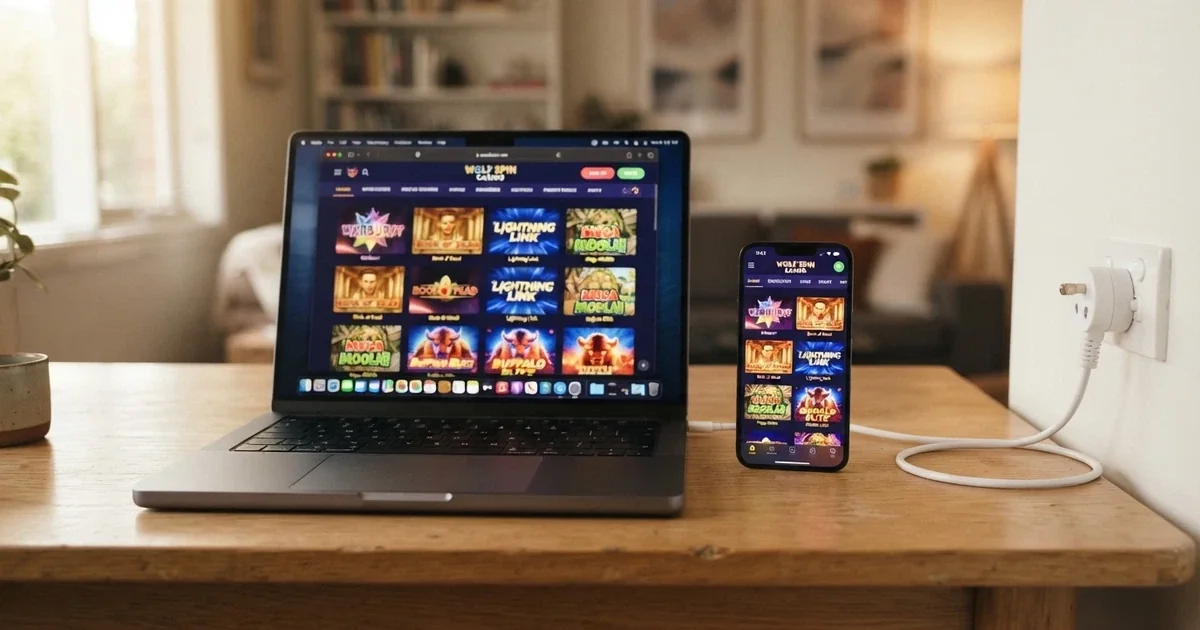
Where Australians Actually Play Casino Online in 2026
 Available in AU
Every online casino accepting an Australian player sits outside Australia. No licence exists for it — not federally, not in any state or territory — and the Interactive Gambling Act 2001 makes providing one an offence. The phrase “Aussie online casino” describes a market that does not legally exist, served by operators who operate anyway. This page compares ten offshore brands visible to Australian players in 2026, ranks them on what is publicly verifiable, and works through the bonus terms that decide whether an offer is worth a real-money deposit.

Data current as of 18 October 2026 and checked against the ACMA register, Curaçao eGaming and Anjouan licensing records, and operator terms pages.
Table of Contents
- Australia’s Offshore Casino Landscape in 2026 — What “Aussie Casino” Really Means
- The Best Offshore Casinos Accepting Australian Players in 2026
- Why Your 2026 Aussie Casino Bonus Is Smaller Than It Looks
- New Aussie Online Casinos — Same Offshore Reality, New Faces
- PayID, Crypto & Fast Payouts — Getting Paid Without the Wait
- Mobile Aussie Casinos — Playing Pokies on Your Phone in 2026
- Is Online Casino Legal in Australia? — What the IGA Actually Says
- Staying Safe — What Australian Players Risk at an Offshore Casino
- How We Evaluate and Rank Aussie Online Casinos
- Playing Smart — A Clear-Eyed Verdict for Australian Casino Players in 2026
- Frequently Asked Questions
Australia’s Offshore Casino Landscape in 2026 — What “Aussie Casino” Really Means
What “Aussie Online Casino” Actually Means in 2026
The term is a contradiction, and the contradiction is the whole story. Australia has never issued a licence for online casino, online pokies, or in-play betting, and the Interactive Gambling Act 2001 closes that door by making it an offence to provide such a service to anyone physically in Australia. So when a website brands itself “Aussie online casino,” it is selling an experience that is not licensed where its customers live. Every one of those sites is registered somewhere offshore — Curaçao or Anjouan, in practice — and every one of them is breaking Australian law to take your deposit.
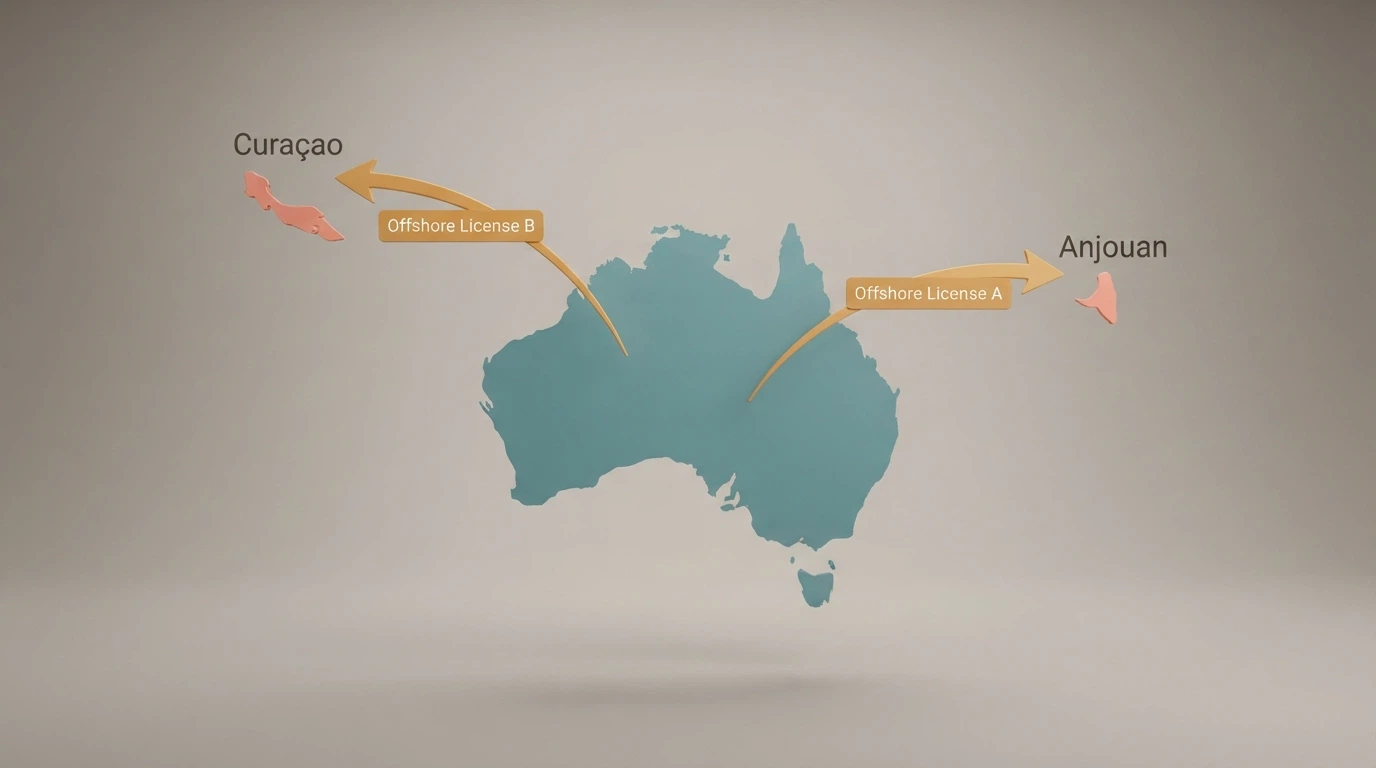
That is the architectural reality the rest of this page sits on. Search results do not look like this: there is no “Australian licensed casino” because none exists. The list pages rank, the affiliate reviewers cover, and the comparison tables compare are all rankings of illegal operators. A page about “the best licensed online casinos in Australia” is describing something that does not exist, and writing one produces a factual lie on every screen.
The reason offshore operators dominate is simple economics. The Australian market is large, English-speaking, and well-paid — exactly the demographics Curaçao-licensed brands target. DNS-level blocks by the ACMA thin the visible set, but a fresh URL with a fresh skin takes its place within weeks. The market is, in regulatory terms, a sieve.
Real-Money Play — What Australian Players Put on the Line
Real money flows in and out of offshore casinos every day in Australia. AUD deposits clear through PayID in seconds at the better operators, and PayID withdrawals at well-reviewed sites settle in under four hours. The pokies load in the browser, the live-dealer tables stream in HD, and the welcome bonus lights up the screen. From the player’s chair, the experience looks identical to any licensed product.
What is missing is the Australian safety net. There is no AU consumer law behind a Curaçao-licensed operator, no complaints body to write to, no AU Financial Complaints Authority to escalate to, and no recourse when a withdrawal is delayed or voided. If the operator’s terms give it grounds to confiscate a balance — a maximum-cashout cap, a bonus-abuse flag, a “irregular play” clause — that is the end of the matter. BetStop, the national self-exclusion register, covers roughly 150 licensed Australian wagering providers and zero offshore casinos. A punter who has self-excluded to manage problem gambling can still deposit at every brand on this page.
The tax side is straightforward. Betting and gambling winnings from recreational play are not assessable income under section 6-5 of the ITAA 1997, and losses are not deductible under section 8-1. The Australian Taxation Office does not tax the casual punter’s wins. That does not change the offshore calculus — the absence of a tax bill is not the same as the presence of a consumer protection.
The Sites That Accept Aussie Players — And Why Every Single One Is Offshore
The Interactive Gambling Act targets the provider, not the punter. That single architectural choice defines the entire Australian player experience. Operators who serve Australians commit the offence; the person logging in does not. The ACMA pursues the operators, and since November 2019 it has had 1,564 illegal gambling and affiliate websites blocked by Australian ISPs, with more than 225 services withdrawing from the Australian market rather than face enforcement since the regime was strengthened in 2017.
Civil penalties for providing or advertising an illegal interactive gambling service can run up to A$2,475,000 per day for an individual and A$12,375,000 per day for a corporation. Those figures are not theoretical — the ACMA issued eight infringement notices to Tabcorp on 16 January 2026 for providing a prohibited in-play betting service, totalling A$158,400. The enforcement teeth are real, but they bite operators, not players.
DNS-level blocking does what it says on the tin: when an Australian ISP receives a block notice from the ACMA, the domain stops resolving for customers on that network. The site itself stays up for everyone else in the world. New domains appear under new names. A player with a balance at a suddenly-blocked site may find their funds inaccessible without the operator lifting a finger — the brand does not disappear, the Australian connection does.
The Pokies Library — Thousands of Titles, Six That Stand Out
Offshore casinos pitch game counts in the thousands — SkyCrown alone advertises over 7,200 — but the titles Australian players actually return to are a much shorter list. The pokie is the unit the market runs on; every featured operator stocks Pragmatic Play, most stock Play’n GO and NetEnt, and the live-dealer catalogues run on Evolution. Of those thousands, six stand out for return-to-player, volatility profile and track record with Australian players.
| Pokie Title | Provider | RTP | Volatility |
|---|---|---|---|
| Big Bass Bonanza | Pragmatic Play / Reel Kingdom | 96.71% | Medium-High |
| Sweet Bonanza | Pragmatic Play | 96.51% | High |
| Wolf Gold | Pragmatic Play | 96.01% | Medium |
| Book of Dead | Play’n GO | 96.21% | High |
| Sweet Bonanza 1000 | Pragmatic Play | 96.53% | High |
| The Catfather | Pragmatic Play | 98.1% | — |
The Catfather stands apart — at 98.1% RTP it is the highest among tested Pragmatic Play titles, though its volatility profile is not publicly documented. Sweet Bonanza 1000 sets the ceiling for upside at a theoretical 25,000x stake, with multiplier bombs up to 1000x in free spins. Book of Dead remains the Play’n GO reference for high-variance play with a 5,000x-plus ceiling on a 5×3, ten-payline grid. Wolf Gold is the medium-volatility pick for players who prefer three jackpots (Mini, Major, Mega) over headline max wins. Sweet Bonanza and Big Bass Bonanza bracket the high-variance end: tumble-pay mechanics versus fishing-themed collect bonuses, both well-represented in the featured operators’ lobbies. Live-dealer tables — blackjack, roulette, baccarat, game-show formats — sit underneath this pokie catalogue at most offshore brands and run on the same HTML5 client. They are a smaller share of the typical Australian session but a higher share of the bankroll.
The Best Offshore Casinos Accepting Australian Players in 2026
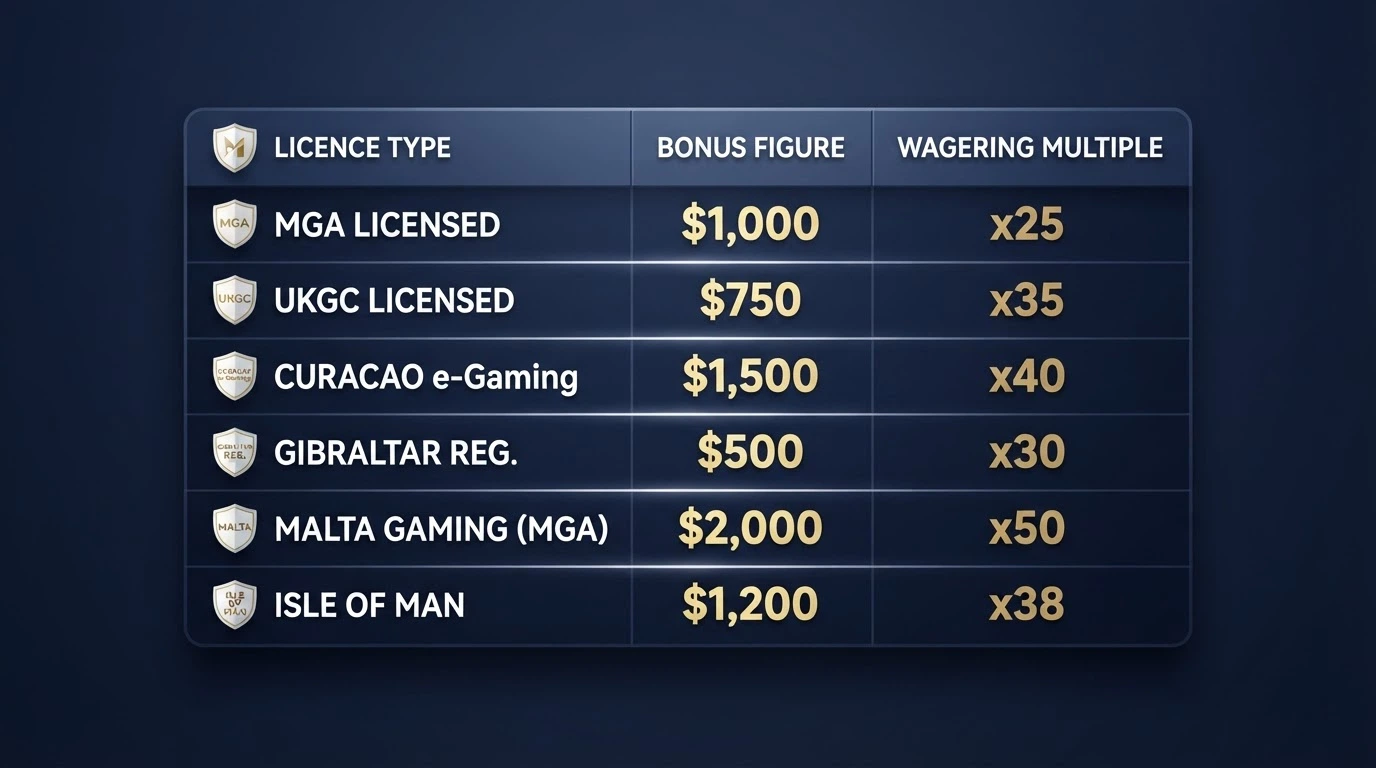
The “best” in this ranking is a comparative claim, not an endorsement. Every operator below accepts Australian players in violation of the IGA, none is licensed in Australia, and the choice between them is the choice between different shades of offshore risk. The table compares them on what can be checked publicly: licence type, welcome bonus, wagering requirement.
| Operator | Licence / Status | Welcome Bonus | Wagering Requirement |
|---|---|---|---|
| SkyCrown | Curaçao eGaming (not licensed in Australia) | Up to A$8,000 + 400 FS across 4 deposits | 40x |
| Rocket Play | Curaçao framework (not licensed in Australia) | — | Up to 40x |
| Royal Reels | Offshore (not licensed in Australia) | A$2,500 + 50 FS across 3 deposits | 35x (bonus only) |
| WinSpirit | Offshore (not licensed in Australia) | — | — |
| Stake | Offshore (not licensed in Australia) | None (crypto-only model) | N/A |
| Fair Go | Curaçao eGaming (not licensed in Australia) | 100% up to A$200 × 5 deposits (A$1,000 total) | 30x |
| Bizzo Casino | Offshore (not licensed in Australia) | — | 40x (on no-deposit spin winnings) |
| Rocket Casino | Offshore (not licensed in Australia) | — | 50x (on deposits over $100) |
| Rainbet | Anjouan licence; geo-blocks Australia | 250% up to $2,100 + 60 FS across 3 deposits | 40x |
| Scream Casino | Offshore (not licensed in Australia) | — | — |
The spread of welcome figures — from A$8,000 at the top end to a deliberate no-bonus model at Stake — looks dramatic until the wagering requirements are read in the same column. SkyCrown’s A$8,000 carries a 40x playthrough across four separate deposits. Royal Reels’ A$2,500 sits at a lower 35x on bonus only. Fair Go’s A$1,000 total across five deposits has the lowest at 30x with no max-bet rule. Rocket Casino’s 50x on deposits over A$100 is the harshest in the set. Stake’s “no welcome bonus” is a different proposition entirely: a crypto-only operator competing on payout speed and game breadth, not on matching deposits.
SkyCrown — 7,200+ Games and an A$8,000 Welcome Package with a Catch
SkyCrown runs the largest game lobby in the featured set at over 7,200 titles — Pragmatic Play, Play’n GO, NetEnt, Evolution, plus the usual roster of boutique studios. The welcome package advertises up to A$8,000 plus 400 free spins across four deposits, with minimum deposits stepping from A$30 (first and second) to A$40 (third) to A$50 (fourth), and a separate high-roller tier starting at A$100. Each deposit’s bonus carries a 40x wagering requirement.
The catch sits in the bonus terms, not the headline. Wagering must be completed within 14 days for the standard package, or five days for the high-roller tier. The maximum bet during bonus play is A$7.50 (A$10 high roller). The maximum bonus-to-real-money conversion is capped at A$5,000 per welcome bonus. Even on a successful clear, the operator’s “A$8,000” is functionally A$5,000 of real-money conversion — the rest is bonus money that expires. SkyCrown’s bank-transfer withdrawals clear within three days from a A$100 minimum, and the operator runs 15-plus active promotional offers beyond the welcome package.
SkyCrown is the play for someone prioritising raw game-library size and willing to grind a 40x playthrough inside a two-week window. For everyone else, the headline figure overstates the real-world ceiling by roughly a third once the conversion cap is factored in.
Rocket Play — 3,000+ Games with Flexible Bonus Terms
Rocket Play sits in the middle of the set: 3,000-plus games, modern slot titles alongside classic table games, and a Curaçao framework licence. The specific dollar value of its welcome package did not surface in current public terms; the package exists, and bonus terms have been rated 6.9 out of 10 in third-party testing, with wagering up to 40x — at the upper end of the market norm rather than above it. The flexibility is in the structure (multiple deposit tiers, ongoing promos) more than in any single low-wagering offer.
A reasonable middle pick for someone who values game breadth over a standout welcome figure. The terms are not the most aggressive in the set, and the welcome dollar figure is less advertised than the package structure.
Royal Reels — PayID Payouts in Under Five Hours
Royal Reels is the PayID benchmark in the featured set. Deposits via PayID clear in under 90 seconds; withdrawals settle in 4 hours 12 minutes once KYC is complete. The welcome pack runs A$2,500 plus 50 free spins across three deposits — 100% up to A$500 on the first, 75% up to A$750 on the second, 100% up to A$1,250 on the third — with 35x wagering on the bonus only and an A$5 per-spin cap during wagering. The library runs roughly 1,800 total titles, of which about 1,400 are pokies, with an average RTP across the top 50 most-played pokies of 96.4%.
Royal Reels sets the speed benchmark. An Australian player who values PayID payout speed above all else will find it hard to beat. The 35x bonus-only wagering is the second-lowest in the set, and PayID support goes in both directions — deposit and withdrawal — which is rarer than the deposit-only setups elsewhere.
WinSpirit — High RTP Transparency and 12–24 Hour Withdrawals
WinSpirit publishes a fuller RTP database than most of its peers, and that transparency is the headline feature for a player comparing operators on game quality. The operator stocks crash and instant games — Aviator, Mines, Plinko — alongside a standard slot and live-dealer lobby. Withdrawals clear in 12 to 24 hours.
The welcome-bonus specifics did not surface in current public terms, and the operator remains light on the kind of detail a comparison shopper wants. That absence is information in itself: a brand that publishes RTP numbers down to the percentage but does not publicise a headline welcome bonus is making a deliberate choice to compete on product rather than promotion.
WinSpirit’s RTP transparency and crash-game selection make it worth a closer look for a player who values those features over a giant welcome figure. The thin welcome details may simply mean the brand is not chasing deposit-led acquisition.
Stake — Crypto-Only Platform with No Traditional Welcome Bonus
Stake is a deliberate outlier. There is no traditional welcome match because there is no fiat deposit rail — the platform runs crypto-only, and the value proposition is sub-two-hour crypto payouts in some sessions, a broad game library, and an operator that competes on product rather than bonus matching. AU access has been intermittent, with some ISPs throwing DNS blocks that interrupt sessions.
The 2024 credit-and-crypto ban for licensed wagering (in force since 11 June 2024) makes no difference to Stake — it is not licensed in Australia, and the ban applies to the licensed wagering market it does not serve. The relevant rule for Stake is the offshore one: the operator’s own terms and its Curaçao licence.
A different sort of choice, for a punter already in crypto and happy with a no-bonus model. Not the right fit for a player who wants to deposit in AUD, claim a welcome pack, or read bonus terms before signing up.
Fair Go — RTG Classics with the Lowest Wagering Tested
Fair Go runs a single-provider RTG (Real Time Gaming) library of 280 games — small by the standards of the rest of the set, but every title is a familiar pokie to Australian players who have spent time in the RTG ecosystem. The welcome offer is a 100% match up to A$200 on each of the first five deposits, totalling A$1,000. The standout figure is the wagering: 30x on pokies with no maximum-bet rule, the fairest bonus terms among seven tested casinos in current market testing.
The right pick for a low-stakes Australian player who values fair wagering over a giant welcome figure, and who is comfortable with a smaller, RTG-only catalogue. The 30x no-cap terms are the headline.
Bizzo Casino — No-Deposit Free Spins and Multi-Provider Aggregator
Bizzo runs a multi-provider aggregator setup, stocks Aviator, Plinko and Mines alongside the standard slot and live-dealer roster, and offers 10 to 25 no-deposit free spins with 40x wagering on spin winnings — one of the few operators in the featured set with a documented no-deposit offer. Payout support covers crypto, PayID and e-wallets, with withdrawals clearing in 24 to 48 hours. Welcome-package dollar value beyond the no-deposit free spins is not confirmed in current public terms.
Bizzo is a useful entry point for a player who wants to test a casino without committing a deposit. The 40x on free-spin winnings is the standard, not the exception — read the maximum-cashout cap on no-deposit wins before you spin.
Rocket Casino — 50x Wagering and Low RTP Transparency
Rocket Casino carries the highest wagering requirement in the featured set: 50x on all deposits over A$100 (as of September 2026), with a A$5 maximum bet during bonus play. The operator runs Mines and Tower crash games alongside its standard lobby, and its RTP transparency is low — fewer published per-title return figures than the better-disclosed competitors.
The combination is unfavourable. A player depositing A$200 has A$10,000 of required turnover at the 50x multiple, which on a 96% RTP pokie is roughly A$400 of expected house edge before any bonus money is factored in. The A$5 max bet extends the time to clear.
The wagering terms are the harshest in the set, and the operator is not compensating with standout game-library transparency or payout speed. A player who values clean terms should look elsewhere.
Rainbet — 250% Welcome Pack, but Geo-Blocked in Australia
Rainbet’s welcome package — 250% up to A$2,100 plus 60 free spins across three deposits, with 40x wagering under a Wager Lock option or a No-Wager-Lock alternative — looks competitive on paper. The licence is Anjouan. The blocker is the operator’s own terms: Rainbet is fully restricted in Australia and geo-blocks Australian players. Accessing the site from an Australian IP via VPN violates the operator’s terms and risks fund confiscation.
Rainbet is listed here for market completeness. It is not a pick for an Australian player — the operator’s own geo-block is the closing line.
Scream Casino — Limited Data, Listed for Market Completeness
Scream Casino appears in traffic data placing it in the AU-facing offshore set, but specific bonus terms, game-provider mix and licence details did not surface in current public terms. The operator is offshore and not licensed in Australia; beyond that, the verification gap is real.
Scream Casino is a brand to approach with the assumption that the terms have not been independently confirmed. Until bonus terms, payout speed and licence details are verified, the comparison to the other nine operators is not apples-to-apples.
Why Your 2026 Aussie Casino Bonus Is Smaller Than It Looks
The headline figure is the marketing number. The real number lives three lines down, in the bonus terms. A A$8,000 welcome package with a 40x wagering requirement and a 14-day validity window is not a A$8,000 gift — it is a A$320,000 turnover target the player must hit in two weeks to convert the bonus into withdrawable cash, against a house edge that compounds with every spin. The same applies, in different proportions, to every bonus in the featured set.

Three bonus-killers do most of the damage. The first is the wagering requirement: at 40x the bonus amount, a A$1,000 bonus requires A$40,000 of slot turnover before it converts. The second is the time limit: 14 days (SkyCrown standard), five days (high-roller), or 24 to 72 hours for no-deposit free spins. The third is the maximum cashout cap, which on no-deposit bonuses typically sits between A$50 and A$300.
Worked example. SkyCrown’s headline A$8,000 bonus at 40x wagering requires A$320,000 of total turnover. Against a representative RTP of 96.4% — the average across the top 50 most-played pokies at Royal Reels, a useful proxy for the broader market — the house edge per dollar wagered is 3.6%. The expected loss from clearing the bonus, assuming only the bonus amount is wagered, is roughly A$320,000 × 0.036 = A$11,520. That is the real cost the offer imposes on a player who completes the wagering; the headline figure understates it by more than 40%.
The calculation is a statistical estimate — an average across many spins under the stated assumptions, not a guaranteed outcome for any single player. It promises no win, no payout and no return.
Welcome Bonuses — The Big Numbers and the Small Print
Multi-deposit welcome packages create headline figures that look generous until the deposit count and per-deposit wagering are read together. SkyCrown’s A$8,000 is across four deposits. Royal Reels’ A$2,500 is across three. Fair Go’s A$1,000 is across five deposits of A$200 each — a lower per-deposit ceiling, but the smallest wagering multiple in the set at 30x. Rainbet’s A$2,100 across three deposits is geo-blocked for Australian players anyway.
Deposit minimums gate each tier. SkyCrown steps from A$30 (first and second) through A$40 (third) to A$50 (fourth), with a separate high-roller path at A$100. Royal Reels requires three deposits at the appropriate minimum to release all 50 free spins and the full A$2,500. The headline figure is the ceiling; the floor is the deposit minimum, and most players never reach the ceiling.
Bonus validity windows matter. A 14-day wagering window at 40x means a player must run roughly A$23,000 of turnover per day to clear a A$8,000 bonus — feasible for a high-volume player, demanding for anyone else. The shorter 24 to 72-hour windows on no-deposit offers make those mathematically much harder to clear, even when the wagering multiple is comparable.
No-Deposit Bonuses — Free Spins and Free Chips Without a Deposit
No-deposit offers are the rarest bonus type and the most restricted when they appear. The shapes are a free-spin bundle (20 to 100 spins), a small cash credit (A$5 to A$25), or a hybrid chip-plus-spins pack. Larger A$100 to A$300 chips carry 40x to 70x playthrough. Wagering on the winnings from no-deposit bonuses sits in the 35x to 50x range; the maximum withdrawable winnings cap is typically A$50 to A$300, with validity windows of 24 to 72 hours to use the bonus and 7 to 30 days to complete wagering.
Bizzo’s 10 to 25 no-deposit free spins at 40x on spin winnings are the concrete example in the featured set. The expected value calculation: a 25-spin bundle at A$0.20 per spin on a 96% RTP slot yields roughly A$4.80 in raw spin value, of which the player keeps after 40x wagering is approximately A$0.12 in expected retained value, before any cashout cap is applied. The “free” in free spins is the marketing word.
Free Spins & Free Chips — What the Offer Actually Costs You
Free spins and free chips are never free. Wagering on spin winnings turns a zero-deposit proposition into an expected-loss calculation the operator has already priced in. A 25-spin bundle at A$0.20 per spin on a 96% RTP pokie generates about A$4.80 of raw spin value, of which the house edge captures roughly 4% — A$0.19 — in a single pass through the wagering. The 40x multiplier on those winnings extends the grind: A$4.80 of winnings becomes A$192 of required turnover to clear, against another 4% house edge, which is roughly A$7 of additional expected loss. The expected loss from clearing a small free-spin bundle therefore runs close to the bonus value itself, before the maximum-cashout cap clips the upside.
The free-chip alternative — a small cash credit with no deposit attached — works similarly. A A$10 free chip at 50x wagering is A$500 of required turnover, again at roughly 4% house edge, which is A$20 of expected loss. The chip itself is positive value; the wagering makes it negative.
Promo Codes & Loyalty Rewards — The Ongoing Offers
Beyond the welcome package, ongoing reload bonuses and loyalty programs stretch the offer timeline. SkyCrown runs 15-plus active promotions at any given time. The problem is that the specific promo structures, deposit-match percentages and reload terms change frequently — they are distribution details that vary by partner, channel and player tier, and no stable public database exists for the AU-facing offshore market.
What can be said in general: ongoing offers at the featured operators tend to carry higher wagering and tighter cashout caps than the welcome package, because the player has already deposited and the operator’s acquisition cost is sunk. A 50% reload with a 40x playthrough is the typical shape. Loyalty and VIP programs layer cashback, faster withdrawals and personal account managers on top, with tier thresholds that vary by operator.
New Aussie Online Casinos — Same Offshore Reality, New Faces
New AU-facing casino brands launch regularly, but every one of them is still offshore. The IGA has not changed; the prohibition is unchanged; “new” means a new Curaçao or Anjouan licence-holder, not a new regulatory regime. The Australian player who joins a brand launched this month is joining the same offshore market, on the same legal footing, with the same lack of Australian consumer protection.
The practical question for a player is whether the new operator can be trusted with a deposit at all. The standard markers — a verifiable Curaçao or Anjouan licence number, a clear ownership disclosure, a published RTP database, a working PayID withdrawal pipeline — apply to a new brand just as they apply to an established one. The absence of any of these is not automatically disqualifying, but it does move the operator further down the trust ranking.
Newly Launched AU-Facing Casino Sites in 2026
The pipeline of new offshore casinos targeting Australians has not slowed. Fresh brands appear monthly, often from the same operator groups behind established names. The pattern is well-established: a new domain, a familiar Curaçao licence number, a welcome offer pitched slightly above the market norm to attract first deposits, and a payment-rail setup that mirrors the existing portfolio.
The bonus offer at a new casino typically runs higher than at an established competitor — a 200% or 250% first-deposit match instead of the standard 100% — partly because the operator needs acquisition volume, and partly because the terms attached to those bonuses are correspondingly tighter.
“New Casino Sites” vs Single-Brand Launches
The distinction between a genuinely new operator and a sister site of an existing brand matters. Sister sites share ownership, payment infrastructure, support teams and risk-management systems; for better or worse, a complaint about one brand reaches the same group. A genuinely new operator has none of that history, which is the very thing a player is trying to evaluate.
The tell is in the licence number and the corporate disclosure. A new brand with the same Curaçao sub-licence number as three other sites, registered through the same corporate vehicle, is a sister site. A brand with a fresh licence, fresh corporate registration and fresh game-provider integrations is something closer to a new entrant.
Best New Aussie Online Casinos — What “Best” Means for a Brand with No Track Record
Ranking a new casino is inherently provisional. Without a withdrawal track record, player-volume data, or public complaint history, the evaluation rests on four markers: licence type and verification, ownership transparency, bonus fairness versus headline generosity, and game-provider quality. A new brand with a verifiable Curaçao licence, a published corporate owner, wagering at 35x or lower and a Pragmatic Play / Play’n GO / NetEnt game catalogue is a reasonable starting point. A new brand with none of those is a deposit the player should think twice about.
The absence of long-term player data is itself information. A A$2,000 first-deposit match with no cap on bonus-to-real conversion, no maximum-bet rule and no published max cashout is either an extraordinary offer or a set of terms that will tighten once the operator sees how players use them. The latter is more common.
PayID, Crypto & Fast Payouts — Getting Paid Without the Wait
Payout speed is the make-or-break metric for Australian players, and PayID has become the preferred route. POLi, the old direct-debit standard, is no longer a payment method anywhere in Australia. PayID — running over the New Payments Platform and Osko rails — has taken its place, settling in seconds for deposits and in hours for withdrawals where the casino has integrated it properly.

Not every offshore casino supports PayID, and those that do vary widely in settlement time. The difference between a four-hour payout and a three-day payout is the operator’s internal processing, the KYC pipeline and the banking relationships underneath.
PayID Deposits and Withdrawals — The Fastest Route for Aussie Players
PayID deposits at Royal Reels clear in under 90 seconds. PayID withdrawals at the same operator settle in 4 hours 12 minutes once KYC is complete. Across the wider featured set, PayID withdrawals at well-reviewed sites settle in under four hours, though the figure varies: SkyCrown’s bank-transfer withdrawals clear within three days from a A$100 minimum, which is the slow end, and the operators that publish PayID-specific withdrawal times tend to sit closer to the Royal Reels benchmark.
The bottleneck is KYC, not the payment rail. PayID itself is essentially instantaneous. What delays the withdrawal is document verification — passport, driver’s licence, proof of address — which the operator runs once and then reuses on subsequent payouts. A player who completes KYC before requesting a first withdrawal sees the PayID speed advertised. A player who requests a withdrawal before completing KYC sees a 24-to-72-hour delay while the documents are reviewed.
Best PayID Casino Sites — What Separates the Fast from the Slow
PayID support alone is not enough. The difference between a 4-hour and a 3-day payout is what happens behind the PayID button. Royal Reels sets the speed benchmark in the featured set at 4 hours 12 minutes post-KYC. SkyCrown’s bank-transfer window is 3 days from A$100 — PayID is not the headline payout route there. WinSpirit sits in the middle at 12 to 24 hours. Bizzo’s 24-to-48-hour window is the slowest of the PayID-supporting operators.
What makes one operator fast and another slow is mostly the staffing behind the payments team. A casino with a 24-hour payments desk clears KYC in hours and pushes PayID payouts the same day. A casino with a once-a-day batch process clears them next morning. The published window is the simplest proxy.
Crypto and Alternative Payments — Anonymity vs the 2024 Ban
Crypto deposits sit in a legal grey zone at offshore casinos. Credit cards, credit-related products and digital currency (crypto) are banned as payment for licensed online wagering since 11 June 2024 under the Interactive Gambling Amendment (Credit and Other Measures) Act 2023 — an operator that fails to enforce the ban faces penalties of up to A$247,500. The ban applies to the licensed wagering market, not to offshore casinos, which continue to accept Bitcoin, Ethereum, USDT and other cryptocurrencies freely.
For an Australian player, the practical question is whether crypto is the right route. Stake’s sub-two-hour crypto payouts are the fastest in the featured set, and Bitcoin Lightning support at some operators reduces fees and confirmation times further. The trade-off is regulatory exposure: a player using crypto at an offshore casino is sitting outside Australian consumer protection entirely, with no AAT-style complaints body to escalate to and no AUSTRAC reporting mechanism to flag suspicious activity.
E-wallet alternatives — Skrill, Neteller, MiFinity — fill the gap for players who want faster-than-bank-transfer payouts without the crypto complexity. PayID is the simplest AUD route where supported.
Mobile Aussie Casinos — Playing Pokies on Your Phone in 2026
Every offshore casino in the featured set works on a mobile browser. Dedicated apps are the exception, not the norm, and the HTML5 browser experience now matches app quality for pokies and table games. Touch input, portrait-and-landscape rotation, and biometric login are standard.
The difference between mobile and desktop, where it exists, is in live-dealer tables. The studio streams are scaled down for smaller screens, the betting interface is more compact, and some game-show formats lose visual detail on a phone. For pokies, the experience is identical.
Mobile-Optimised Browser Play — The Default for Aussie Players
HTML5 has made the mobile browser the primary casino client. The pokies load in portrait, spin with a tap, and run the autoplay and turbo features the desktop version offers. Game selection is parity — every title in the desktop lobby is in the mobile one, sometimes through a slightly different categorisation. The only meaningful degradation is data usage: live-dealer streams on 4G chew through mobile data fast, and a one-hour session on a single live table can cost a substantial share of a monthly budget on a capped plan.
Pokies are lean by comparison. A typical pokie spin uses a fraction of the data of a live-dealer stream, and a session of several hundred spins stays within a reasonable data envelope on a standard Australian mobile plan.
The Casino App Experience — Rare, and Rarely Better
Dedicated casino apps are the exception in the AU-facing offshore market. Where they exist, they typically add push notifications — used heavily for promotional marketing — and biometric login via Face ID or fingerprint. They do not usually outperform the browser on game selection or payout speed.
The push-notification angle is worth flagging for any player with responsible-gambling concerns. An app that pings the phone with reload bonuses, free-spin drops and tournament reminders is, by design, a marketing channel. The browser experience can be opened when the player chooses; the app sits on the home screen whether the player is in the mood or not.
Is Online Casino Legal in Australia? — What the IGA Actually Says
Online casino is prohibited in Australia. The Interactive Gambling Act 2001 makes it an offence to provide an online casino, online pokies or in-play sports betting to a person in Australia. There is no licence for online casino anywhere in the country — not federally, not in any state or territory. The Australian Communications and Media Authority (ACMA) enforces the prohibition; it investigates complaints, issues formal warnings and civil penalty proceedings, directs ISPs to block illegal sites, and refers operators for enforcement.

The IGA was strengthened by the Interactive Gambling Amendment Act 2017, which closed loopholes used by offshore operators and gave the ACMA its blocking powers. The individual player is not prosecuted under the Act — the IGA targets the provider of the prohibited service, not the person in Australia using it. That single architectural choice is what makes the offshore market possible in its current form.
The Interactive Gambling Act & Australia’s Offshore-Casino Rule
The IGA’s provider-side prohibition is the structural feature that defines the entire Australian player experience. The Act makes it an offence to provide an online casino, online pokies or in-play sports betting; it does not make it an offence for an Australian to use one. Operators who serve Australians commit the offence. The ACMA pursues the operators.
The 2017 amendment closed the workarounds the offshore industry had been using — the “technically based overseas” disclaimers, the click-wrap jurisdictional consents, the .com-versus-.com.au distinctions. It gave the ACMA formal power to direct Australian ISPs to block illegal sites and to issue infringement notices with civil penalties attached. The minimum age for all commercial gambling in Australia is 18; the offshore casinos do not enforce this uniformly.
What Is Legal vs What Is Not — A Plain-Language Breakdown
The legal landscape splits into three tiers, and the offshore casino market sits in none of them:
- Licensed and legal in Australia: wagering on races and sport placed before the event begins, lotteries, keno, land-based casinos (Crown, The Star), and state-licensed wagering operators (Sportsbet, TAB, Ladbrokes, Bet365 AU, and so on). All operate under state or territory licensing, primarily the Northern Territory Racing and Wagering Commission / Licensing NT.
- Prohibited under the IGA: online casino games, online pokies, in-play betting on sporting events, and the provision of any of those services to a person in Australia. Credit cards, credit-related products and crypto as payment for online wagering are also prohibited for licensed operators since 11 June 2024.
- The offshore grey zone: any real-money play at an unlicensed offshore casino by a person in Australia. The player is not prosecuted. The operator is breaking Australian law. From 1 January 2027, online keno “pocket pokies” and foreign-matched lotteries are also prohibited.
The 2026 Gambling Reform Bill — passed by Parliament on 19 August 2026 and commencing 1 January 2027 — extends the framework further. Wagering advertising will be capped at three ads per hour between 6:00 am and 8:30 pm on broadcast, with a live-sport blackout running from 15 minutes before to 5 minutes after a live event. Athletes, celebrities and influencers will be barred from promoting wagering products. Broadcasting sporting odds will be banned outright. Direct marketing of inducements will be prohibited for 14 days after a customer signs up, for three months after a person deregisters from BetStop, and indefinitely for customers identified as at risk of gambling-related harm. Banks and payment providers gain express authority to block transactions to illegal gambling operators.
ACMA Enforcement — 1,564 Sites Blocked and Counting
The ACMA has real teeth. Since November 2019 it has had 1,564 illegal gambling and affiliate websites blocked by Australian ISPs, and more than 225 illegal services have withdrawn from the Australian market since enforcement was strengthened in 2017. Civil penalties run up to A$2,475,000 per day for an individual and A$12,375,000 per day for a corporation — the kind of figures that make offshore operators either comply with a block notice or quietly withdraw.
The 2026 reform extends the ACMA’s infringement notice window from 12 months to 24 months, giving the regulator more time to act on breaches. The cost of administering Parts 7D and 7E of the new regime will be recovered via a levy on licensed interactive wagering service providers — the Interactive Gambling (Cost Recovery Levy) Bill 2026. The AdStop (Wagering Advertising Opt-out) register, which would let Australian consumers opt out of wagering advertising, is not expected to be operational by 1 January 2027 and will commence on a later day fixed by proclamation.
The Tabcorp enforcement action in January 2026 — eight infringement notices totalling A$158,400 for providing a prohibited in-play betting service — is a reminder that the ACMA pursues licensed operators as well as offshore ones, and that the in-play prohibition is enforced against Australian-licensed brands too.
Staying Safe — What Australian Players Risk at an Offshore Casino
Offshore casinos sit outside every Australian protection. There is no BetStop coverage, no ACMA complaints mechanism, no Australian consumer law behind a Curaçao-licensed operator, and no local dispute-resolution body. The safety net is whatever the operator chooses to offer, and the only recourse a player has when a withdrawal is delayed or voided is the operator’s own dispute process — which is also the body that made the original decision.

That is the single biggest difference between playing at a licensed Australian wagering operator and playing at an offshore casino. The licensed operator is bound by the IGA, state-level responsible-gambling codes, BetStop coverage and a complaints process that escalates to the regulator. The offshore operator is bound by its own terms and its Curaçao or Anjouan licence, both of which the player has read on the way to depositing and almost nobody ever reads again.
Problem-Gambling Help — The Services Every Australian Player Should Know
The help infrastructure exists and is free, 24/7, and confidential. The National Gambling Helpline is 1800 858 858 — a free, confidential line staffed 24 hours a day, 7 days a week, with online chat and email counselling through Gambling Help Online at gamblinghelponline.org.au. Lifeline provides 24/7 crisis support on 13 11 14, with text on 0477 131 114 and online chat available. The National Debt Helpline on 1800 007 007 provides free financial counselling for people affected by gambling, open 9:30 am to 4:30 pm Monday to Friday.
The scale of the issue is meaningful: about 2.1% of Australian adults — roughly 430,000 people — experience problem gambling, and the Australian Institute of Health and Welfare put high-risk gambling at 1.8% in 2022. Those numbers describe recreational players, problem gamblers and everyone in between, and they sit behind every offshore casino comparison page that exists.
Self-Exclusion, BetStop & the Offshore Gap
BetStop is Australia’s single most powerful player-protection tool — and it covers exactly zero of the offshore casinos on this page. The National Self-Exclusion Register went live on 21 August 2023 and, by 31 July 2026, had 67,480 registrations, of which 41,290 exclusions were still active. Seventy-eight per cent of registrants were under 40; 38% chose lifetime exclusion. The minimum self-exclusion period is three months, the maximum is lifetime, and removal requires a statutory declaration confirming counselling.
The gap is the key fact. BetStop covers approximately 150 licensed wagering providers in Australia; offshore casinos are not connected to the register and are not bound by it. A person who has self-excluded through BetStop because they recognise a problem can still deposit at every brand in the featured set. The self-exclusion tools at offshore casinos are operator-by-operator, with no central register, and the player has to remember to apply them at each brand separately.
How We Evaluate and Rank Aussie Online Casinos
This ranking is built from publicly available licence data, bonus terms that have been tested and compared side by side, game-provider audits, and ACMA enforcement records. Not from affiliate commission structures, and not from operator-supplied marketing copy.
The evaluation criteria, in rough order of weight: licence status and verification against the Curaçao or Anjouan public registers; bonus fairness, measured by the combination of wagering multiple, validity window, maximum-cashout cap, and per-spin betting cap; game-provider quality, including the depth of the lobby and the operator’s RTP transparency across named titles; payout speed, with PayID as the benchmark and bank transfer as the fallback; and ACMA blocking or enforcement history, where available.
The sources consulted: the ACMA register of blocked services and infringement notices; operator terms and conditions pages, captured at the time of evaluation; independent slot-RTP databases for the named pokie specs cited on this page; and player-forum withdrawal reports for the PayID and crypto payout timing figures. Where a specific figure could not be verified, the cell carries the no-data marker rather than an estimate.
What the ranking does not measure: no actual deposit testing was conducted by this page’s authors; no long-term player-experience tracking is in place; the criteria above are a snapshot of publicly available information, not a guarantee of operator behaviour. A rank on this page is the comparison of what is verifiable today.
Playing Smart — A Clear-Eyed Verdict for Australian Casino Players in 2026
The decision to play at an offshore casino is a personal one, and this page does not make it for the reader. What it does is lay out what the verifiable numbers say, and the comparison the numbers produce.

Three things matter most when choosing among the featured operators. The first is licence transparency: a Curaçao or Anjouan licence, verifiable through the relevant public register, is the baseline; an unverifiable licence is a downgrade. The second is bonus fairness, which is a compound measure: the wagering multiple, the validity window, the maximum-cashout cap and the per-spin betting cap together tell you what the bonus is actually worth. A A$1,000 bonus at 30x with no max-bet rule is a better offer than a A$8,000 bonus at 40x with a 14-day window and an A$5,000 cashout cap — the worked example in the bonus section of this page puts the expected cost of the larger bonus at roughly A$11,520 against the house edge, before the cap clips the upside. The third is PayID payout speed: Royal Reels’ 4 hours 12 minutes post-KYC is the benchmark, and operators measured in days rather than hours are a different proposition for a player who plans to withdraw.
The headline bonus figure is the least useful number on this page. Every bonus in the featured set has the same basic structure — match the deposit, attach a wagering multiple, set a validity window, cap the conversion — and the spread of headline numbers is wider than the spread of real value. A player who reads the headline first will choose a different operator than one who reads the terms.
The single most important protection, before any deposit at any offshore casino, is to know the help numbers and to set a personal deposit limit before the first transfer. The National Gambling Helpline is 1800 858 858, free, confidential and staffed 24 hours a day. BetStop covers the licensed market but not the offshore one, so a player who has self-excluded through BetStop should not assume the same protection extends to the brands on this page. The offshore gap is the cost of the offshore market.
No operator on this page is recommended over any other. The ranking compares what is publicly verifiable, and the reader’s own circumstances — preferred payment method, tolerance for wagering terms, attitude to licence type, and any history with problem gambling — determine fit. The numbers on the page are tools for that decision, not a substitute for it.
Frequently Asked Questions
Are online casinos legal in Australia for players?
Online casinos are prohibited in Australia under the Interactive Gambling Act 2001. The Act targets the provider, not the player. An Australian playing offshore is not prosecuted, but the operator breaks Australian law. The player has no consumer protection, no BetStop coverage, and no complaints mechanism if a withdrawal is delayed or voided.
Are winnings from online casinos taxable in Australia?
Betting and gambling winnings from recreational play are not assessable income under section 6-5 of the ITAA 1997, and losses are not deductible under section 8-1. The ATO does not tax casual winnings. Absence of a tax bill is not the same as consumer protection — offshore status and tax treatment are separate questions.
Will the 2026 gambling reform affect online casino players?
The Interactive Gambling Amendment (Gambling Reform) Bill 2026 passed Parliament on 19 August 2026 and most measures commence 1 January 2027. The reform caps wagering advertising, bans athlete and influencer endorsement, prohibits inducements for 14 days after sign-up, and gives banks authority to block transactions to illegal gambling operators. Online casino remains prohibited.
How do I know if an online casino is safe for Australian players?
Verify the Curaçao or Anjouan licence on the regulator’s public register. Check that the operator publishes full terms — wagering, max cashout, validity windows. Look for a working PayID deposit and withdrawal pipeline with a published settlement time. Check the ACMA register of blocked services. None of these guarantees safety.
What are the most popular online pokies in Australia right now?
Big Bass Bonanza (Pragmatic Play, 96.71% RTP, medium-high), Sweet Bonanza (96.51%, high), Wolf Gold (96.01%, medium, three jackpots), Book of Dead (Play’n GO, 96.21%, high variance, 5,000x-plus max), Sweet Bonanza 1000 (96.53%, high, 25,000x max), and The Catfather (98.1%, the highest among tested Pragmatic Play titles). All are stocked across the featured operators.
How does BetStop self-exclusion work and does it cover offshore casinos?
BetStop — the National Self-Exclusion Register — went live on 21 August 2023. Registration excludes the user from approximately 150 licensed wagering providers in one step. The minimum exclusion period is three months, the maximum is lifetime; removal requires a statutory declaration confirming gambling counselling. BetStop does not cover offshore casinos — a self-excluded player can still deposit at every brand on this page.
Published by the Welcome Bonus Casinos AU team.