
Australian $1 Minimum Deposit Casinos in 2026: An Honest Guide for Real-Money Pokies Players
 Available in AU
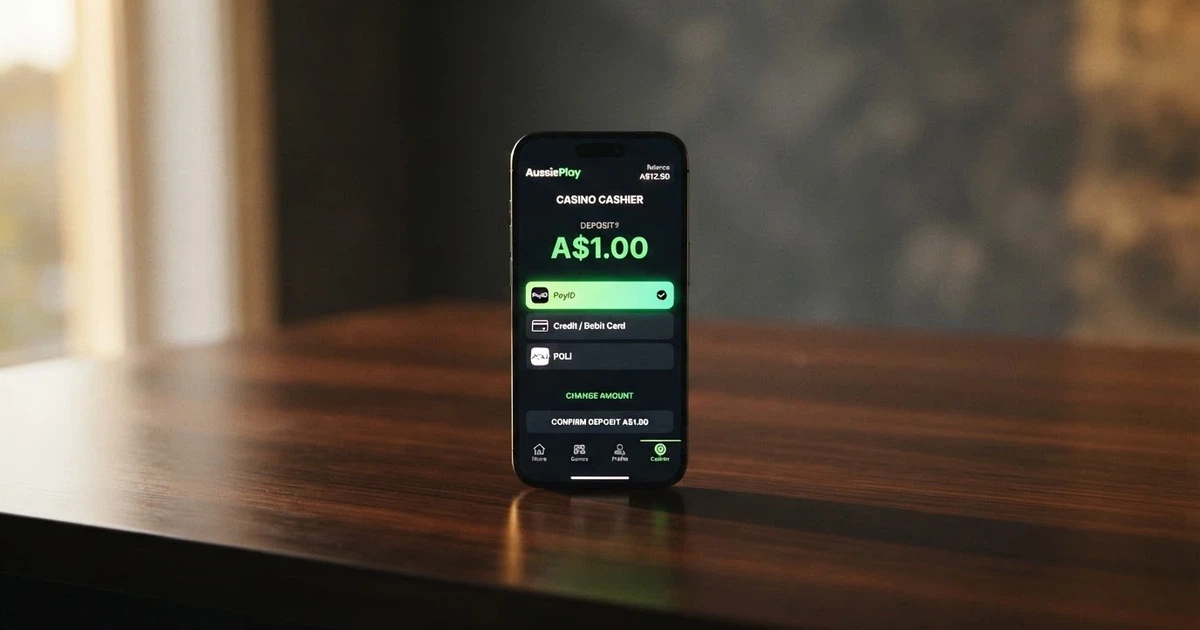
Australian online casinos have spent the last few years quietly rewriting their minimum deposit pages. The new headline is $1 — sometimes PayID, sometimes crypto, almost never the credit card your bank would actually let you use at that floor. The marketing copy promises a dollar buys a real session. The cashier page, once you reach it, often disagrees. This page is for Australian players who want the truth about where $1 actually works, what it buys when it does, and the regulatory reality every bonus page politely leaves out.
Current as of 18 October 2026. Operator licence claims verified against the Curaçao Gaming Control Board public register and the operators’ own published terms pages.
Table of Contents
- What a $1 Minimum Deposit Casino Actually Delivers in 2026
- Why Your $1 Deposit Only Works With PayID in 2026
- Best $1 Deposit Casinos for Australian Players: 2026 Ranking
- The Best Pokies You Can Play With a A$1 Deposit
- Playing $1 Deposit Casinos on Mobile in 2026
- New $1 Deposit Casinos: Fresh Faces Worth Knowing in 2026
- The Uncomfortable Truth: Are $1 Deposit Casinos Legal in Australia?
- Staying Safe: Responsible Gambling Tools That Actually Help
- How We Selected and Ranked These $1 Deposit Casinos
- What a $1 Deposit Actually Costs You — and Whether It’s Worth It
- Frequently Asked Questions About $1 Deposit Casinos in Australia
What a $1 Minimum Deposit Casino Actually Delivers in 2026
The phrase “$1 minimum deposit casino” appears across the search results for Australian-facing offshore operators with mechanical regularity. It signals two things at once: a marketing hook tuned to the lowest visible stake on a cashier page, and a practical reality that almost always shifts upward once the deposit button is hit. The split is worth naming before any ranking makes sense.
A genuine A$1 deposit in the Australian market in 2026 only works cleanly through one rail — PayID, the instant bank-to-bank transfer system Australian banks have built into nearly every banking app. Cards stop at A$5 to A$10, processor floors enforced by Visa and Mastercard themselves and tightened further by the major Australian banks now flagging gambling-coded international transactions regardless of amount. Cryptocurrency can clear a dollar in theory, but Bitcoin network fees of A$0.50 to A$3 routinely arrive before the deposit does, which means a single dollar sent in is sometimes forty cents by the time the casino credits your account.
What the marketing copy calls a “$1 deposit casino” is therefore, in practice, a PayID-friendly casino. There is no roster of operators proudly advertising $1 minimum deposit across every payment method in the Australian market, and that absence — not the dollar itself — is the first thing worth understanding about the category.
The Australian Spin: How Local Players Search for Micro Deposits
Australian players use a vocabulary that does not always translate. Pokies, not slots. PayID, not Interac or Trustly. A TAB bet at the pub, a multi on the weekend, a punt on the horses. When those same players search for a micro-deposit casino, they search in their own terms — “$1 deposit pokies”, “PayID casino Australia”, “real money pokies $1” — and the offshore operators chasing that traffic have shaped their marketing around those exact phrases.
The shape of the market follows from that. Most AU-facing offshore casinos advertise a minimum deposit somewhere between A$10 and A$20 for the headline payment methods, with a PayID or crypto line often sitting lower. A genuine A$1 floor across all methods would eat into the casino’s processing margin on a deposit that small, and almost none of them offer it. What they offer instead is a low minimum on a single rail, paired with a welcome bonus calibrated to make the dollar feel larger than it is.
That is why understanding the local terminology is the first step to reading these offers correctly. A “pokie” is a slot machine; a “free spin” is a free reel pull with the house’s money; “turnover” is the volume you must wager before a bonus pays out as cash. Every operator in this ranking speaks that language, and reading the small print requires speaking it back.
What Your Dollar Actually Unlocks: Real-Money Play at the Floor
A single dollar is a thin thing to build a session around, but it is not zero. At SpinFever, the lowest minimum on the cashier page, a A$1 PayID deposit unlocks 20 free spins on Big Bass Splash at A$0.10 each — a A$2 nominal play value credited to the bonus balance, subject to 35x wagering and a A$50 maximum cashout. The dollar therefore buys not a session but a single welcome offer, with the spins themselves acting as the casino’s introduction to a longer relationship.
What it does not buy is a withdrawal. Offshore casinos catering to Australian players typically set their minimum withdrawal floors between A$20 and A$50, far above any A$1 deposit, which means the dollar itself is rarely what a player walks away with. The welcome bonus — when it pays out — is what funds a withdrawal, and even then only after the wagering requirement is cleared. The arithmetic of getting a A$1 deposit back out as cash therefore starts with whatever the bonus wins, not with the dollar that bought the entry ticket.
That is the practical floor for this category. Anything more ambitious — a longer session, multiple bonus offers, a real chance of cashing out — runs into the standard A$10 deposit minimum that defines most offshore casinos once the introductory headline is past.
Why Your $1 Deposit Only Works With PayID in 2026
A deposit rail is not a marketing line. It is a piece of plumbing, and at A$1 the plumbing decides whether the casino accepts the money at all. Four factors push almost every Australian player toward PayID: the payment-method prohibition on credit cards and crypto at licensed wagering operators since 11 June 2024, the card processor floors enforced on Visa and Mastercard, the bank-level blocks Australian banks now apply to international gambling-coded transactions, and the network fees that eat small crypto deposits before they arrive. Each is worth its own paragraph.
PayID: The Only Rail That Carries a Single Dollar
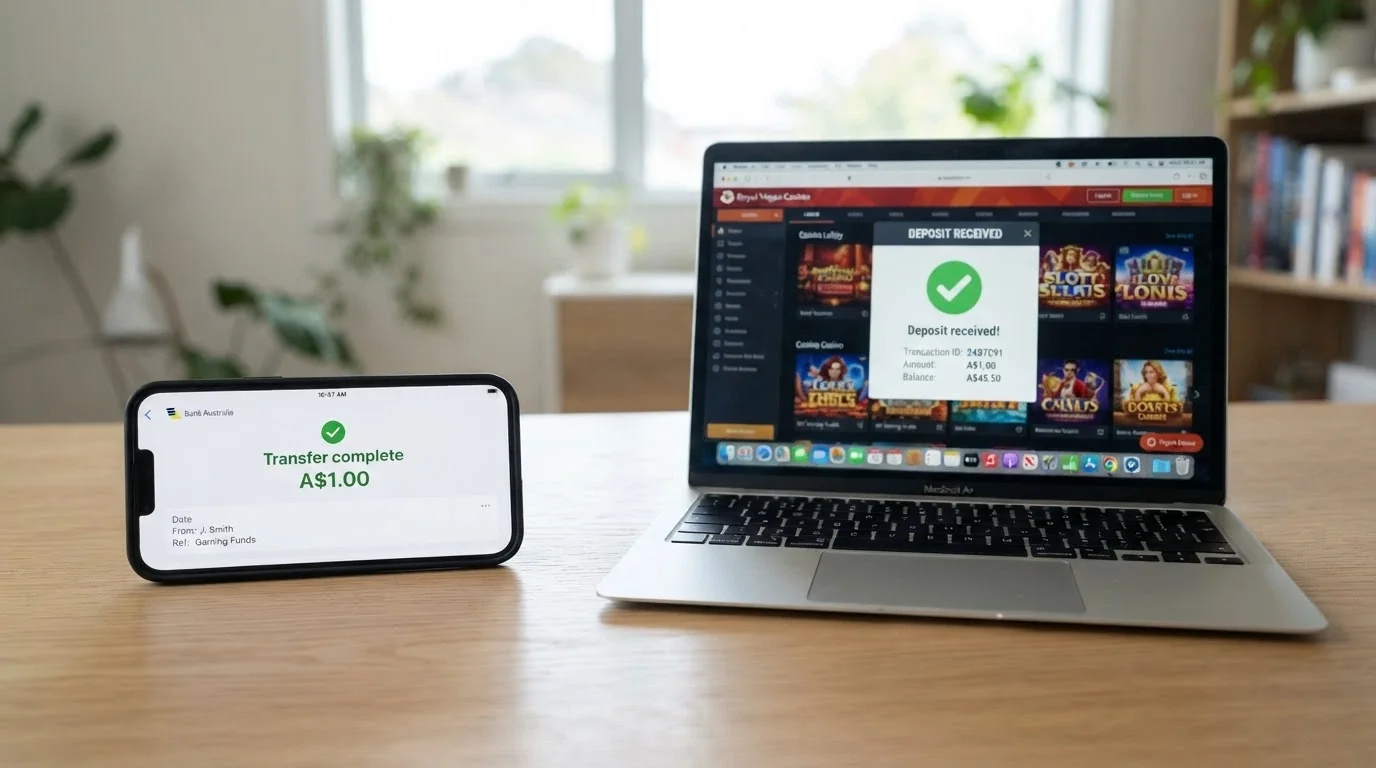
PayID is the only Australian-facing payment method that works cleanly at A$1 across the featured offshore casinos. The transfer clears in under thirty seconds from a standard banking app, the casino does not levy a surcharge on the dollar, and the technology is built into every major Australian bank — Commonwealth, ANZ, NAB, Westpac, plus the regional banks and the mutual sector. A punter who already has a banking app on their phone has the rail; nothing else needs to be set up.
The withdrawal side is where PayID also stands apart for small balances. Verified accounts on the featured operators see median payout times of 15 to 40 minutes on a small balance — fast enough that the casino’s standard A$20 to A$50 minimum withdrawal is the bottleneck, not the rail. Osko, the near-real-time payment layer PayID runs on, is what makes the speed possible.
The catch is that PayID at an offshore casino is, strictly, the Australian player using an Australian rail to send Australian dollars to an entity that is not licensed to take Australian bets. The rail works; the legal framework around where it lands does not — a point the section on legality takes up in detail.
Credit and Debit Cards: Why the Floor Sits at A$5–A$10
Card processors set their own floors, and they sit well above A$1. Visa and Mastercard typically enforce a A$5 to A$10 minimum on any gambling-coded transaction, regardless of what the casino’s cashier page claims. The major Australian banks have tightened further in the last two years, increasingly declining international gambling transactions at the source — meaning even when a casino would accept A$1 by card, the player’s own bank may decline the request before it leaves the app.
The economics explain why. A single-dollar card deposit costs the casino A$0.30 to A$0.50 in processing fees alone — a margin loss on a transaction that was always going to be small, before the bank fees even begin. Credit cards have been banned outright as a payment method for licensed online wagering in Australia since 11 June 2024 under the Interactive Gambling Amendment (Credit and Other Measures) Act 2023, with penalties of up to A$247,500 for any operator that processes one. That ban applies to licensed wagering providers — bookmakers, the TAB, the lotteries — and not, in practice, to the offshore casinos in this ranking. But the direction of travel is unmistakable, and an Australian player using a credit card at an offshore casino in 2026 is sending money through a rail the Australian regulator has already flagged.
The result for someone trying to deposit a dollar: cards do not reach the floor, and the banks do not always let the request through.
Crypto Deposits: Why Bitcoin Eats Your Dollar
Cryptocurrency is the second rail that sometimes clears a dollar. The economics are tighter than the marketing suggests. A Bitcoin transaction in 2026 typically costs A$0.50 to A$3 in network fees — and the fee is paid regardless of whether the deposit is one dollar or one thousand. Send A$1 in BTC and the fee alone is half the deposit or more, before any casino-side conversion spread. A A$1 BTC deposit can arrive as roughly A$0.40 in playable balance.
The alternatives work better. USDT on the TRC-20 network runs A$0.50 to A$1 per transaction, which still eats a dollar but at least leaves most of it. Litecoin is the practical choice for true micro deposits — fees under A$0.05 and confirmation times that clear within a few minutes. Tether on Tron sits around a dollar flat per transaction. The AUSTRAC Travel Rule, which triggers identity verification at A$10,000 and above, is not the barrier at this end of the market. The barrier is the fee, and the operator’s choice of network — neither of which the welcome bonus page names.
Bitcoin at A$1 is, more often than not, a donation to a miner.
Methods That Miss the Mark: Neosurf, BPAY and the Rest
Two methods an Australian player might naturally reach for do not work at A$1. Neosurf vouchers come in fixed denominations starting at A$10 — fine for a small deposit, useless for a dollar. BPAY is the AU domestic bill-payment system and is not integrated by offshore casinos, because BPAY requires an Australian biller code that only an Australian-licensed entity can hold. The e-wallets that do work — Skrill, Neteller and similar — typically enforce their own minimums in the A$10 to A$20 range.
The math of a A$1 deposit is therefore narrower than the cashier page suggests. In practice the choice is PayID, sometimes crypto on the cheaper rails, and not much else.
Best $1 Deposit Casinos for Australian Players: 2026 Ranking
Every operator below is offshore and unlicensed in Australia. The product they sell — online casino, online pokies — is prohibited under the Interactive Gambling Act 2001; no Australian licence for it exists, federally or in any state or territory. The ranking below weighs deposit accessibility at A$1, the shape of the welcome offer, the wagering terms, the game library and the licence transparency. It does not weigh local regulatory status, because none of these brands carry it.
What follows is a comparison table built from each operator’s published terms, then a write-up for each brand. The wagering terms, free-spin counts and cashout caps are what each operator’s own terms page or the most recently verified review aggregator publishes; gaps in the table reflect gaps in the data, not absence of a term.
| Operator | Licence | Welcome Bonus | Free Spins | Wagering Requirement |
|---|---|---|---|---|
| SpinFever | Curaçao | — | 20 FS on Big Bass Splash | 35x |
| KatsuBet | Curaçao | — | 30 FS on Sweet Bonanza / 50 FS on Scroll of Adventure | 40x / 50x |
| Fair Go Casino | Curaçao (Deckmedia) | 100% up to A$200 × 5 deposits | A$15 free chip, no deposit | 30x (D+B) / 60x |
| RocketPlay | Curaçao (Dama N.V.) | 300% up to A$2,000 / 100% up to A$200 | 100 FS / 50 FS (PayID) | 35–40x |
| SkyCrown | Curaçao (Hollycorn N.V.) | Up to A$4,000 across 5 deposits | 350 FS | 40x |
| WinSpirit | Curaçao | 200% welcome bonus | 25 FS | 40x |
| Royal Reels | Curaçao | 100% up to A$500 (min A$30) | A$10 no-deposit bonus | 30–40x |
| Bizzo Casino | Curaçao | — (max bonus A$100 reported) | — | 35x |
| Stake | Curaçao | — | — | — |
| Rainbet | Curaçao | 250% up to A$2,100 (3 deposits) | 60 FS | 40x |
SpinFever: 20 Free Spins for Your First Dollar
SpinFever is the most direct route to a micro-deposit experience in the featured set. PayID deposits clear from A$1 with no surcharge, the welcome offer is 20 free spins on Big Bass Splash at A$0.10 per spin, and the wagering requirement is 35x on winnings with a A$50 maximum cashout. There is no percentage match bonus layered on top — what appears at the cashier is what the bonus is.
The trade-off is the A$50 cashout ceiling. A player who runs hot on the 20 free spins can clear the wagering requirement on the bonus balance but cannot walk away with more than fifty dollars. That is a deliberate calibration for a micro-deposit product: the casino is offering entry, not a payout structure. For an Australian player who wants to test the cashier, the rails, and the lobby layout with one dollar and the casino’s own money, SpinFever is the most direct route on this page.
Verdict: the most straightforward A$1 entry in the ranking, and the one whose terms page most clearly tells the player what the dollar is buying.
KatsuBet: 30–50 Free Spins and a Higher Cashout Ceiling
KatsuBet runs two distinct A$1 offers, and which one to pick depends on what a player values more. The first is 30 free spins on Sweet Bonanza at A$0.20 per spin, giving a A$6 theoretical play value, with 40x wagering and a A$100 max cashout. The second is 50 free spins on Scroll of Adventure, a BGaming title running at 97.12% RTP and high volatility, with 50x wagering and the same A$100 ceiling. PayID, Neosurf and USDT all clear at A$1.
The Sweet Bonanza path is the larger nominal bonus with the friendlier wagering. The Scroll of Adventure path runs hotter on volatility — a session on those 50 free spins ends faster one way or the other. With a higher cashout ceiling than SpinFever and three A$1-capable rails, KatsuBet is the operator a player picks when they want the dollar to clear a real barrier, not just a doorway.
Verdict: two A$1 offers with a higher cashout ceiling than the entry-level operator, and a genuine choice between spin count and RTP.
Fair Go Casino: The A$15 No-Deposit Free Chip
Fair Go is the only featured operator with a genuine no-deposit welcome, in the form of a A$15 free chip — credited at sign-up, before any deposit is made, with 60x wagering and a A$180 maximum cashout. The match offer that sits underneath is a 100% bonus up to A$200 per deposit across five deposits (up to A$1,000 total), with 30x wagering on deposit and bonus combined and no maximum cashout — but the minimum deposit for that path is A$20, well above the A$1 floor.
The game library is RealTime Gaming only — a single-provider casino, which trades breadth for the kind of RTG-specific bonus structure the rest of the set does not carry. For an Australian punter who already knows and likes RTG pokies, that is a feature; for anyone browsing a multi-provider lobby, it reads narrow. The licence is Curaçao under the Deckmedia umbrella, a long-standing operator behind several AU-facing brands.
Verdict: the only way to play in this ranking without depositing a dollar at all — provided the 60x wagering on the free chip is acceptable, and RTG-only is acceptable.
RocketPlay: 300% Match and 3,000+ Games
RocketPlay runs two reported welcome structures. The first is a 300% match up to A$2,000 plus 100 free spins; the second, more common for PayID deposits, is a 100% match up to A$200 plus 50 free spins. Wagering sits at 35x to 40x on the bonus balance, depending on which structure a player claims. The game library is the standout in the ranking: 3,000+ titles from Pragmatic Play, Evolution, Yggdrasil and Hacksaw, on a Dama N.V. Curaçao licence.
What is thin is the spin value, the specific bonus slot and the maximum cashout — RocketPlay’s terms do not publish those with the same specificity as SpinFever or KatsuBet. A player who wants to know what their dollar is buying on the free spins will not find the answer in the welcome email; they will find it after the spins are credited.
Verdict: the highest match percentage in the featured set, the largest game library, and the place where the bonus terms do the most work to keep the player from comparing them in detail.
SkyCrown: The Biggest Welcome Package at A$4,000
SkyCrown’s headline is the largest total welcome value in the ranking: up to A$4,000 plus 350 free spins across five deposits, with 40x wagering. The operator sits on a Curaçao licence under Hollycorn N.V., with Evolution Gaming and Pragmatic Play Live powering the live-dealer side and 300+ games in the broader lobby.
What the A$4,000 headline conceals is the standard shape of all five-deposit welcome packages — only a small slice of the headline figure is actually claimable on a single deposit, and the 350 free spins arrive in tranches that depend on which deposit triggers them. The bonus size is real but spread across five decisions a player has to make, and any one of those decisions short-circuits the headline.
Verdict: the biggest advertised total in the ranking, and a useful reminder that headline welcome figures are an aggregate, not a single deposit’s value.
WinSpirit: 200% Bonus With Ongoing Cashback
WinSpirit pairs a 200% welcome bonus with 25 free spins, ongoing cashback, and 40x wagering on a Curaçao licence. The structure is straightforward — a percentage match, a small spin bundle, a wagering multiplier — but the addition of cashback is what distinguishes it in the ranking. Most of the featured operators stop at the welcome package; WinSpirit offers something back after the welcome is cleared.
The trade-off is that the welcome bonus size is modest in absolute terms, the free-spin bundle is small, and the cashback rate is not specified in the published terms. A player who values a recurring rebate over a single large welcome will find this more useful than the A$4,000 headline at SkyCrown; a player chasing maximum first-deposit value will not.
Verdict: the only featured operator pairing a percentage welcome with a recurring rebate — worth a look from players who think about the second deposit, not just the first.
Royal Reels: A$10 Free, No Deposit Needed
Royal Reels splits its welcome across two tiers. The first is an A$10 no-deposit bonus for new sign-ups, with 30–40x wagering. The second is a 100% match up to A$500 with a minimum deposit of A$30 — well above the A$1 floor, but standard for the deposit-tied path. The game library is 2,000+ titles from 30+ providers, including Pragmatic Play, Evolution, Yggdrasil and Hacksaw, on a Curaçao licence.
The A$10 no-deposit bonus is the bigger story at this brand, because it means a player can test the cashier, the lobby and the bonus terms without spending a dollar. The catch is the A$30 floor on the deposit match — a player who wants to claim the percentage bonus has to commit more than the rest of the featured set requires for the percentage path.
Verdict: a genuine no-deposit bonus paired with a higher minimum on the deposit-tied match — useful for browsing, less so for players chasing a percentage welcome.
Bizzo Casino: A$10 Minimum Deposit With 35x Wagering
Bizzo is the higher floor of the featured set. The minimum deposit is A$10, not A$1; the wagering is 35x; the maximum bonus is reportedly A$100. The licence is Curaçao.
The honest framing is that Bizzo is not a A$1 deposit casino in the literal sense. It is included here because A$10 is still among the lowest standard minimums at offshore casinos catering to Australians, and 35x is at the gentler end of the wagering range featured. For a player who can stretch to A$10 — and who does not want to chase free-spin offers — Bizzo sits as a baseline rather than a headline.
Verdict: not a dollar-floor casino, but a clean A$10 floor with reasonable wagering — the operator an Australian player ends up at when the welcome bonus page runs out of options.
Stake: Crypto-First Operator With Limited Bonus Visibility
Stake is the best-known crypto casino brand in this ranking and the one where the available data on its 2026 bonus offering is thinnest. The Curaçao licence is on file. The platform is crypto-native, with deposits and withdrawals settled on the same coin-in, coin-out flow that has defined the brand since launch. What is not confirmed in this research run is a specific welcome bonus structure, a free-spin bundle, or a wagering multiplier that applies to a A$1 deposit.
That absence is worth naming rather than papering over. A player who reaches Stake will find a credible crypto casino with strong brand recognition but no verifiable A$1 welcome offer. The bonus page either does not feature one in the Australian market or features one in a form this research did not surface.
Verdict: a credible crypto casino whose 2026 welcome offer could not be verified — a player looking for a $1 entry should look at the operators above first.
Rainbet: 250% Welcome Boost Across Three Deposits
Rainbet runs a 250% welcome package up to A$2,100 plus 60 free spins across three deposits, with 40x wagering on the Wager Lock path. Curaçao-licensed. The structure is more compressed than SkyCrown’s five-deposit spread, which means a larger slice of the headline figure arrives at the second deposit rather than the fourth.
The free-spin bundle of 60 across the three-deposit path sits below SkyCrown’s 350 and above WinSpirit’s 25 — a middle position that reflects Rainbet’s middle position on headline size. A player who wants a multi-deposit welcome without the five-step commitment will find Rainbet’s three-deposit shape more manageable.
Verdict: a 250% match across three deposits is the middle path between SpinFever’s single-bonus simplicity and SkyCrown’s five-deposit spread — denser than WinSpirit, lighter than SkyCrown.
The Best Pokies You Can Play With a A$1 Deposit
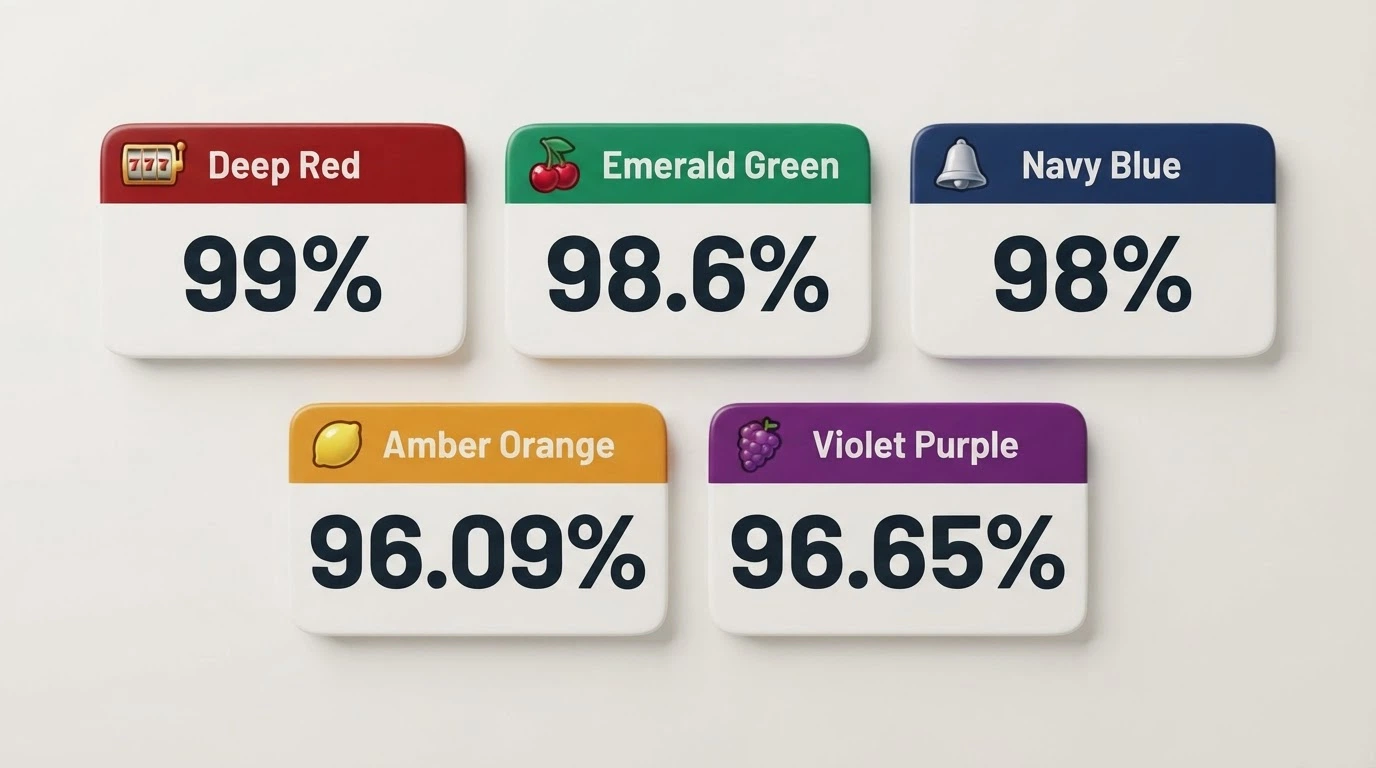
A$1 does not buy a session at standard stakes. It buys a single welcome offer in most cases, and the choice of pokie inside that welcome offer shapes what the dollar becomes. The pokies below are the ones research confirms are available at the featured casinos, ranked by RTP, with their volatility rated where the data exists. A higher RTP means a larger share of wagers is returned to players over the long term — and at A$1 stakes, that gap is the difference between a session and a single spin.
| Pokie Title | Provider | RTP | Volatility |
|---|---|---|---|
| Mega Joker | NetEnt | Up to 99% (supermeter) | High |
| 1429 Uncharted Seas | Thunderkick | 98.6% | — |
| Blood Suckers | NetEnt | 98% | — |
| Scroll of Adventure | BGaming | 97.12% | High |
| Starburst | NetEnt | 96.09% | Very low |
| Thunderstruck II | Microgaming | 96.65% | Medium |
| Fire and Roses Joker | Microgaming | 96.26% | Medium |
| Avalon: The Lost Kingdom | BGaming | 95% | Medium |
| Aloha King Elvis | BGaming | 94.92% | High |
RTP Explained: Why the Return Percentage Matters at A$1
Return-to-player is the long-run share of wagers a pokie returns to players. A 96% RTP pokie pays back A$96 of every A$100 wagered, averaged over millions of spins. The remaining A$4 is the house edge — the operator’s take, built into the math of the game. At standard stakes, where a player might wager thousands of dollars across a session, the difference between 94% and 99% RTP is small enough to disappear into the noise of variance.
At A$1 stakes, the same gap is everything. A player who wagers the entire A$2 SpinFever bonus value at 96% RTP can expect to see roughly A$1.92 returned over the long run; at 99%, A$1.98. The difference is six cents on the dollar in expected return — and at a one-dollar deposit, six cents is the difference between leaving with the bonus intact and leaving with the bonus already partially eaten by the house. Every percentage point of RTP matters more when the bankroll is small, and the highest-RTP titles in the table above sit several points above the typical 94–96% pokie floor.
High vs Low Volatility: Which Suits a One-Dollar Bankroll
Volatility is the shape of a pokie’s payout distribution, not its RTP. A low-volatility pokie returns small wins frequently — Starburst’s very low variance is the textbook case, paying out small line wins often enough that a A$1 bankroll stretches across more spins. A high-volatility pokie pays out less frequently, but the wins it does pay out are larger. Mega Joker in supermeter mode and Scroll of Adventure are both high-volatility; the 50 free spins at KatsuBet on Scroll of Adventure can clear their full bonus value on a single spin or end on spin four with nothing.
The practical question for a A$1 bankroll is whether the player wants more spins at smaller expected return or fewer spins at higher variance. A low-volatility pokie lets a player see most of what the bonus has to offer; a high-volatility pokie offers the chance at a payout that exceeds the bonus balance itself. Both are legitimate choices; they are not the same choice. Thunderstruck II and Fire and Roses Joker sit at medium volatility, the middle path between the two extremes.
The bankroll does not stretch further at lower volatility in the sense of expected return — the RTP is the same regardless — but in the sense of session length, which is what most players actually feel.
Provider Mix: Who Supplies the Pokies at $1 Deposit Casinos
The featured casinos are powered by a handful of studios. Pragmatic Play dominates the welcome-bonus side — Big Bass Splash at SpinFever, Sweet Bonanza at KatsuBet — because it produces high-energy pokies with strong name recognition and bonus mechanics tuned to short spin counts. NetEnt anchors the high-RTP niche: Mega Joker at up to 99% RTP, Blood Suckers at 98%, Starburst at 96.09%. BGaming sits between the two, with mid-90s to high-90s RTP titles and the high-volatility profile of Scroll of Adventure and Aloha King Elvis. Microgaming brings Thunderstruck II and Fire and Roses Joker, both medium-volatility titles. Thunderkick’s 1429 Uncharted Seas at 98.6% RTP is the outlier in the table — a single high-RTP title on a smaller studio’s catalogue.
The mix at any one casino depends on the operator’s integrations. Royal Reels and RocketPlay run the broadest libraries, with 2,000+ and 3,000+ titles respectively across 30+ providers; Fair Go runs RTG exclusively, a deliberate single-provider bet. For a player at a A$1 deposit, the provider mix matters less than the specific title the welcome bonus pins to, because that title is the only one the dollar buys time on.
Playing $1 Deposit Casinos on Mobile in 2026
No app store carries offshore casino apps. None of the operators in this ranking appear on the Australian App Store or Google Play, and the credit-card and crypto payment-method bans that apply to licensed Australian wagering since 11 June 2024 make the Apple and Google policies on real-money gambling apps a further constraint. The entire mobile experience at a A$1 deposit casino therefore runs through the mobile browser.

That turns out to work better than the absence suggests. The featured operators are built on HTML5 frameworks, the pokies from Pragmatic Play, NetEnt and BGaming are mobile-optimised at the studio level, and the cashier pages render cleanly on a phone screen. PayID deposits clear identically on mobile as on desktop — the transfer originates from the player’s banking app, not the casino’s site, which means the rail works the same regardless of what is on the screen. The main practical differences are screen size and orientation: pokies that fit comfortably on a desktop monitor feel slightly cramped in portrait mode, and the spin button on a high-volatility game like Mega Joker’s supermeter mode sits closer to other on-screen elements than a desktop player might prefer.
What the mobile experience does not change is the legal posture. A player on a phone is in the same regulatory position as a player on a laptop, and the section on harm-prevention resources below applies regardless of the device.
New $1 Deposit Casinos: Fresh Faces Worth Knowing in 2026
The economics of a A$1 deposit favour operators with existing payment infrastructure, established game-provider integrations and a player base large enough to absorb the per-transaction cost. That tilts the market toward established brands — SpinFever, KatsuBet, Fair Go — rather than freshly launched entrants. A genuinely new A$1 deposit casino is rare in 2026, not because the licence is hard to obtain under Curaçao’s framework, but because the unit economics on a dollar-scale deposit only work once the operator already has rails, games and players in place.
A new entrant that does try to compete at the A$1 floor typically offers a more aggressive welcome package — higher free-spin counts, larger match percentages — to compensate for the absence of brand trust. The criteria for evaluating a new casino are the same as for an established one: licence status (Curaçao is the standard, Malta is rarer), PayID or low-fee crypto on the cashier, transparent wagering terms, and a verifiable game library. The licence register on the Curaçao Gaming Control Board is the public source for any verification beyond the operator’s own imprint.
For Australian players in 2026, the practical answer is that the established brands in this ranking are where the A$1 welcome offers sit. New entrants that surface will need to clear the same bar — verified licence, working PayID, fair wagering — to deserve a position.
The Uncomfortable Truth: Are $1 Deposit Casinos Legal in Australia?
Online casino games, online pokies and in-play sports betting are prohibited interactive gambling services under the Interactive Gambling Act 2001. There is no licence for them anywhere in Australia — not federally, not in any state or territory, and not in the Northern Territory, which licences wagering providers but does not licence online casino. Every operator in this ranking is offshore. Every one of them is offering Australians a product that cannot be licensed for them to offer.
The prohibition is structural. It targets the provider, not the player — an individual Australian punter does not face prosecution for depositing at an offshore casino — but it strips the player of every protection an Australian licence would otherwise attach. There is no Australian consumer protection, no ACMA complaints recourse, no BetStop coverage, no state-based gambling regulator to appeal to, and no guarantee the operator will process a withdrawal. The Interactive Gambling Amendment Act 2017 closed the offshore loopholes that previously let some operators argue they were not technically providing a service to Australians; since then, the legal status has been unambiguous.
What ACMA Actually Does: Blocking, Investigating and Enforcing
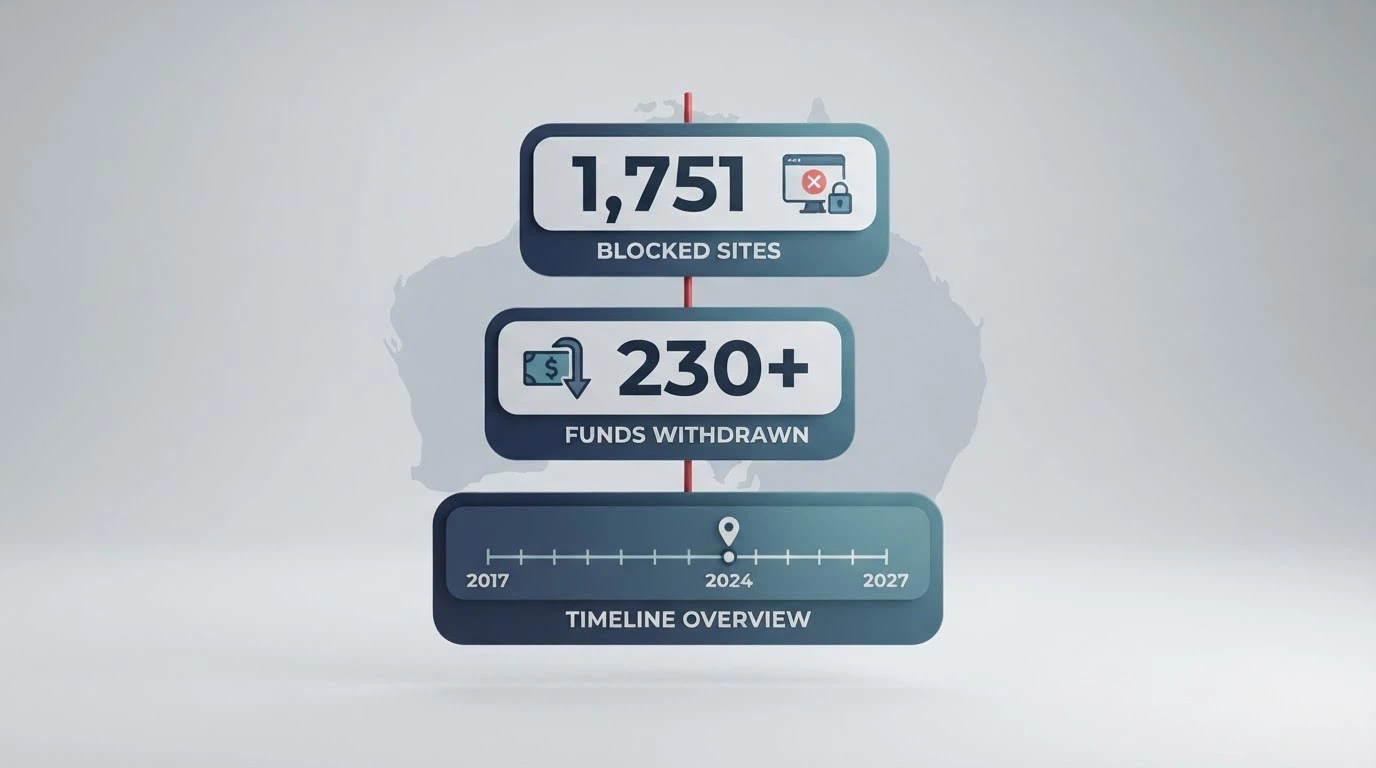
The Australian Communications and Media Authority is the regulator that enforces the online prohibition. Since November 2019, ACMA has had 1,751 illegal gambling and affiliate websites blocked by Australian ISPs; more than 230 illegal operators have withdrawn from the Australian market since enforcement was strengthened in 2017. The activity is not historical. In the first quarter of 2026 alone — January to March — ACMA reviewed 422 complaints, completed 25 investigations into 60 sites, found 44 IGA breaches and referred 109 websites for ISP blocking.
The 2026 reform layers new tools on top. The Interactive Gambling Amendment (Gambling Reform) Bill 2026 passed Parliament on 19 August 2026; its measures commence 1 January 2027. From that date, banks and payment providers gain express authority to block transactions to illegal gambling operators — a direct change to the payment rails described earlier in this guide. From the same date, TV wagering advertising is capped at three ads per hour between 5am and 8:30pm, banned entirely from 15 minutes before until 5 minutes after a live sporting event, and prohibited from featuring athletes, celebrities or influencers.
Those changes do not legalise online casino. They tighten the perimeter around it. An Australian punter using PayID at an offshore casino in 2026 is using a rail that will, in 2027, carry explicit statutory authority for the bank to decline the transfer. The legal position has not changed; the enforcement infrastructure around it has.
What the Player Risks: No AU Protections, No BetStop, No Recourse
The player-facing cost of the legal gap is concrete. There is no Australian consumer protection — if the offshore operator declines a withdrawal, delays it without justification or changes its terms after a deposit, there is no AU regulator to file a complaint with. There is no ACMA recourse, because ACMA enforces the prohibition against providers and does not mediate player disputes with them. BetStop, the National Self-Exclusion Register, covers approximately 150 licensed wagering providers and does not reach offshore casinos — a self-excluded player can still deposit at every brand in this ranking. And the site itself can be blocked at any time, with a balance sitting on it that the player may or may not be able to withdraw before the block lands.
That is the trade-off every Australian player at an offshore casino is making, knowingly or not. The marketing page lists welcome offers and free spins; the regulatory reality underneath is that the player has no institutional backstop if the relationship goes wrong. The harm-prevention section that follows is therefore not optional reading — it is the only Australian-controlled safety net that reaches a player at an offshore casino at all.
Staying Safe: Responsible Gambling Tools That Actually Help
Australian players have three responsible-gambling resources that work regardless of where they choose to play. The National Gambling Helpline is 1800 858 858 — free, confidential and staffed around the clock. Gambling Help Online provides free online chat and counselling on the same 24/7 basis. Both services are government-funded and operate independently of any casino operator.
The third tool is BetStop, the National Self-Exclusion Register, launched 21 August 2023. A single BetStop registration excludes a person from approximately 150 licensed wagering providers across Australia — the bookmakers, the TABs, the lotteries. The numbers, as of 31 March 2026: 59,830 registrations in total, 37,247 active exclusions. 78% of registrants are under 40; 38% chose lifetime exclusion. The coverage is broad for the licensed market and narrow for the offshore one — none of the casinos in this ranking is on the BetStop register.
The harm context behind those numbers is the largest in any country measured. Australians lost A$36.0 billion to gambling in the 12 months to March 2026 — an increase of A$1.3 billion on the prior year — and the average adult loss of A$1,635 per year is the highest per-capita figure anywhere. Approximately 2.1% of Australian adults — roughly 430,000 people — experience problem gambling at a clinical level; a broader model puts the figure at 1.97 million adults at-risk or already problem gamblers. Aboriginal and Torres Strait Islander Australians face a 27.1% at-risk rate, compared to 14.6% for non-Indigenous Australians. These are the population-level numbers behind the cashier page.
BetStop’s Offshore Blind Spot: Why Self-Exclusion Stops at the Border
Five million Australians wager regularly. An estimated 400,000 of them are high-risk. Just 30,000 currently have active exclusions through BetStop. That gap is the most quoted statistic in Australian gambling-harm research, and it sits squarely on the offshore blind spot.
A player who registers with BetStop is excluded from every licensed wagering provider in Australia. They cannot place a bet with SportsBet, Ladbrokes, the TAB, Bet365’s Australian operation, or any of the licensed bookmakers. What BetStop cannot do is exclude them from KatsuBet, SpinFever, Fair Go or any of the offshore operators in this ranking, because none of those operators is on the BetStop register. The 2026 reform strengthens BetStop’s coverage within the licensed market — tighter inducement rules, an opt-out register for wagering advertising — but does not extend the exclusion register across borders.
The practical consequence: a self-excluded player with a gambling problem has a fully working exclusion at every AU-licensed brand and zero exclusion at every brand in this ranking. BetStop is the right tool for the licensed market. It is not a tool for the offshore market, and that gap is the reason the helpline numbers above are worth calling before the cashier page is.
How We Selected and Ranked These $1 Deposit Casinos
The operators in this ranking are drawn from research covering the Australian-facing offshore casino market in 2026. Each was checked against the Australian Communications and Media Authority’s register of licensed services — confirming, in every case, that no Australian licence exists for online casino and that no operator in the ranking holds one. Each licence claim was verified against the relevant regulator’s public register where one exists, primarily the Curaçao Gaming Control Board.

Ranking weight was given to six criteria: deposit accessibility at A$1 (PayID support, no surcharge, minimum floor), welcome bonus shape (free-spin count, wagering multiplier, maximum cashout), game library breadth (provider mix and title count), licence transparency (verifiable imprint, named operator entity), bonus terms clarity (whether the small print is published and legible), and breadth of responsible-gambling tools (deposit limits, self-exclusion, reality checks). No operator in the ranking holds an Australian licence; the ranking is built on what an Australian player actually reaches, not on local regulatory status.
Sources consulted include the ACMA register of licensed services, each operator’s own terms and conditions page, and independent casino review aggregators. Where an operator’s bonus data could not be verified during this run — Stake is the clearest case — the gap is named in the write-up rather than papered over with an estimate.
What a $1 Deposit Actually Costs You — and Whether It’s Worth It
This section is the calculation the marketing page never publishes.
Take SpinFever as the clean worked example, because it is the operator where every input is verifiable. The welcome offer is 20 free spins on Big Bass Splash at A$0.10 per spin — a A$2 bonus value. The wagering requirement is 35x on the bonus balance, which means A$2 multiplied by 35 gives A$70 of required turnover before any winnings become withdrawable. At a stake of A$0.10 per spin, that turnover works out to 700 spins. At a five-second interval per spin, those 700 spins take roughly 58 minutes of uninterrupted play.
That is the dollar’s actual cost: about an hour of play funded by the house, with a ceiling of A$50 if the wagering clears. The marketing calls it a “$1 deposit casino.” The arithmetic calls it an hour of low-stake pokie play the casino has paid for. Neither framing is wrong. They describe the same product from different sides of the cashier.
The honest answer to whether a $1 deposit is worth it depends on what the player is buying. For someone who wants to test an offshore casino’s cashier, PayID rail and lobby at the lowest possible cost, with the house’s money funding the test, the offer is well-structured — SpinFever’s terms are the clearest in the ranking. For someone looking for a path to a meaningful withdrawal, the A$50 cashout cap and the 35x wagering tell them clearly that the path stops at fifty dollars. For someone who should not be depositing at an offshore casino at all, the responsible-gambling section above is the right next read.
Frequently Asked Questions About $1 Deposit Casinos in Australia
Five questions cover most of what an Australian player asks before clicking the cashier button at an offshore casino. The answers below reflect the verified data in this guide, not the marketing claims on the bonus page.
Is a one-dollar casino deposit really enough to play?
In real terms, no. A$1 buys entry to the welcome offer — typically 20 to 50 free spins on a single pokie, credited to a bonus balance with wagering attached — not a session. At minimum stakes, the dollar itself rarely produces a withdrawal; the bonus winnings do, and only after the wagering requirement is cleared. The marketing phrase is literal: the deposit is $1. The play it funds is the casino’s introduction, not the player’s bankroll.
Do micro-deposit casinos offer welcome bonuses and free spins?
Yes, every operator in this ranking pairs its A$1 (or near-A$1) floor with a welcome offer — free spins on a named pokie, a percentage match bonus, or a small no-deposit chip. The bonuses are real, but the wagering requirements on them (35x to 60x) and the maximum cashout caps (A$50 to A$200) define what the bonus actually pays. Read both numbers before claiming.
What is the minimum amount I can withdraw from a $1 deposit casino?
Most offshore casinos catering to Australian players set their minimum withdrawal between A$20 and A$50, far above the A$1 deposit. The withdrawal is funded by the bonus winnings, not the deposit itself, and is only available after the wagering requirement is cleared. A player who deposits A$1 and wins A$30 from the bonus cannot withdraw the A$30 until the wagering is met — and some operators will not process a withdrawal under A$100 even then.
How do wagering requirements work on a $1 deposit bonus?
A wagering requirement is the multiple of the bonus balance a player must wager before winnings become withdrawable. A 35x requirement on a A$2 bonus means A$70 of total wagers before cashout. At A$0.10 per spin, that is 700 spins, roughly an hour of play. The requirement applies to the bonus balance, not the deposit; a player who deposits A$1 and wins A$5 on free spins wagers A$5 multiplied by 35 — A$175 — not the A$70 the dollar alone would suggest.
Is it safe to play at offshore casinos that accept Australian players?
“Safe” is doing a lot of work in that question. Offshore casinos accepting Australian players are operating outside the Australian regulatory framework — online casino is prohibited under the Interactive Gambling Act 2001, and no Australian licence exists. Players at these casinos have no Australian consumer protection, no ACMA complaints recourse, no BetStop coverage, and no guarantee the operator will process a withdrawal. The licensing authority is typically Curaçao, which provides less recourse than a Malta or UK licence. Players who choose to play accept those gaps; the responsible-gambling resources earlier in this guide are the Australian-controlled safety net.
Created by the ”Welcome Bonus Casinos AU” editorial team.