
What Actually Happens Between Tapping Withdraw and Seeing the Money in 2026
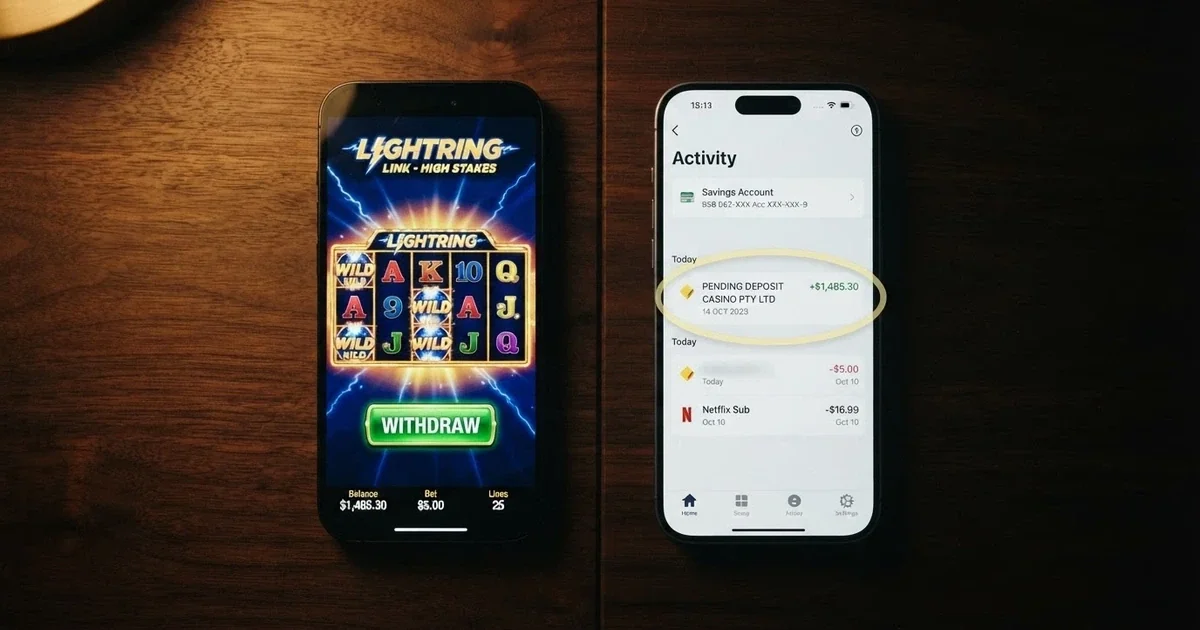
Online pokies with instant withdrawals are a clear pitch: play, win, tap withdraw, see the money. The product, in Australia, sits outside the licensed market. For a player sitting at a phone in Sydney or Perth, the gap between that pitch and what actually happens in the bank account is the whole subject of this page. The Interactive Gambling Act 2001 prohibits online casinos and online pokies as interactive gambling services, and the operators reaching Australian traffic in 2026 are offshore-facing brands rather than locally licensed ones. That offshore status shapes everything: which payment rails work, which bodies will listen if a payout goes wrong, and how fast a withdrawal can really land.
Data current as of 22 November 2026; checked against the ACMA operator register and the Interactive Gambling Act 2001.
Table of Contents
- The Pokies Cashout Reality Australian Players Actually Face in 2026
- Withdrawal Speed, Method by Method — What “Instant” Really Delivers
- The 10 Most-Tracked Pokies Sites Australian Players Use — and What We Know About Their Payouts
- The Legal Reality No Pokies Site Puts on Its Homepage
- When Fast Cashouts Meet Responsible Play — The Tension No-One Talks About
- How We Evaluated and Ranked These Operators
- What This Means for Your Next Pokies Session
- Frequently Asked Questions
The Pokies Cashout Reality Australian Players Actually Face in 2026
Every Australian-facing pokies site markets itself on cashout speed. PayID payout, same-day withdrawal, instant cashout — these phrases sit in headlines, hero banners and welcome pages across the niche. What they actually deliver depends on a layered process that runs from the moment the player taps withdraw to the moment funds clear into a bank account, and most of the friction in that chain sits with the operator, not the payment rail. Australian players comparing sites in 2026 are comparing two different clocks: the operator’s approval queue, and the banking rail’s settlement time.
What “Fast Withdrawal” Actually Means for Australian Pokies Players
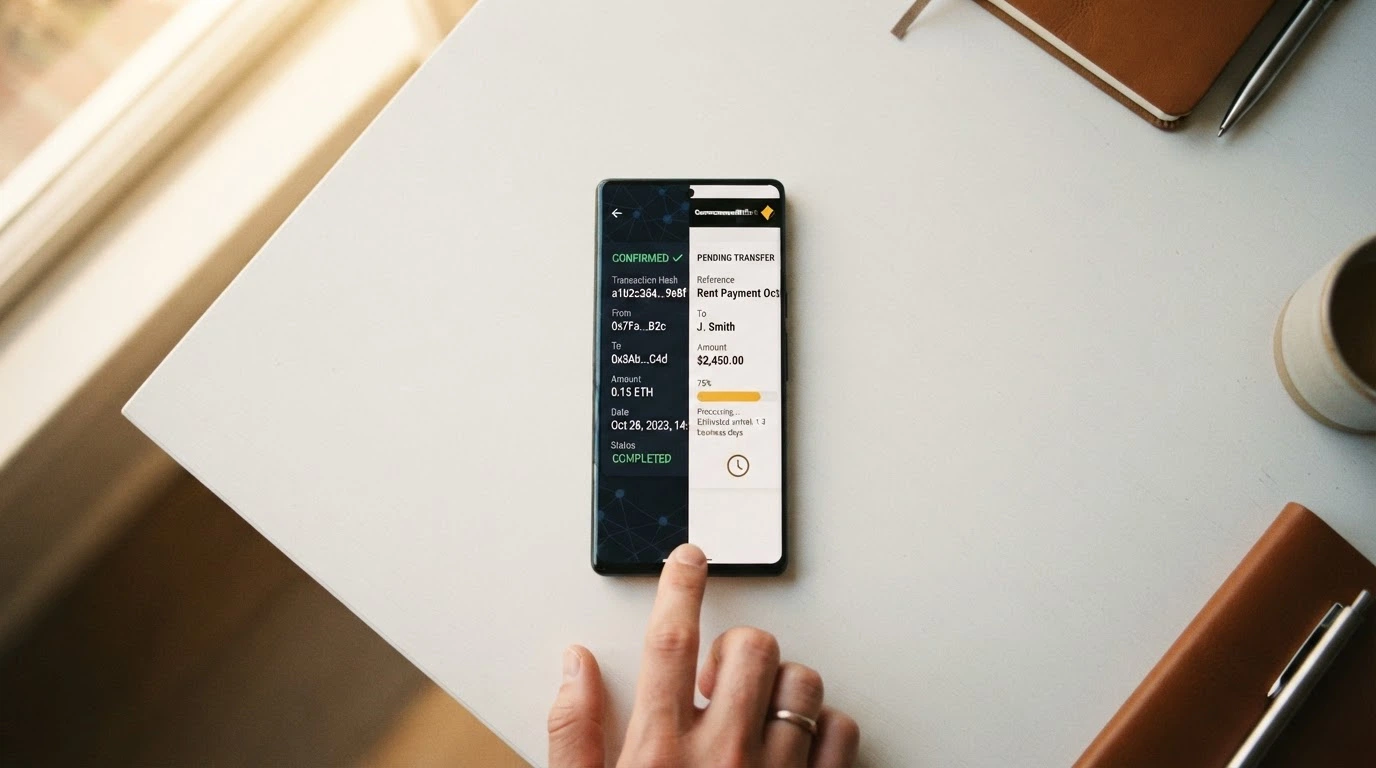
Fast withdrawal is two separate clocks, and almost every advertised time refers to one of them, not both. The first clock is the operator’s approval queue: how long between a player requesting a cashout and the operator releasing the funds. The second is the payment rail’s settlement window: how long between the operator releasing the funds and the player’s bank account, wallet or crypto address receiving them. The first is operator-controlled and varies. The second is rail-controlled and varies less.
The phrase “instant withdrawal” almost always refers to the rail, not the operator. PayID and Osko on the New Payments Platform can settle in seconds between participating Australian banks. Crypto networks can confirm a transaction in minutes. Bank transfers measured in business days sit at the other end of the scale. None of these rails tell you how long the operator holds the withdrawal before pushing it onto the rail — and that holding period is where the player actually feels the speed.
The AU market has no regulatory standard for payout speed, because the product is prohibited under the Interactive Gambling Act 2001. No ACMA-enforced clock applies to offshore pokies sites. Whatever window an operator promises is the operator’s own policy, policed by the operator’s own terms page and enforced only by what the player is willing to lose by walking away.
How Australian-Facing Pokies Sites Process a Cashout
Every withdrawal on every AU-facing pokies site follows a four-stage pipeline, and the middle two stages are the ones that vary.
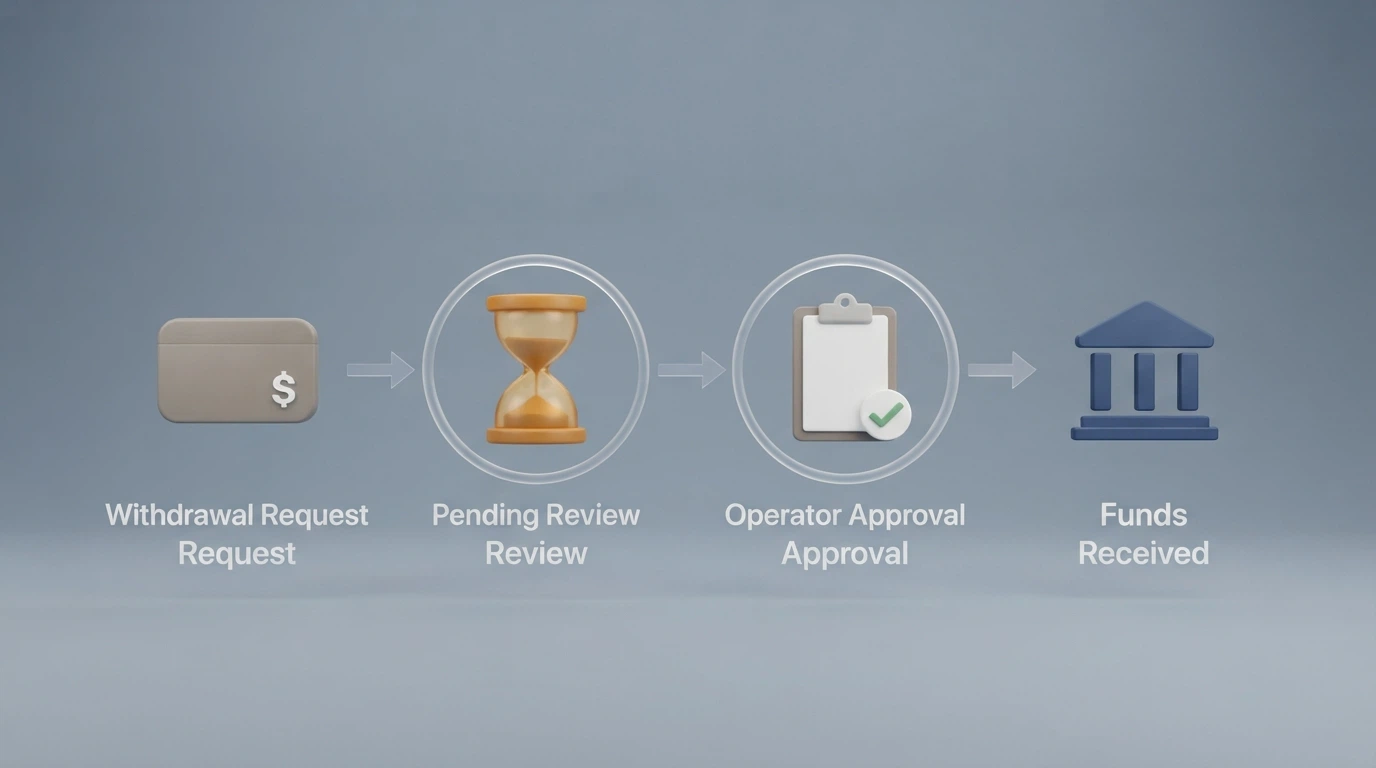
Stage one is request. The player submits a withdrawal, typically from the cashier section of an account, naming an amount and a destination — a bank account via PayID or BSB, a crypto address, or in some cases an e-wallet. The site logs the request and the operator’s cashier system begins processing it.
Stage two is KYC check, and this is the gate that catches first-time withdrawals. Know Your Customer verification is a regulatory and anti-money-laundering obligation most operators carry under their own offshore licence, and it triggers when a player requests a withdrawal for the first time, when cumulative withdrawals cross a threshold, or when the operator’s risk system flags a profile. The check typically requests photo ID — a driver licence or passport — plus proof of address — a utility bill or bank statement — and sometimes a payment-method ownership check. No payment rail can skip a document check the operator has not yet run, and the operator’s processing of that check is the gate no rail can bypass.
Stage three is operator approval. Once KYC clears, the request enters the operator’s payout queue. Some operators run approval automatically, others manually, and the window can range from minutes to days depending on the operator’s policy, the size of the withdrawal, and whether the account carries an active bonus with unfinished wagering.
Stage four is payment rail settlement. The operator pushes the approved funds onto the rail — PayID, Osko, crypto network, or bank transfer — and the rail takes over. This is the stage where PayID can settle in seconds, crypto can confirm in minutes, and bank transfer can take one to three business days.
The friction a player feels is concentrated in stages two and three. The rail does not help once the operator has not yet released the money.
The State of the AU Online Pokies Market Right Now
The Australian online pokies market in 2026 is offshore by structure, not by accident. The Interactive Gambling Act 2001 prohibits online casinos and online pokies as interactive gambling services, and that prohibition has been in place since 2001 and strengthened by amendments in 2017. The Australian Communications and Media Authority, ACMA, is the federal regulator charged with enforcing the prohibition on the provider side.
What this means in practice is that there is no Australian-licensed online pokies category. Wagering on racing and sport placed before the event begins, lotteries and keno — those are permitted interactive gambling categories. Online pokies, online casino games, in-play sports betting — those are prohibited. Every site reaching Australian players with pokies content is doing so from outside the licensed system.
The shape of the offshore market reaching Australia is documented in regulatory outcomes. As at March 2026, the ACMA has had 1,564 illegal gambling and affiliate websites blocked by Australian ISPs since the first blocking request in November 2019. More than 225 illegal services have withdrawn from the Australian market since enforcement was strengthened in 2017. These figures do not tell you how many offshore pokies sites currently reach Australian traffic; they tell you how many have been pushed back.
A reform package announced on 2 April 2026 reshapes the regulatory perimeter from 1 January 2027. The Interactive Gambling Amendment (Stop the Gambling Ads) Bill 2026 passed the House on 18 August 2026 and the Senate on 19 August 2026. From 1 January 2027, banks and payment providers gain express authority to block transactions to illegal gambling operators, and the ACMA gains faster blocking powers. The intended effect is to narrow the practical reach of offshore pokies sites serving Australian players, regardless of where the operator is incorporated. The window between now and then is the period in which this page’s research sits.
Withdrawal Speed, Method by Method — What “Instant” Really Delivers
The method a player chooses sets the rail’s ceiling. The operator’s queue sits on top of that ceiling. Understanding the difference is what separates an “instant withdrawal pokies” headline from the time a deposit actually clears into a bank account.
| Method | Speed Tier | What Slows It Down |
|---|---|---|
| PayID / Osko | Seconds on the rail; same-day at the bank with a fast operator | Operator’s KYC gate, approval queue, and bonus-wagering check |
| Crypto (BTC, USDT) | Minutes on-chain; hours to days end-to-end to AUD | Exchange off-ramp, spread, AU bank on-ramp step |
| Bank transfer | One to three business days | Inter-bank batch windows, business-day-only settlement |
| BPAY | One to two business days | BPAY batch window, business-day-only settlement |
PayID and Osko — The Speed Australia Actually Gets
PayID and Osko are the headline rail on every AU-facing pokies site. PayID is a New Payments Platform addressing layer that lets a sender route a payment to a recipient using a phone number, email or ABN rather than a BSB and account number. Osko is the NPP real-time settlement service that moves the funds between participating banks. Together, they are the closest thing Australia has to a domestic instant-payment rail.

A PayID deposit to a pokies site settles in seconds. The same rail can settle a withdrawal back to a player’s bank account just as quickly, once the operator releases the funds. The gap is the operator. An AU-facing site that processes payouts within minutes can deliver a PayID withdrawal into a bank account in a window the player measures in seconds. An AU-facing site that holds withdrawals in a pending state for 24 hours while it runs its own KYC and approval flow delivers the same PayID withdrawal in roughly 24 hours plus rail time.
The structural detail that matters: PayID and Osko settle seven days a week, including weekends and public holidays. Bank transfers do not. A player who requests a withdrawal on a Friday afternoon via bank transfer waits until the next business day, sometimes Monday, sometimes later if the next day is a public holiday. A PayID or Osko withdrawal requested at the same time settles before the player has put the phone down.
No AU-facing pokies site publishes a guaranteed PayID receipt window in minutes, because the window is operator-controlled and operators do not publish it. What is structurally true is that the rail can be near-instant; what is operator-controlled is whether the player ever sees that rail without a delay.
Bank Transfer — The Slow Lane That Still Ships
Bank transfer is the fallback method on most AU-facing pokies sites and the one that always works. Direct credit via BSB and account number does not depend on a wallet, an exchange, or a real-time rail — it depends on the Australian banking system’s batch settlement windows and the receiving bank’s own processing.
A bank transfer withdrawal from an offshore pokies site typically takes one to three business days after the operator releases the funds. Some operators clear faster; some clear slower. The structural floor is the inter-bank transfer window; the structural ceiling is whatever queue the operator runs.
For a player who does not hold a crypto wallet, who does not use PayID, or who is withdrawing a sum large enough to make the rail choice almost irrelevant, bank transfer is the dependable option. It is not the fastest option. It is the one that arrives.
The exact receipt window for a particular operator’s bank transfer lives on that operator’s terms page, and a player should read it before requesting the cashout.
Same-Day vs Instant — The Realistic Payout Benchmark
Same-day and instant are not the same word. Same-day is a realistic benchmark — it requires operator approval within hours and a fast rail. Instant is a marketing word — it describes the rail, not the whole pipeline, and it almost never applies to the first withdrawal a player requests.
The realistic same-day benchmark for an AU-facing pokies site looks like this: KYC cleared from a prior deposit, operator approval within four to six hours of the request, and a PayID or Osko payout rail that settles on release. A player who has been verified, plays through an active bonus, requests a withdrawal before lunchtime and has PayID set up can see the money the same day. A player who hits the bonus wagering requirement at 11pm, requests at 11:01pm, and the operator’s approval queue does not process until the next morning, sees the money the next day. Same rail. Different queue.
Instant is the word that marketing uses, and it is the word readers should be most skeptical of. A withdrawal that sits pending for 24 hours while the operator runs its checks is not instant. A withdrawal that clears in 30 seconds after the operator releases it is. The same rail can produce both outcomes on the same site. The variable is the operator, and that variable is the one the marketing copy skips.
Why Your First Withdrawal Takes Longer Than Every One After
The first withdrawal a player requests from an AU-facing pokies site is a KYC gate, not a speed test. No payment rail can skip it.
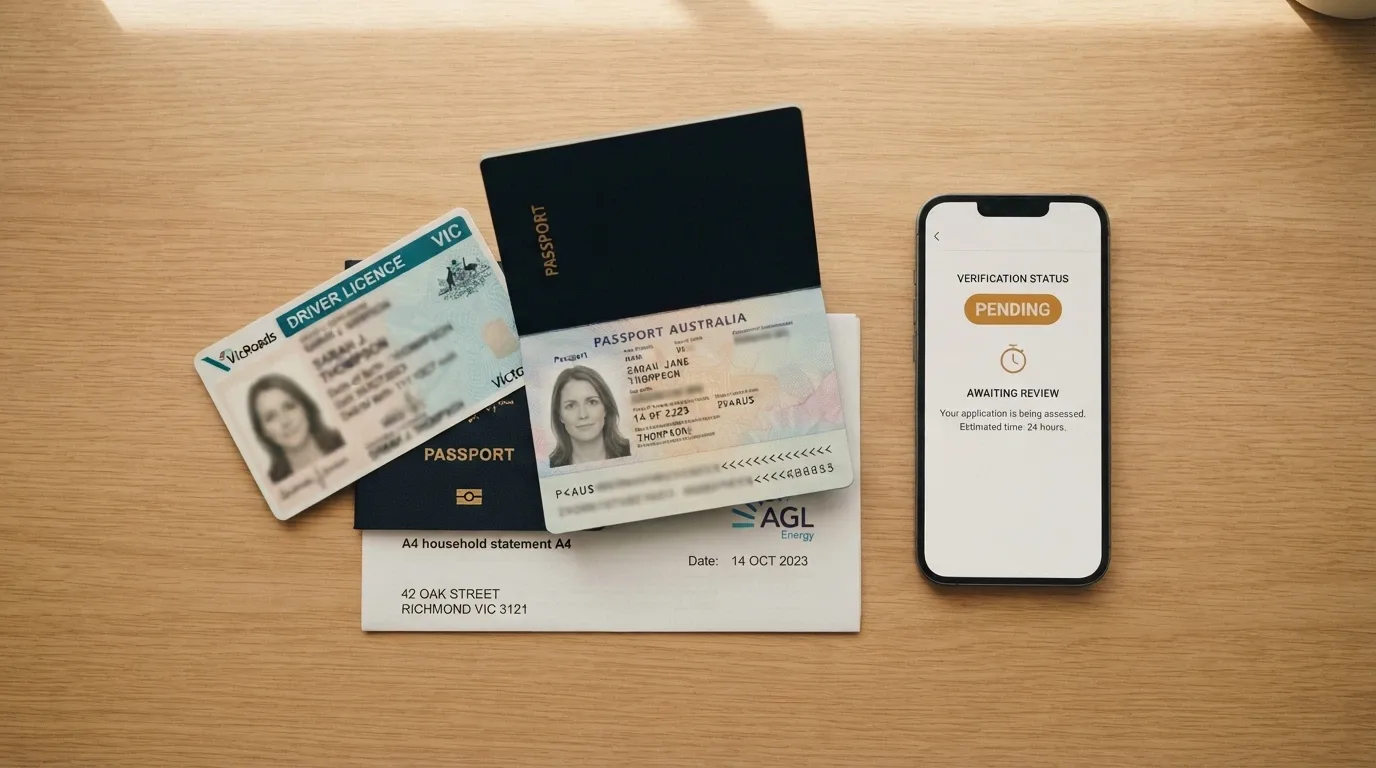
Know Your Customer verification is an obligation most operators carry under their own offshore licence. The check typically triggers on the first withdrawal, on cumulative withdrawals crossing a threshold, or when the operator’s risk system flags the account. The standard document set is a government-issued photo ID — a driver licence or passport — plus a proof of address dated within the last three months — a utility bill, a bank statement, or a rates notice — and sometimes a payment-method ownership check, like a photo of the card used to deposit with the last four digits visible.
The structural truth: an account that has not been verified cannot withdraw through any rail. A player who deposits, plays, wins, requests a withdrawal and has never uploaded documents will see the request sit pending until the operator’s verification team reviews what they have sent — and if the player has not sent anything, until the player sends it. Once verified, the account’s subsequent withdrawals clear the KYC stage and proceed to operator approval without that gate.
No instant-withdrawal marketing survives the first cashout, because the first cashout is a KYC check the operator has not yet run, and no rail moves faster than a document review.
Withdrawal Limits, Thresholds and the Fine Print That Caps Your Cashout
Speed means little if the ceiling stops a player taking the money out in one go. The limits buried in an offshore pokies site’s withdrawal terms do more work than the payment rail, and they are the part of the offer the marketing skips.
Common structures across offshore pokies sites include per-transaction caps — the maximum a single withdrawal request can take — per-day and per-week caps — the maximum a player can withdraw in a defined window — and minimum withdrawal thresholds — the smallest amount the cashier will process. Bonus wagering requirements can interact with all three: some operators will not pay out the bonus balance until wagering is complete, and some will not pay out the deposit-and-bonus balance above a multiplier cap until an additional play-through is run.
The reader who plans to take the full balance out in one request needs to check the operator’s per-transaction and per-period caps before requesting — those caps are the part of the offer the marketing skips, and a withdrawal split into multiple requests is not the same shape as a single approved cashout.
The 10 Most-Tracked Pokies Sites Australian Players Use — and What We Know About Their Payouts
The ranking below is built from tracked AU market-share data — the share of Australian-facing online casino traffic each operator captures as recorded by external monitoring. Per-operator withdrawal speeds, bonus terms, and licence details are not part of the ranking, because none of the ten featured brands publishes those figures in a form the verification sources this page drew on could confirm. The ranking is what the available data supports, and the limits of that data are stated openly rather than papered over.

| Operator | AU Tracked Market Share | Geo-Legal Status |
|---|---|---|
| Rocket Play | 9.40% | Offshore — product prohibited in AU |
| Skycrown | 8.55% | Offshore — product prohibited in AU |
| Royal Reels | 2.51% | Offshore — product prohibited in AU |
| WinSpirit | 1.55% | Offshore — product prohibited in AU |
| Rainbet | 1.28% | Offshore — product prohibited in AU |
| Stake | 1.28% | Offshore — product prohibited in AU |
| Scream Casino | 0.99% | Offshore — product prohibited in AU |
| FairGO | 0.80% | Offshore — product prohibited in AU |
| Bizzo Casino | 0.57% | Offshore — product prohibited in AU |
| Rocket Casino | 0.57% | Offshore — product prohibited in AU |
Two things stand out from the ranking. The first is concentration at the top: Rocket Play and Skycrown together account for the majority of tracked AU market share among the ten, and the remaining eight split a much smaller share among themselves. The second is the legal status column — every operator on the list is offshore and providing this product in Australia is prohibited. There is no Australian-licensed pokies category to rank from.
What the ranking does not carry is per-operator withdrawal time, bonus terms, game provider mix, licence number, or KYC timeline. None of the featured brands publishes these figures in a form a reader can verify, and the operator write-ups that follow route what is known — market position and geo-legal status — without inventing what is not.
Rocket Play
Rocket Play sits at the top of the tracked AU market share among the ten featured operators, commanding 9.40% of recorded Australian-facing online casino traffic. That share is not a quality signal — it is a reach signal — and it tells a reader that more Australian players are reaching Rocket Play’s cashier than any other operator in the set. It does not tell a reader how fast those players get paid, what bonus terms they accept, or which licence governs the operation.
The geo-legal status is the structural fact: offshore, with the consequences for an Australian player spelled out in the section on the legal reality. The operator’s market position does not change its legal position, and the licence status that the verification sources could not confirm is also unchanged.
The verdict for an Australian player weighing reach against the data gap: Rocket Play is the AU-traffic leader of the featured set, and reach is not regulation. Choosing the leader of an offshore field is still choosing offshore.
Skycrown
Skycrown sits second in the tracked AU market share at 8.55%, a close competitor to Rocket Play and a long way ahead of the third-ranked operator in the set. The gap between Skycrown and Royal Reels — 8.55% versus 2.51% — is the cleanest break in the ranking and signals that the AU-traffic market in the featured set has a two-brand leader and a long tail behind it.
The geo-legal status is the same as every other operator in the set, with the section on the legal reality covering what offshore means in practice. The operator’s market position does not grant it any local recognition under the Interactive Gambling Act 2001.
For a reader comparing operators on reach alone, Skycrown is the credible alternative to Rocket Play — close in share, identical in legal status, equally undifferentiated on the dimensions the verification sources could not confirm.
Royal Reels
Royal Reels takes the third slot in the tracked AU market share at 2.51%, a clear gap behind Skycrown and a clear lead ahead of the rest of the field. The mid-field position means Royal Reels reaches a smaller pool of Australian players than the two leaders, but more than the rest of the set.
The operator’s brand presence in AU-facing search is the practical implication. Royal Reels is a name Australian pokies players encounter, but it is not the name they encounter most. The operator’s status is offshore, meaning it falls under the prohibition explained in the section on the legal reality.
What Royal Reels offers that the top two do not: a smaller operator on which an Australian player is unlikely to find a thick body of public-record player experience. Reach drops, the regulatory baseline does not.
WinSpirit
WinSpirit takes 1.55% tracked AU market share, placing it just behind Royal Reels and ahead of Rainbet and Stake in the ranking. The mid-field position signals a smaller AU-facing reach than the top three but a stable presence in the set.
The geo-legal status is the same as every other operator in the ranking, with the section on the legal reality spelling out what offshore means under the IGA.
For a reader cross-checking the long tail of the ranking, WinSpirit sits where Royal Reels sits — mid-to-lower-field on traffic, identical legal status, identical absence of confirmed per-operator data on payout, bonus, and licence. The two are interchangeable on the dimensions this page ranks.
Rainbet
Rainbet is a hybrid betting-plus-casino platform, tracked at 1.28% AU market share, tied with Stake in the ranking. The hybrid model is the relevant detail: Rainbet serves both sports-betting and casino-style content, and the audience that reaches it is not solely a pokies audience. The implication for withdrawal behaviour is structural — the operator’s cashier must support both rails — and the practical question for a pokies player is whether the cashier treats casino withdrawals as a first-class flow or as a secondary one to betting settlements.
The geo-legal status is the offshore status recorded in the ranking; the section on the legal reality covers what that means under the IGA.
For an Australian pokies player, Rainbet’s hybrid model is worth noting because it shapes what the cashier actually offers — and a betting-primary cashier is not the same UX as a casino-primary one. Whether Rainbet’s cashier is betting-primary or casino-primary is not visible from the public data the verification sources carried.
Stake
Stake is a globally recognised brand with a material AU audience, tracked at 1.28% AU market share in the featured set. The brand reach is real — Stake’s name carries recognition well beyond the offshore-casino niche — and the AU audience it captures is a slice of that global footprint rather than a home-grown AU market position.
The geo-legal status is the limit on what that global recognition means in Australia. Stake is offshore; providing this product in Australia is prohibited. The brand’s global profile does not extend any Australian regulatory recognition under the Interactive Gambling Act 2001, and an Australian player using Stake is using an unlicensed operator regardless of the operator’s international standing.
The verdict: Stake carries the largest international brand recognition in the featured set, but the international standing is not an Australian licence. The data gaps that apply to the rest of the field apply here too.
Scream Casino
Scream Casino takes 0.99% tracked AU market share, placing it in the lower band of the featured set. The position implies a smaller AU-facing traffic reach than most operators in the ranking, and a corresponding thinner pool of AU-specific player experience to draw on in the public record.
The geo-legal status is the offshore status recorded in the ranking; the section on the legal reality covers what offshore means for an Australian player’s protections. The smaller AU share does not come with any local recognition under the IGA.
Caveat for a reader comparing smaller operators: lower reach tends to mean thinner public-record evidence for what the cashier actually does. A player weighing Scream Casino against the leaders should expect less external validation, not less risk — the offshore status is the same in either case.
FairGO
FairGO takes 0.80% tracked AU market share, placing it in the lower band of the featured set. The brand name targets the Australian market directly — the “Fair GO” phrasing reads as local, casual, and on-message for an Australian audience — and the operator’s positioning leans into that local-flavour branding.
The geo-legal status is the same: offshore, with the section on the legal reality spelling out what offshore status means in practice. The local-flavour branding is marketing, not a regulatory designation. No amount of brand-level Australian positioning extends Australian regulatory recognition to the product.
Caveat: brand-flavour naming can read as a trust signal it does not carry. An Australian player encountering “FairGO” should know the name is marketing, not a marker of local regulation.
Bizzo Casino
Bizzo Casino is tied at the bottom of the featured set with 0.57% tracked AU market share. The smallest-share position means the thinnest public pool of AU-specific player experience to draw on and the smallest AU-facing reach of any operator in the ranking.
The geo-legal status is the offshore status recorded in the ranking; the section on the legal reality covers the consequences. For an Australian pokies player choosing among the ten, Bizzo Casino is the floor on traffic. The product category is the same as the rest of the ranking; the AU-facing reach is the smallest.
Rocket Casino
Rocket Casino is tied at 0.57% tracked AU market share with Bizzo Casino at the bottom of the featured set. The Rocket brand lineage — Rocket Play at the top of the ranking, Rocket Casino at the bottom — is the relevant detail: these are two distinct operators sharing a brand word, not the same operator at different volumes.
The geo-legal status is the same as every other entry, with the section on the legal reality spelling out what offshore means under the IGA. The brand relationship to Rocket Play does not extend any shared regulatory status. The two Rockets are independently offshore.
For a reader who landed on “Rocket” through search and is choosing between the two: they share a brand word and nothing else. Rocket Play is more than fifteen times the AU reach; Rocket Casino is a separate operator at the bottom of the set. Both are unlicensed in Australia.
The Legal Reality No Pokies Site Puts on Its Homepage
Offshore pokies sites market to Australian players as if the product is a normal consumer category — a service a person can compare on speed, on bonus size, on game library, and pick from like a hotel or a telco plan. The law in Australia does not see it that way, and the gap between the marketing frame and the legal frame has real consequences a player pays for.
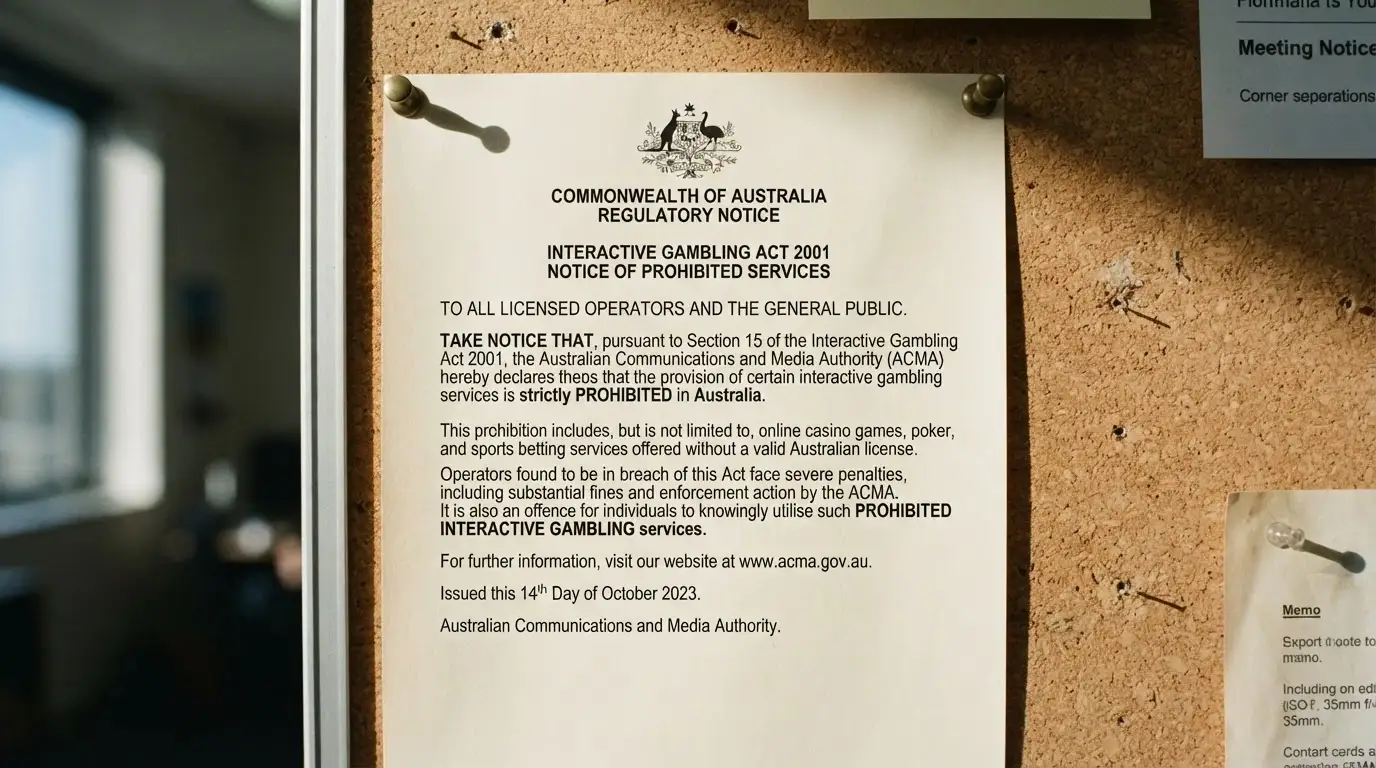
AU Licensing — What the IGA Actually Prohibits
The Interactive Gambling Act 2001 prohibits online casinos and online pokies as interactive gambling services, and that prohibition has been in force since 2001 and strengthened by amendments in 2017. The Department of Infrastructure, Transport, Regional Development, Communications, Sport and the Arts states the prohibited list plainly: casino-style games such as online blackjack and roulette, pokies or slot machines, and in-play sports betting are all prohibited interactive gambling services. Online wagering on racing and sport placed before the event begins, lotteries and keno are permitted. The line is sharp, and pokies sit firmly on the prohibited side.
The Australian Communications and Media Authority, ACMA, is the federal regulator charged with enforcing the prohibition on the provider side. ACMA does not license pokies sites; ACMA blocks them. Since the first blocking request in November 2019, ACMA has had 1,564 illegal gambling and affiliate websites blocked by Australian ISPs as at March 2026. More than 225 illegal services have withdrawn from the Australian market since enforcement was strengthened in 2017. These are enforcement outcomes against the provider side, not penalties against individual players.
Licensed online wagering concentrates in practice through the Northern Territory Racing and Wagering Commission, the NTRWC, administered through Licensing NT. The NTRWC acts as the de facto national licensor for large online bookmakers. The licensed wagering category covers racing and sport, not pokies. A player looking for a licensed Australian interactive gambling service finds it in the bookmaker space, not the casino space.
The honest framing for any AU-facing pokies site in 2026: the product is prohibited, the operators reaching Australian players are doing so from outside the licensed system, and the ACMA enforcement record shows the regulator is active, not asleep.
BetStop, AdStop and the Protection Gap Offshore Sites Can’t Close
BetStop is the National Self-Exclusion Register. It launched on 21 August 2023 and binds every Australian-licensed online and phone wagering service in one registration. As of 31 March 2026, 37,247 people had active BetStop exclusions. To the end of Q3 FY 2025–2026, 59,830 people had registered with the service. Self-exclusion is available for a minimum of 3 months and up to a lifetime.
BetStop is a serious Australian protection. It is also a protection that offshore pokies sites do not honour. The register binds Australian-licensed wagering services; an offshore casino is not licensed here, is not connected to the register, and can keep accepting a self-excluded person’s money. The regulatory record is plain on this point: offshore casinos are not connected to BetStop and can keep taking deposits from a person who has self-excluded. The same protection that lets a player block themselves out of every licensed Australian wagering service in one step does nothing on an offshore pokies site.
A reform package announced on 2 April 2026 reshapes the perimeter from 1 January 2027. The Interactive Gambling Amendment (Stop the Gambling Ads) Bill 2026 passed the House on 18 August 2026 and the Senate on 19 August 2026. The reforms create a national wagering advertising opt-out register called AdStop, to be administered by ACMA. The reforms prohibit marketing inducements to new customers for 14 days from account sign-up, and prohibit inducements for 90 days to individuals who have ended a BetStop self-exclusion. The live-sport advertising blackout extends to begin at least 15 minutes before an event. The reforms ban athletes, celebrities and influencers from promoting wagering products, ban the broadcasting of ads promoting sporting odds, and ban gambling ads in sports venues and on the uniforms of players and officials. The same reform package prohibits foreign-matched lotteries and keno-type lotteries. From 1 January 2027, banks and payment providers gain express authority to block transactions to illegal gambling operators, and ACMA gains faster blocking powers.
Every one of these measures binds licensed Australian wagering services. None of them bind an offshore pokies site serving Australian traffic. The protection gap is structural, not procedural — the offshore operator is outside the regulated perimeter, and the perimeter is what each reform expands.
What You Lose When You Play Outside the Licensed Market
Choosing an offshore pokies site is not a victimless loophole. It strips away every Australian consumer protection that exists for a player who stays inside the licensed system.
The first thing a player loses is BetStop coverage. A self-excluded Australian cannot stop themselves playing on an offshore pokies site through the register, because the register does not see the site.
The second thing a player loses is the payment-method ban’s full protective effect. From 11 June 2024, credit cards, credit-related products and crypto are banned as payment for online wagering in Australia. That ban applies to Australian-licensed wagering services. An offshore casino can still take a credit card deposit from an Australian player; an offshore casino can still take a USDT or BTC deposit. The payment-method cap that a licensed bookmaker has to honour does not bind an offshore operator.
The third thing a player loses is complaints recourse. The Australian Financial Complaints Authority, AFCA, has no jurisdiction over an offshore pokies site. No state tribunal has jurisdiction. The ACMA can take enforcement action against the provider, but ACMA does not adjudicate individual payout disputes. A player whose withdrawal stalls, whose account is closed mid-cashout, or whose balance disappears when a site is blocked has no Australian body to escalate to.
The fourth thing a player loses is regulatory fallback when the operator fails. If ACMA blocks an offshore site, the operator’s domain stops resolving for Australian ISPs, but the funds a player had on account at the moment of blocking do not automatically return. The 1,564 blocked sites as at March 2026 represent a regulator actively pushing offshore operators out of reach — but each blocked site is also a site a player may have had an open balance with at the point of blocking.
The IGA targets the provider, not the player. That is a real legal protection for the individual. It is not a consumer protection for the player’s money. The two are different protections, and an offshore pokies site sits outside the second one.
When Fast Cashouts Meet Responsible Play — The Tension No-One Talks About
The same “instant withdrawal” pitch that sells pokies sites also removes the friction that gives a player time to pause. The Australian harm-minimisation infrastructure exists precisely because that friction matters — and the gap between what licensed wagering is required to provide and what offshore pokies sites voluntarily offer is the practical shape of the responsible-gambling conversation for AU players.

When Faster Payouts Work Against the Player
Friction is a harm-minimisation tool. A withdrawal that takes 24 hours to clear is also a 24-hour window in which a player can step back, reconsider, or decide not to redeposit. An instant cashout removes that window. The money cycles from the casino back to the bank account and back into the casino before the impulse that triggered the withdrawal has had time to fade. The behavioural economics are well understood: faster access to funds produces faster redeposit, and faster redeposit produces higher total loss for the same population of players.
The Australian regulatory framework accounts for this. Licensed wagering operators are required to offer customer-set deposit limits, activity statements on request, and time-out and self-exclusion tools. The National Consumer Protection Framework for Online Wagering sets out 10 measures that bind every licensed online wagering service provider, and those measures include the player-protective friction the IGA explicitly does not impose on the offshore space. There is no federal deposit, loss or stake ceiling for online gambling in Australia, because the product those ceilings would govern is banned outright; what sits at the operator level instead is the controlled-friction regime that licensed wagering operators are required to run.
Offshore pokies sites are not bound by the National Consumer Protection Framework. An offshore operator may offer deposit limits; an offshore operator may offer self-exclusion; an offshore operator may offer reality checks. Whatever an offshore operator offers in the way of responsible-gambling tools is voluntary, not enforced, because the framework binds licensed Australian wagering services only.
The honest framing for an Australian player: faster payouts are exactly what the marketing promises, and exactly what the harm-minimisation literature flags as a risk multiplier. The two facts coexist because the offshore operator is not bound by the licensed framework that resolves the tension.
The Help Stack Every Australian Pokies Player Should Know
The Australian help infrastructure is free, confidential and available right now, regardless of which site a player uses. Three numbers and one website are the core of it.
BetStop is the National Self-Exclusion Register and the entry point for a player who wants to stop themselves from gambling on Australian-licensed online and phone wagering services. Registration takes minutes, the exclusion applies to every licensed operator in one step, and the minimum period is 3 months, the maximum is a lifetime. BetStop launched on 21 August 2023 and had 37,247 active exclusions as of 31 March 2026.
The Problem Gambling Helpline on 1800 858 858 is a 24-hour confidential telephone counselling and referral service. It is staffed every hour of every day, and a player can call it from anywhere in Australia without giving a name.
Gambling Help Online is the counselling and chat service that sits beside the phone line. A player who prefers text-based support or who wants to read self-help material in their own time can reach it online.
The honest limit on BetStop is the same limit noted in the section on the legal reality: the register binds Australian-licensed wagering services only. An offshore pokies site is not connected to BetStop and can keep taking a self-excluded player’s money. The help stack is real and effective. It is also incomplete for the offshore case — and that is the case every Australian pokies player using a featured operator is in.
The awareness gap is worth noting. Only 33.5% of wagerers and 26.5% of adults know BetStop exists, according to the most recent AGRC research carried in the public sources. Three in four Australian adults do not know the national self-exclusion register is available. A help stack that exists but is unknown to most of the population it is built for is not yet doing the work it was built to do.
How the Featured Operators Handle Responsible-Gambling Tools
The National Consumer Protection Framework for Online Wagering applies to all Australian-licensed online wagering service providers and sets out 10 measures for harm minimisation: customer-set deposit limits, activity statements on request, time-outs, self-exclusion, the prohibition of inducements, mandatory pre-commitment for higher-intensity products, and a small number of operational standards. Every licensed Australian bookmaker is bound by these measures.
The ten operators in this ranking are offshore. They are not bound by the National Consumer Protection Framework. Whatever an offshore operator offers in the way of deposit limits, time-out tools, self-exclusion, activity statements or reality checks is voluntary and is enforced only by the operator’s own policy.
For an Australian player comparing the ten, the responsible-gambling question is one the site’s terms page answers, not one the regulator answers. The licensed Australian wagering category has a uniform baseline. The offshore pokies category does not. The reader who treats both as offering the same protections is mistaken, and the mistake is one an offshore operator has no obligation to correct.
The Prevalence Picture: Gambling Harm in Australia Right Now
The numbers that explain why the Australian regulatory architecture exists are not abstract. They are population-level, recent, and worse than they were a year ago.
Roy Morgan Research estimated in March 2026 that 2,857,000 Australians (13.0%) were experiencing some form of gambling harm from their own gambling behaviours, and that 1,177,000 Australians (5.4%) were experiencing gambling harm from other people’s gambling. In total, an estimated 3,320,000 Australians (15.1%) were experiencing some form of gambling harm. The Roy Morgan Gambling Harm Index uses a screening framework developed by Central Queensland University.
A separate model-based national estimate, published in the Journal of Gambling Studies, found that approximately 3.29 million Australians aged 5 years and over are affected annually by their own or another person’s gambling. Within that estimate, approximately 1.38 million affected others are adults, and a reference-case total of approximately 280,000 children are affected. An estimated 1,970,000 adults are classified as having at-risk or problem gambling, and gambling harm is associated with over 400,000 Years Lived with Disability annually among Australian adults.
The POLIS: The Centre for Social Policy Research at ANU found that gambling participation in Australia declined to 58.8% in 2025, down from prior years, but that risky gambling rose from 13.7% in 2024 to 19.4% in 2025. More than half (56.1%) of people who gambled mainly participated online in the past 12 months. Among people who gambled, almost half (46%) were classified as being at some risk of gambling harm in the past 12 months according to the PGSI.
These figures are the context the offshore pokies market operates inside. They explain why the reform package was announced on 2 April 2026, why the bank-blocking power takes effect on 1 January 2027, and why BetStop and the help stack are funded. They do not explain why an Australian player would choose to step outside the licensed system into one that operates on a different rulebook — but they make clear what the cost of that step looks like at population level.
How We Evaluated and Ranked These Operators
Transparency about how the ranking was built matters more for this list than for most. The reason is the data gap: per-operator withdrawal times, bonus terms, game-provider mixes, or licence details are not published by any of the ten featured brands in a form a reader can verify. The ranking had to be built from what was confirmed, and what was confirmed was tracked AU market share and geo-legal status.
The backbone of the ranking is the AU market-share data carried in the available sources. Each operator’s percentage is the share of tracked Australian-facing online casino traffic the operator captures, sourced from external monitoring of AU-facing search and traffic patterns. The ranking is ordered by that share, from highest to lowest. Ties — Rainbet and Stake at 1.28%, Bizzo Casino and Rocket Casino at 0.57% — are listed alphabetically by operator name within the tied band.
The criterion that ordered the ranking is market reach, not payout speed, not bonus generosity, not game library depth. Payout speed is not published by any featured brand in a verifiable form. Bonus terms are not published in a way a reader can confirm. Game-library depth is not published the way a reader can check. A ranking that pretended to order on those dimensions would be inventing data to fill a gap the verification sources do not close, and that is exactly the move this page does not make.
The second criterion is geo-legal status, which is uniform across the ten. Every operator on the list is offshore; providing this product in Australia is prohibited. The geo-legal status is therefore not a differentiator — it is a baseline — and it is carried in the operator ranking and in each operator write-up because the reader who is comparing operators needs to see it at every step of the comparison, not once at the top.
The verification sources used were the official Australian regulatory framework: the Interactive Gambling Act 2001 as the statutory backbone, the ACMA blocklist and register as the verification source for prohibited-service enforcement, and the Northern Territory Racing and Wagering Commission register as the licensed-operator check. None of the ten featured brands appear on the NTRWC licensed-wagering register, because none of them hold an Australian wagering licence — and an Australian wagering licence does not cover online pokies anyway.
The honest limit of this ranking: it tells a reader which of ten offshore-facing operators reaches the most Australian traffic, and confirms that each of them is offshore. It does not tell a reader which of them pays out fastest, which of them offers the best bonus, or which of them is licensed by any regulator a reader would recognise. The verification sources this page drew on could not answer those questions.
What This Means for Your Next Pokies Session
Three checks before depositing a dollar. The first is the ACMA blocklist. The ACMA publishes the list of blocked illegal gambling services, and an AU-facing pokies site a reader is considering should be cross-checked against it before any deposit is made. The blocklist is not a complete blacklist — it lists the sites ACMA has acted on, not every site that is illegal — but a site that appears on it is one that is already the subject of enforcement action.
The second check is the payment method. An offshore pokies site that advertises “PayID instant withdrawal” and only supports credit card deposits is selling the withdrawal rail the player came for while routing the deposit through a method the licensed Australian wagering space is banned from taking. The withdrawal pitch and the deposit reality can disagree, and the disagreement is the second check.
The third check is the complaints path. An offshore pokies site has no Australian complaints body with jurisdiction. No AFCA path. No state tribunal. The only body that can act against the provider is the ACMA, and ACMA does not adjudicate individual payout disputes. A player who wants to know what happens when a withdrawal stalls needs to assume the answer is “nothing Australian” before they deposit.
The honest verdict on “instant withdrawal” as a category in Australia is structural. The rail can be instant — PayID and Osko genuinely settle in seconds, crypto genuinely confirms in minutes. The operator’s approval queue, the KYC gate on the first cashout, and the offshore status of the operator mean the full path from tapping withdraw to seeing money in a bank account is rarely measured in seconds and is measured in days more often than the marketing admits. A reader who treats the rail as the whole pipeline is reading the marketing and skipping the queue.
The course of action: treat every offshore pokies site as unregulated, measure withdrawals in days rather than minutes, use only money the player can afford to lose entirely, and know the help stack — 1800 858 858, BetStop, Gambling Help Online — before it is needed. The Australian regulatory framework does not protect a player who steps outside it, and the offshore pokies market is outside it.
Frequently Asked Questions
Are instant withdrawal pokies actually legal in Australia?
No. Online casinos and online pokies are prohibited interactive gambling services under the Interactive Gambling Act 2001. No Australian licence exists for this product. Every site reaching Australian players with pokies content is doing so from outside the licensed system, and providing the product in Australia is prohibited.
What does “instant withdrawal” really mean when an Australian casino site says it pays with PayID?
The phrase refers to the payment rail, not the operator’s approval queue. PayID and Osko on the New Payments Platform genuinely settle in seconds between participating banks. The operator’s queue — KYC check, payout approval, bonus-wagering check — sits in front of that rail and is where the actual delay lives.
How long does a PayID or Osko withdrawal usually take from request to bank receipt in Australia?
The rail leg is seconds. The operator leg is the variable. A player whose account is already KYC-verified, whose bonus wagering is complete, and whose operator processes approvals within hours can see the money the same day. A first withdrawal, an unverified account, or a slow approval queue stretches the timeline into days, not minutes.
Which withdrawal methods are usually fastest for Australian pokies players: PayID, crypto or bank transfer?
PayID and Osko are the fastest end-to-end path to an Australian bank account, because the rail is Australian and the off-ramp is instant. Crypto is fastest on-chain but adds an off-ramp step — converting USDT or BTC back to AUD through an exchange adds time and spread. Bank transfer is the slowest.
If I am self-excluded through BetStop, can an offshore pokies site still accept my deposits?
Yes. BetStop binds Australian-licensed wagering services. An offshore pokies site is not licensed in Australia, is not connected to the register, and is not bound by the self-exclusion. The regulatory record is plain on this: offshore casinos are not connected to BetStop and can keep taking deposits from a person who has self-excluded.
If a site blocks my account or delays my payout, what recourse do Australian players actually have?
Practically none. No Australian complaints body has jurisdiction over an offshore pokies site — AFCA does not cover it, state tribunals do not cover it, and ACMA does not adjudicate individual payout disputes. The only practical recourse is the site’s own support, escalated through the card issuer if the deposit was made by one.
Crypto Withdrawals — Faster Payout or Faster Headline?
Crypto is the rail offshore pokies sites pitch as the fastest. Bitcoin and USDT transactions can confirm on-chain in minutes, sometimes faster, and a player who already holds crypto at the destination can move the funds without touching the Australian banking system.
The catch is the off-ramp. A player who withdraws USDT or BTC from an offshore pokies site does not have Australian dollars in their bank account at confirmation — they have crypto at a wallet address. Converting that crypto to AUD costs time, spread and a conversion fee, and routes through an exchange. The total elapsed time from tapping withdraw to seeing AUD in a bank account can match or exceed what PayID would have delivered, even with the on-chain leg genuinely fast.
The regulatory picture sharpens the question for AU players. From 11 June 2024, credit cards, credit-related products and crypto are banned as payment for online wagering in Australia. That ban applies to Australian-licensed wagering services. Offshore pokies sites are not bound by it. A licensed Australian bookmaker cannot take a crypto deposit from an Australian customer; an offshore casino serving Australian traffic can, and many do.
Crypto is structurally the fastest rail on-chain while being one of the slowest end-to-end paths to a bank account, because the off-ramp to AUD is a step the marketing tends to skip.
Mobile Pokies Withdrawals — Same Method, Same Clock?
The device changes the interface, not the payout pipeline. A withdrawal requested from an AU-facing pokies site’s mobile app or mobile browser hits the same operator queue, the same KYC stage, and the same payment rail as a withdrawal requested from a desktop session.
What can change is the app layer. Some operators route mobile-app withdrawal requests through an additional in-app approval step before the request reaches the cashier system — a soft confirmation, a biometric prompt, or a delay-coded “we’ll email you when it’s ready” — and that layer adds time without changing the rail. The rail itself does not behave differently in an app; PayID still settles in seconds, bank transfer still takes business days.
The structural position is that the method and the operator’s queue, not the device, set the clock.