
Best 3-reel pokies for Australian players in 2026
 Available in AU
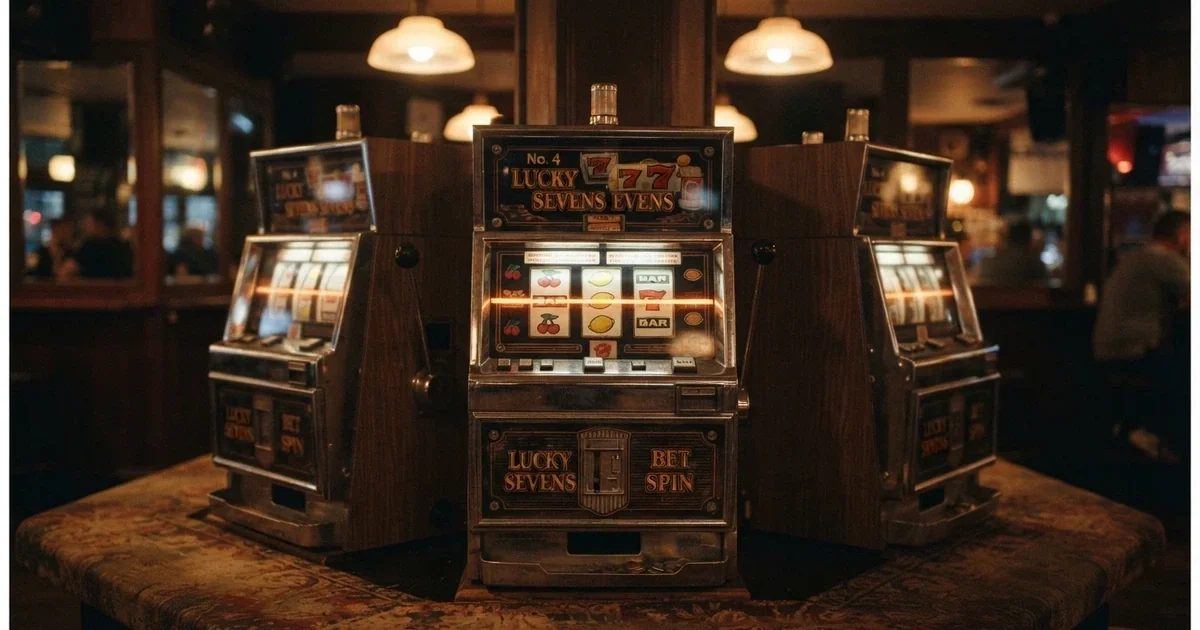
A 3-reel pokie is the closest an online casino gets to the original fruit machine. Three reels, one to nine paylines, a handful of symbols — cherries, BARs, sevens — and a spin that resolves in under a second. There are no expanding wilds, no cascading wins, no second-screen bonus round to wait through. For Australian players, the format is also where the maths is cleanest: classic 3-reel titles regularly carry RTPs higher than 96%, and the very highest return in the surveyed set — Mega Joker at 99% — sits well above what most 5-reel screens offer.
The catch sits one level up. Online casino games, online pokies and in-play betting are prohibited in Australia under the Interactive Gambling Act 2001. No online casino licence exists in the country — not federally, not in any state or territory. Every operator on this page is offshore, runs on its own house rules, and accepts Australian players without Australian consumer protection. The page describes what those operators offer and which 3-reel titles they host, but it cannot promise the safety the licensed wagering system would provide.
Current as of 18 October 2026 against the ACMA register and the operators’ public-facing sites.
Table of Contents
- Why your 2026 3-reel pokie plays nothing like a 5-reel screen
- Where Australians actually play 3-reel pokies online in 2026
- The law Australian 3-reel players can’t afford to ignore
- Keeping the reels fun — responsible play for classic pokies
- How we picked and ranked every title on this page
- Which 3-reel pokie suits your style — and how to start
- Frequently Asked Questions
Why your 2026 3-reel pokie plays nothing like a 5-reel screen
The 3-reel pokie is the format online casinos never quite got around to killing. Five-reel video slots get the marketing budget, the branded tie-ins, the feature reels with three mechanics layered on top of each other. The classic three-reel stepper still earns its place because it does one thing — pay out on a line — and it does it fast.
What a classic 3-reel pokie actually is — and the symbols that built it
A classic 3-reel pokie has a 3×3 grid, three reels that spin independently, and somewhere between one and nine paylines. Some titles stick to a single horizontal centre line; others — Black Diamond being the standout — run nine lines across the small grid, accepting bets in a single credit block across all of them.
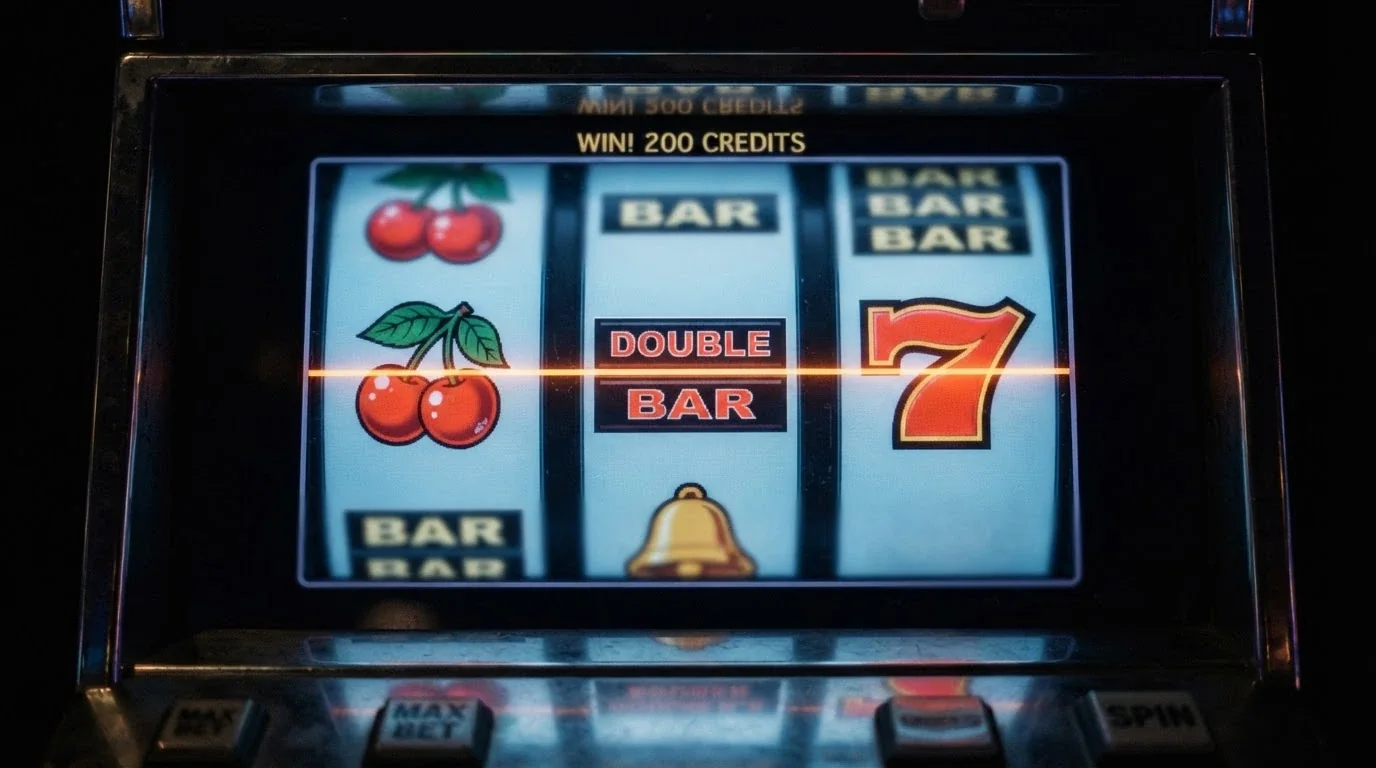
The symbol set has barely changed in four decades. Cherries, lemons, plums, oranges, watermelons. Single, double and triple BARs. Red sevens, blue sevens, white sevens. Bells. The diamond, when it appears, usually does the heavy lifting — on Black Diamond it triggers the progressive tiers. On Red, White and Blue, IGT kept the symbol set so faithful to its land-based cabinet that the digital game reads as a direct conversion: BARs, coloured 7s, simple line results, nothing else.
That fidelity is the point. A player who disliked what 5-reel slots became — the bonus buys, the megaways, the gamble features — finds in a 3-reel pokie a format that does not evolve around them. It just spins. A line of three sevens pays. A line of three mixed BARs pays less. The maths runs in plain sight.
The volatility profile matches. Classic 3-reel pokies typically run low to medium volatility, with basic wild symbols and multipliers and free spins rarely offered. That profile suits a player who wants longer sessions from a smaller bankroll — the wins come more often, and the dry spells between them are shorter.
RTP and house edge — why the return number decides your session
Return-to-player is the percentage of all wagered money a slot is designed to return over millions of spins. The flip side is the house edge: the percentage the operator keeps. A slot with a 95% RTP carries a 5% house edge; a slot with a 99% RTP carries a 1% house edge.
On a 3-reel pokie that difference compounds quickly. The format spins fast — often in under five seconds per round — and a session that lasts an hour might run 500 to 1,000 spins. At $1 per spin, a 95% RTP costs roughly $25 to $50 in expected house edge per hour. At 99% RTP, the same hour costs $5 to $10. Over a year of regular play, the gap between the high and low end of the surveyed set — 99% versus 93.98% — is the difference between a session that costs what a coffee costs and one that costs what a tank of petrol costs.
Worked example. Triple Diamond carries an RTP of 95.6%, putting the house edge at 4.4%. A session of 1,000 spins at $1 per spin wagers $1,000 in total. The expected loss across that session, on the maths alone, comes to about $44. The figure is an average over many spins, not a guaranteed outcome for any one player — but it is also the number that decides whether an evening’s play costs a parking ticket or a restaurant meal.
The best-RTP 3-reel titles Australian players can access in 2026
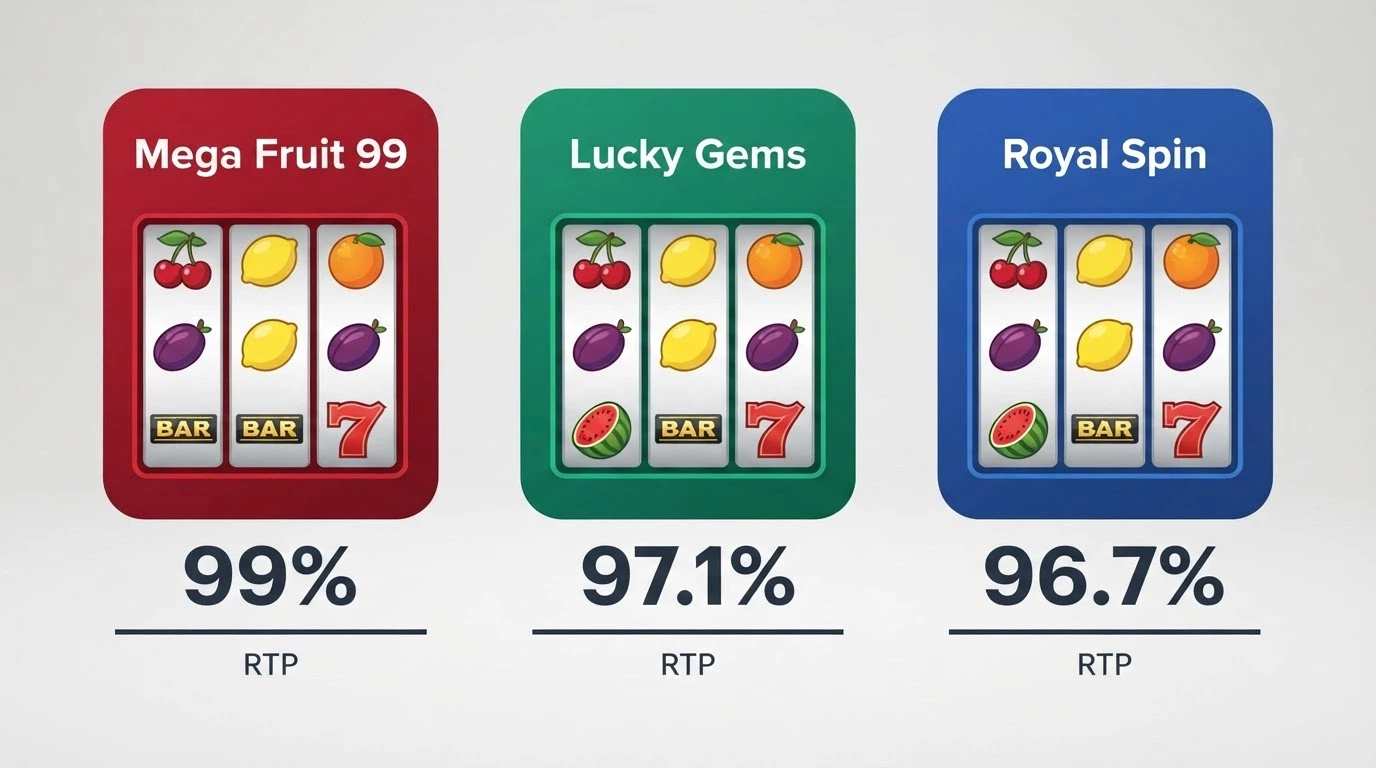
The table below ranks seven 3-reel titles by RTP, descending. The standout feature column captures the mechanic — or the absence of one — that defines each game.
| Slot title | Provider | RTP | Volatility | Standout feature |
|---|---|---|---|---|
| Mega Joker | NetEnt | 99% | — | Progressive jackpot, no win cap, $100 max bet |
| Break da Bank Again | Microgaming | 97.1% | — | Wild multipliers up to 5x on a line, $250,000 max win |
| Fruit Shop | NetEnt | 96.7% | — | Free spins — rare on a 3-reel slot, $100,000 max win |
| Fire Joker | Play’n GO | 96.15% | — | Respin of Fire, Wheel of Multipliers up to x10 |
| Black Diamond | Everi | 95.95% | Low-to-medium (2/5) | Two progressive jackpots, combined multipliers up to 30x, 9 paylines |
| Triple Diamond | IGT | 95.6% | — | Classic three-reel single-line format, $150,000 max win |
| Red, White and Blue | IGT | 93.98% | Medium-high | Stepper-cabinet conversion, one fixed payline, no wilds or bonus features |
Mega Joker’s 99% sits at the top of the surveyed set by a wide margin. It also happens to carry a progressive jackpot with no win cap and accept bets up to $100 per spin, which makes it the highest-paying title on the list when the jackpot lands. Black Diamond’s 95.95% looks modest by comparison, but the two progressive jackpots — one tied to paylines 1 through 8, the top prize tied specifically to payline 9 and only triggered at max bet — change the calculation for a player who will bet big.
At the bottom end, Red, White and Blue at 93.98% is the lowest RTP in the set. The trade-off is fidelity: it is the title that plays most like a real stepper cabinet, with a single fixed payline and no wilds, scatters, free spins or bonus rounds. A player who wants the authentic land-based feel accepts a 5% house edge instead of the 1% Mega Joker offers.
Volatility carries through only where the source supplies it. Most of these titles are rated medium by their providers without a public number; Black Diamond is the exception, listed at 2/5 by Everi.
How to play 3-reel pokies free — no download, no deposit
Demo mode is the right starting point for any title on the table above. Offshore casinos that host 3-reel pokies typically run their games in two modes: real-money play, which requires a registered account and a deposit, and fun mode, which loads the same game with a play-money balance. The demo does not require a download — most providers stream it through the browser as an HTML5 title — and it does not require a card.

The demo is most useful for two things. First, it lets a player see the volatility in action. A low-to-medium volatility classic like Black Diamond produces a steady drip of small wins and the occasional bigger one; a medium-high volatility title like Red, White and Blue produces long dry stretches punctuated by larger hits. The pattern shows up within fifty spins. Second, it lets a player learn the paytable before any real money is on the line — which paylines the title runs, how the wild multiplier behaves, what triggers the respin or wheel feature.
The free-play route has limits. Demo mode pays out nothing — wins and losses are both fictional. The RTP is the same as the real-money version, but the psychology is not. Losses cost nothing, which means a player can chase a near-miss in demo for an hour and feel no regret. The jump from free play to a real-money deposit is where harm-minimisation has to start, and that jump should be a deliberate one.
Playing 3-reel pokies for real money in Australia
Real-money play at an offshore operator changes three things at once. The spins cost real AUD. The wins are withdrawable, subject to the operator’s terms. And the deposit itself comes from one of a small set of legal payment routes.
The legal AU deposit routes are debit card, bank transfer, PayID and Osko, and BPAY. Credit cards, credit-related products and crypto have been banned as payment for online wagering since 11 June 2024. An operator that takes a credit-card deposit faces penalties of up to $247,500 under the Interactive Gambling Amendment (Credit and Other Measures) Act 2023. For an Australian player, the practical effect is that funding an offshore account means using a debit card linked to an everyday bank account, a PayID transfer, or BPAY from a transaction account. The minimum age for any commercial gambling activity in Australia is 18.
Stake sizing on a 3-reel title is straightforward in a way 5-reel slots are not. A classic with one to nine paylines usually takes a single coin size and a line multiplier — bet one credit per line, or bet max to light all nine. Most surveyed titles sit in a $0.20 to $5 per-spin practical range at the entry end. Mega Joker and Break da Bank Again both allow max bets above $50, with Mega Joker topping out at $100 and Break da Bank Again at $75. Triple Diamond caps at $50. Fruit Shop caps at $40.
The Australian framing of the game — “pokies” rather than “slots” — is worth noting. The terms describe the same product, but a page that talks about “real money pokies” or “online pokies Australia” is the language a player will hear from other Australian players and from Australian-facing operators. Offshore sites vary: some use the Australian term, others use the global one.
Bonus rounds on a 3-reel slot — rare, but they exist
Most 3-reel pokies skip the bonus screen. The format’s appeal is its simplicity, and a second-screen feature pulls against that. Two titles in the surveyed set break the pattern cleanly.
Fruit Shop is the standout. NetEnt built a free-spins round into a game that otherwise looks and feels like a classic — a five-payline fruit machine where the free spins trigger on a fruit symbol combination rather than the usual three-scatter trigger. Free spins are described as rare for a 3-reel slot, and Fruit Shop is the clearest counterexample in the surveyed set.
Fire Joker takes a different path. Play’n GO’s 3×3 grid runs five fixed paylines and ships two mechanics: the Respin of Fire, which fires when two reels land filled with the same symbol and locks them in place for a free respin of the third reel, and the Wheel of Multipliers, which spins after any full-reel Fire Joker win and awards a multiplier of up to x10. The title reads as a hybrid — a classic format with modern feature mechanics bolted on.
Black Diamond treats its progressives as a bonus substitute. The two progressive jackpots — one across paylines 1 through 8, the top prize tied to payline 9 — function as the headline feature in place of a free-spins round. Both are max-bet gated, which means the bonus is only available to a player betting the maximum credits across all nine lines.
3-reel vs 5-reel — what you trade and what you gain
A 5-reel video slot runs 20 to 1,024 paylines, several layers of mechanics, and a session that often takes longer per spin because of the bonus animation. A 3-reel pokie runs one to nine paylines, one layer of mechanics, and a spin that completes in under five seconds. The trade is straightforward: fewer lines and a cleaner maths model in exchange for fewer features and less screen real estate.
The RTP comparison favours the classics in the surveyed set. Mega Joker’s 99% beats most 5-reel titles a player will find in the same lobby. Black Diamond’s 95.95% sits in the same band as a typical video slot. Red, White and Blue’s 93.98% sits below most modern 5-reel releases. The volatility profile differs as well: classic 3-reel pokies typically run low to medium, while 5-reel titles range across the full spectrum and often skew higher.
The session pace is the other half of the trade. A 3-reel slot spins fast, which means a fixed bankroll evaporates faster but each individual loss feels smaller. A 5-reel slot with a 30-second bonus round produces fewer spins per hour but each spin carries more anticipation. A player who wants longer sessions from a smaller bankroll generally prefers the 3-reel format. A player who wants the chance at a life-changing payout on a single bonus trigger generally prefers the 5-reel format.
That is the shape of the choice. It is not a better-versus-worse call; it is a question of what a player wants an hour of their time to feel like.
Where Australians actually play 3-reel pokies online in 2026
Every operator an Australian player can access for online pokies is offshore. No AU online casino licence exists — not federally, not in any state or territory — and the ACMA has had 1,564 illegal gambling and affiliate websites blocked by Australian ISPs since November 2019. The set below is ranked by AU market share, from the largest offshore brand to the smallest. None of them holds an Australian casino licence because none can.
| Operator | Legal status in Australia | AU market share |
|---|---|---|
| Rocket Play | Offshore (no AU online casino licence) | 9.4% |
| Skycrown | Offshore | 8.55% |
| Royal Reels | Offshore | 2.51% |
| WinSpirit | Offshore | 1.55% |
| Stake | Offshore | 1.28% |
| Rainbet | Offshore | 1.28% |
| Scream Casino | Offshore | 0.99% |
| FairGO | Offshore | 0.8% |
| Bizzo Casino | Offshore | 0.57% |
| Rocket Casino | Offshore | 0.57% |
For each operator below, the licence and provider data reflects what the operator’s public-facing site claims.
Rocket Play
Rocket Play is the largest offshore operator by AU market share at 9.4%, ranked #3 overall with $632.69M revenue. The operator’s public-facing site claims a Curaçao licence.
The game-provider mix claimed by the operator covers Microgaming, NetEnt and Pragmatic Play. The first two matter most for 3-reel pokies — Microgaming supplies Break da Bank Again, NetEnt supplies Mega Joker and Fruit Shop — which means a player who wants the high-RTP end of the surveyed set should find those titles available. Pragmatic Play’s classic 3-reel catalogue is thinner, but the provider is present.
The welcome package takes a multi-tier shape, with successive deposits drawing additional credit. Specific amounts, wagering requirements and game-weighting rules should be checked at the operator’s site before any deposit. AU-relevant deposit routes advertised by the operator include card payments and crypto; for an Australian player, the card route is the legal one. The full rule is set out in the section on credit cards and PayID.
Rocket Play is the right starting point in this set for a player who values provider breadth over licence certainty. The 9.4% share means it has the most active Australian players, which usually correlates with the deepest lobby.
Skycrown
Skycrown ranks #4 by AU revenue at 8.55%, with $436.07M in tracked AU revenue. The operator claims a Curaçao licence on its public-facing site.
The welcome package is a multi-tier structure across the first few deposits, with the operator’s site carrying the specific amounts and the wagering terms. The bonus percentage and the maximum bonus vary by tier; game-weighting contributions—how much of each spin counts toward clearing the bonus—should be checked before any deposit.
For 3-reel pokies, Skycrown’s catalogue covers NetEnt, Microgaming and a range of other providers the operator aggregates. The classics from the surveyed set — Mega Joker, Fruit Shop, Break da Bank Again — should appear in the lobby. The withdrawal side is the practical concern: an Australian player should confirm the operator processes withdrawals in AUD or accepts a PayID or BPAY route before signing up.
Skycrown is the sensible alternative to Rocket Play for a player who wants to compare two large offshore lobbies before choosing one. The two brands sit in the same weight class on share, and a player who is wary of a single-operator dependency can split their play between them.
Royal Reels
Royal Reels sits at #9 with 2.51% AU market share and $243.99M in tracked AU revenue. The operator’s licence and game-provider mix vary; the write-up reflects what the operator’s public-facing site claims.
The 3-reel catalogue is harder to characterise without confirmed provider data. A player looking for the surveyed titles — Mega Joker, Break da Bank Again, Fruit Shop — should search the lobby before depositing, since the title availability varies by operator. Welcome terms and payment routes should be checked at the operator’s site for the same reason.
Royal Reels is best understood as a mid-sized AU-facing brand. The 2.51% share puts it well below the top two but well above the bottom of the set. A player who wants to move away from the largest offshore brands but still wants a recognisable name finds Royal Reels a reasonable next stop on a comparative sweep.
WinSpirit
WinSpirit ranks #11 in AU with a 1.55% market share. The operator’s licence, provider mix and welcome terms vary; the write-up covers the operator’s public-facing claims.
The 3-reel slot count and the providers behind it are not separately confirmed, which means a player should check the lobby directly. Welcome offer shapes typically include a deposit-match structure with a wagering requirement, but the specific terms at WinSpirit need verification. AUD deposit support is common at offshore brands, but PayID support is less common and should be confirmed before signing up.
WinSpirit sits in the lower-mid tier of the surveyed set by share. Worth a look for a player who has already dismissed the larger offshore brands; the verification work falls on the player, since the operator’s basic terms are not on the public record this round.
Stake
Stake ranks #12 with 1.28% AU market share. The operator’s public-facing site claims a Curaçao licence. Stake is one of the more prominent crypto-native operators globally, which is worth flagging in two directions.
The first is the AUD payment side. Stake’s platform was built around crypto deposits, and the operator is widely used for that reason. For an Australian player, the credit and crypto ban in force since 11 June 2024 makes a crypto-funded play problematic in principle — funding an offshore gambling account from a credit card or from a credit-related product carries operator penalties, and the player’s own bank may decline the transaction once the 1 January 2027 bank-blocking authority comes into force.
The second is the 3-reel catalogue. Stake aggregates a wide range of providers, and the NetEnt and Microgaming classics should appear. The practical concern for an Australian player is the payment route: an AUD debit card or PayID deposit, where supported, is the cleanest option.
Stake is the best fit in this set for a player who already operates in crypto and accepts the regulatory grey zone. For an AUD-only player, the payment friction makes it a second-tier choice.
FairGO
FairGO ranks #16 with 0.8% AU market share. The operator’s public-facing site claims RealTime Gaming as its primary provider.
RealTime Gaming’s 3-reel catalogue is more limited than the catalogues of Microgaming or NetEnt. RTG does publish a handful of classic stepper-style titles, and a player who specifically wants the RTG look may find what they want at FairGO. The provider’s volatility and RTP reporting is thinner than the larger studios’, which makes the bonus terms section harder to fill in accurately.
Welcome terms and AUD banking routes should be verified at the operator’s site. FairGO is a known name in the Australian-facing market, but the 0.8% share places it well below the larger brands. A player committed to the RTG catalogue may find it suits their needs; a player who values provider breadth should look at the larger offshore brands first.
Scream Casino
Scream Casino ranks #14 with 0.99% AU market share. The operator’s licence claim, provider mix, welcome terms and payment routes reflect what the operator’s public-facing site states.
The 3-reel catalogue will depend on which providers the operator aggregates. A player looking for the surveyed titles should check the lobby. Welcome terms typically involve a deposit match with a wagering requirement, but the specifics at Scream Casino need verification.
The 0.99% share places Scream Casino in the lower-mid tier. One to consider for a player prioritising lobby size over provider breadth, with the caveat that basic terms need verifying first.
Bizzo Casino
Bizzo Casino ranks #19 with 0.57% AU market share. The operator claims a Curaçao licence on its public-facing site.
The 3-reel catalogue covers the providers Bizzo aggregates — likely including NetEnt, Microgaming and a range of smaller studios. The welcome structure is a multi-deposit package, but the specific amounts and wagering terms need verification at the operator’s site. AUD banking routes are advertised, but PayID support varies.
Bizzo Casino is the second-smallest brand in the surveyed set by share. The verification cost is high relative to the upside — for most players, the larger offshore brands in the set will return more for the same effort.
Rocket Casino
Rocket Casino ranks #20 with 0.57% AU market share — tied with Bizzo at the bottom of the surveyed set. The operator’s licence claim, provider mix and bonus terms should be confirmed at the operator’s site.
The 3-reel title availability is unclear without confirmed provider data. A player should search the lobby directly. Welcome terms and payment routes follow the standard offshore shape but need verification.
Rocket Casino shares its name with Rocket Play, which is a common confusion point and worth flagging up front. They are separate operators. For a player comparing the two, the 9.4% share at Rocket Play is the practical differentiator: a deeper lobby, a larger player base, and usually a more established bonus structure.
Rainbet
Rainbet ranks #13 with 1.28% AU market share. The operator’s licence claim, provider mix and bonus terms should be confirmed at the operator’s site.
The 3-reel slot availability depends on the providers Rainbet aggregates. A player should check the lobby for the surveyed titles. Welcome terms and AUD deposit routes need verification at the operator’s site.
Rainbet is a mid-sized AU-facing brand, sitting between the top four and the smaller operators. Worth comparing to the other mid-tier entries on a sweep, but the data thinness means the player carries most of the verification load.
The law Australian 3-reel players can’t afford to ignore
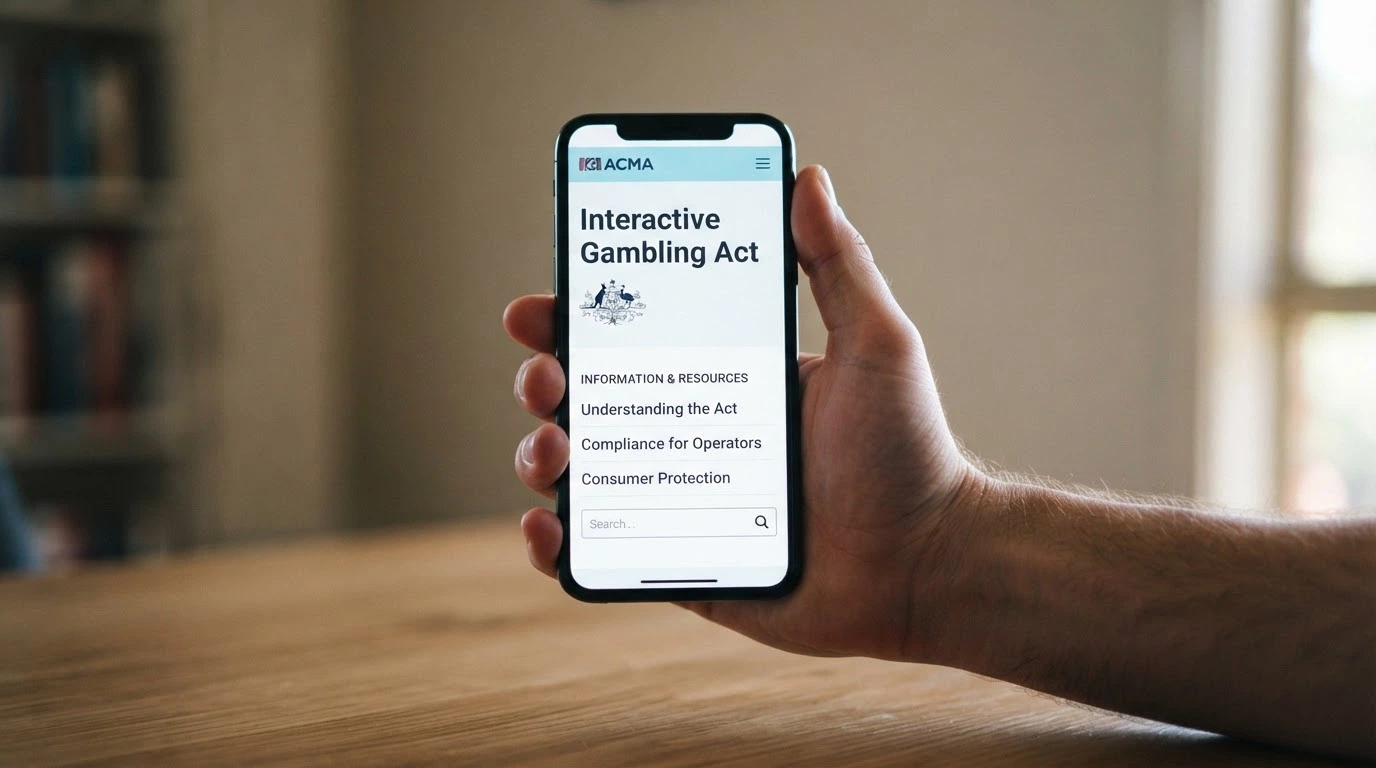
The legal landscape for Australian online pokies is not ambiguous. Online casino games, online pokies and in-play betting on a sporting event once it has started are prohibited to persons in Australia under the Interactive Gambling Act 2001. The Act was strengthened by the Interactive Gambling Amendment Act 2017, and the Interactive Gambling Amendment (Gambling Reform) Bill 2026 passed Parliament on 19 August 2026 with its measures commencing 1 January 2027.
What the Interactive Gambling Act actually bans — in plain English
The IGA 2001 prohibits three categories of online gambling service from being supplied to a person in Australia: online casino games, online pokies and in-play betting on a sporting event once it has started. The first two are the relevant categories for a 3-reel pokie player. The third matters only if the same player wagers on sport.
What the IGA permits is wagering on races and sport placed before the event begins, plus lotteries and keno, through operators licensed by a state or territory. The Northern Territory Racing and Wagering Commission, administered through Licensing NT, is the de facto national licensor for online wagering. The minimum age for any commercial gambling activity in Australia is 18.
The distinction is clean and the consequences are asymmetric. A player who wagers through an AU-licensed bookmaker on a Saturday afternoon race is using a regulated product. A player who plays a 3-reel pokie at an offshore casino is using a prohibited product — but the IGA targets the provider, not the player. No individual Australian has been prosecuted under the IGA for placing a bet; the prohibition is enforced against the companies supplying the service.
That asymmetry does not make the activity risk-free. It does mean that an Australian 3-reel pokie player is choosing to enter a market that does not have Australian consumer protection behind it.
ACMA enforcement — site blocks, fines and the 1,564 sites already gone
The Australian Communications and Media Authority is the federal regulator that enforces the online prohibition. Since its first blocking request in November 2019, the ACMA has had 1,564 illegal gambling and affiliate websites blocked by Australian ISPs. More than 225 illegal services have withdrawn from the Australian market since the 2017 enforcement strengthening.
The mechanism is straightforward in outline. The ACMA investigates complaints, issues formal warnings, and where a provider continues to offer prohibited services to Australian customers, the ACMA refers the matter for civil penalty proceedings and directs ISPs to block the offending domain. The blocking is at the ISP level — an Australian customer whose ISP has blocked a site typically sees a landing page instead of the casino. The site may still be reachable through some technical workarounds, but the practical effect for most players is that the site stops working.
The critical detail for a player is what happens to a balance when a site gets blocked. The site is not required to refund balances, and the ACMA’s enforcement does not include a player-redress function. A player who has deposited and is mid-session when a block lands is exposed.
Offshore casinos — the real landscape for Australian pokie players
Every operator on this page is offshore. That means four specific things for an Australian player.
There is no Australian consumer protection framework for offshore play. The Australian Competition and Consumer Commission does not have jurisdiction over an operator in Curaçao or Malta. A player who feels they have been treated unfairly has recourse only through the operator’s own complaints process, and where that fails, through the dispute-resolution body the operator claims to be registered with — which is usually a Curaçao or Maltese forum of limited practical use.
BetStop does not cover offshore casinos. The National Self-Exclusion Register, which went live in August 2023, binds every Australian-licensed online and phone wagering service. An offshore casino is not connected to the register. A person who has registered with BetStop because they wanted to stop gambling can still deposit and play at every operator on this page. The full consequences of that gap are covered in the responsible-gambling section below.
Withdrawal refusals and voided wins sit outside any Australian framework. The operator’s own terms decide what counts as a “bonus abuse” violation or an “irregular play” flag, and the operator’s own process decides whether a withdrawal is paid. A player who has a complaint has no Australian regulator to escalate it to.
The site may be blocked with a balance inside. If the ACMA directs Australian ISPs to block the operator, the player’s account and any balance on it become inaccessible from Australia. The operator is not obliged to refund the balance. The practical advice is to keep balances small and to withdraw promptly after a winning session, but that advice is not enforceable.
Credit cards, crypto and PayID — what you can and can’t use
The Interactive Gambling Amendment (Credit and Other Measures) Act 2023 banned credit cards, credit-related products and digital currency as payment for online wagering. The ban commenced 11 June 2024. An operator that fails to enforce it faces penalties of up to $247,500. For a player, the rule is simple: no credit card, no crypto.
What the rule permits is the legal AU deposit routes — debit card, bank transfer, PayID and Osko, and BPAY. PayID is the most common choice at offshore operators that support it, since the transfer settles in seconds and the funds come from an everyday transaction account. Debit cards are widely accepted but face higher decline rates for offshore gambling transactions. BPAY is slower but reaches any operator that accepts Australian bill payments.
Identity verification is required for licensed operators under state and territory conditions, and most offshore operators now run their own KYC checks. The verification usually requires a government-issued ID, a proof of address, and sometimes a source-of-funds check. The process is slower for a first withdrawal than for a deposit — a player expecting a fast cashout should plan for it.
From 1 January 2027, banks and payment providers gain express authority to block transactions to illegal gambling operators. The 2026 reform bill made this explicit. The practical effect is that an Australian bank may decline a debit-card transaction to an offshore casino on its own initiative, without the player having to do anything wrong.
The 2026 reform — what changes on 1 January 2027
The Interactive Gambling Amendment (Gambling Reform) Bill 2026 passed Parliament on 19 August 2026. Its measures commence 1 January 2027. The reform is the most significant update to the IGA since 2017 and changes the advertising and inducement landscape significantly — without legalising online casino.
The advertising restrictions are detailed. No more than three wagering ads per hour between 6:00 am and 8:30 pm. A live-sport blackout from 15 minutes before a live sporting event until 5 minutes after it ends. Radio ads barred during school times. Online wagering ads only to logged-in, age-verified users with an opt-out. No ads in sports venues or on player or official uniforms. Athletes, celebrities and influencers barred from promoting wagering.
The inducement changes matter for the bonus landscape. Direct marketing of inducements is prohibited for 14 days after a customer signs up, for three months after a person deregisters from BetStop, and indefinitely for customers identified as at risk of gambling-related harm. BetStop’s operation is strengthened at the same time.
What the reform does not do is legalise online pokies. The product remains prohibited. The reform tightens the licensed market, makes the advertising environment less aggressive, and gives banks the authority to block transactions to illegal operators. For an offshore casino player, the practical change is that funding an offshore account from an Australian bank may become harder over time.
What protections you actually have — and what you leave behind offshore
Inside the licensed wagering system, an Australian player has a set of protections that exist precisely because the system is licensed. Customer-set deposit limits are mandatory under state and territory conditions, although the specific ceiling varies by jurisdiction and there is no national statutory cap. Activity statements show a player what they have wagered over a period. BetStop provides a one-step exclusion across every licensed service. The Australian Consumer Law applies. A complaint can be escalated to the relevant state or territory regulator, and ultimately to the ACMA.
Outside it — at any of the operators on this page — none of those apply. There is no AU-mandated deposit-limit tool. There is no BetStop coverage. There is no AU dispute resolution. The operator’s own terms govern, and the operator’s own process decides.
The tax position is the same in both cases. Betting and gambling winnings are not assessable income under section 6-5 of the ITAA 1997, and gambling losses are not deductible under section 8-1, unless the person is carrying on a business of betting or gambling. No Australian case has held the winnings of an ordinary punter assessable. ATO ruling IT 2655 sets out the criteria. For a player who plays 3-reel pokies as a hobby, the wins are tax-free and the losses are not recoverable.
The operator-level taxes — the Northern Territory’s 5% wagering tax plus 0.05% racing levy, and the state point-of-consumption tax typically 10–15% of net wagering revenue — do not touch the player directly. They are costs the operator absorbs. They explain why licensed wagering operators are not in the online casino business: the tax base for online casino does not exist in Australia, so the operators that pay these taxes do not offer the product.
Keeping the reels fun — responsible play for classic pokies
A 3-reel pokie session can escalate faster than a 5-reel session. The spins land quickly. The wins come often enough that the session feels productive. The dry stretches between wins are short, which means the player keeps playing. None of that is a moral judgement on the format — it is just what the maths does.
About 2.1% of Australian adults — roughly 430,000 people — experience problem gambling. The Australian Institute of Health and Welfare put high-risk gambling at 1.8% in 2022. These numbers are not predictions; they are the population a responsible-gambling section is written for.
Set a time and money limit before the first spin
The single most effective guardrail a classic-pokie player has is a loss limit set before the first spin. The mechanics are simple: decide the maximum amount the session can cost, decide the maximum duration the session can run, and stop at whichever limit is hit first. The decision made before the session is the one that holds when the session is going badly.
A 3-reel pokie session is a poor place to make decisions in the moment. The spins come fast. A near-miss on a three-cherry line produces a small payout and an urge to keep going. A dry stretch produces the urge to chase. Both urges feel reasonable at the time and both produce worse outcomes than the original plan.
Licensed wagering operators offer activity-statement tools that show a player their wagering history. Offshore casinos do not provide AU-compliant harm-minimisation tools. The licensed side has the framework; the offshore side does not.
BetStop and Australia’s gambling-help network
BetStop is the National Self-Exclusion Register, live since August 2023. One registration excludes a person from every Australian-licensed online and phone wagering service. As at 31 July 2026, the register recorded 67,480 registrations, of which 41,290 exclusions were still active. 78% of registrants were under 40, and 38% chose lifetime exclusion.
The register works well for the product it covers. A player who has registered cannot deposit at any AU-licensed bookmaker or TAB. The exclusion period can be set from three months upwards, and a lifetime exclusion is irrevocable. The ACMA administers the register and the licensed operators are required to honour it.
The critical limit for any 3-reel pokie player is the offshore gap, which the section on offshore casinos covers in detail. The 10 operators on this page are all offshore. For a player who has registered with BetStop because they wanted to stop, the offshore casinos remain open. Self-exclusion from an offshore account is a manual, per-operator step.
The fallback is the National Gambling Helpline, 1800 858 858 — free, confidential, staffed 24/7 — and Gambling Help Online at gamblinghelponline.org.au, which offers online chat, free counselling sessions and a self-assessment tool. Both are Australian services, both are independent of the operators, and both are free.
Why demo mode and real cash should stay separate
The psychology of demo play is the opposite of what most people expect. A player who spins a 3-reel pokie in free-play mode for an hour experiences wins that feel real and losses that cost nothing. The wins register as the brain’s reward signal; the losses do not register as a cost. The session ends with a positive feeling that has no actual cost attached.
That positive feeling is what makes the jump to a real-money deposit dangerous. The player has just experienced a session where everything went well. The format feels comfortable. The mechanics feel familiar. The deposit feels like a small extension of what was already happening. The only difference — that the losses now cost real money — feels technical rather than meaningful.
A deliberate gap between free play and real-money deposit is the practical defence. A player should set a fixed window — an hour, a day, a week — between the last demo session and the first deposit. The bookmarks for the demo should be deleted before funding an account. The point is to make the switch a decision, not a continuation.
Fast spins, fast losses — recognising when a classic session turns
The 3-reel format’s speed is its appeal and its risk. A session that produces 800 spins an hour produces 800 decisions an hour. The player who can stay aware of the session’s shape across all 800 spins is rare. The player who cannot is normal.
The warning signs are familiar and worth naming. Chasing a loss means increasing the stake to recover a previous loss. Extending a time limit means deciding to play one more session when the original limit was reached. Depositing again in one session means topping up the account from a fresh bank balance when the original deposit has gone.
The self-assessment tool at Gambling Help Online gives a structured version of the same question. The tool is free, anonymous, and produces a printed set of next steps based on the answers. It is the same tool the helpline counsellors use as a starting point. For a player who suspects the session has turned, it is the next step.
Self-exclusion from an offshore account is a separate, manual process. Each operator has its own self-exclusion mechanism, usually buried in the responsible-gambling section of the site. A player who wants to close an offshore account has to find the form, fill it out, and wait for the operator to action it. BetStop does not do this for them.
How we picked and ranked every title on this page
The titles in the RTP table and the operators in the comparison table were chosen for two different reasons, and the reasoning is worth stating up front.
The titles were selected because each carries an RTP backed by a published source, each is identified to a specific provider, and each is a 3-reel format available to Australian players via the featured operators. Seven titles met all three criteria: Mega Joker, Break da Bank Again, Fruit Shop, Fire Joker, Black Diamond, Triple Diamond, and Red, White and Blue. The RTP figures come from Electroman, 777slotsroom and auspokies for the specific titles cited; volatility is shown only where the provider publishes a number. Titles without a sourced RTP — and there are many — were not included.
The operators were selected from the offshore brands that accept Australian players for pokies and ranked by AU market share. The top 10 brands by AU share were routed into this page, in order from 9.4% to 0.57%. The licensed Australian wagering brands — SportsBet, TAB, Bet365, Ladbrokes and the rest — were excluded because they are sports and race wagering operators, not online casinos, and they do not offer 3-reel pokies. The legal-status check against the ACMA framework returned the same finding as the regulator: no operator holds an Australian online casino licence because no such licence exists. A “best licensed online casino in Australia” page is describing a product that does not exist.
There are no invented scores or percentage weightings. The ranking of operators by AU market share is descriptive, not editorial. The ranking of titles by RTP is the publisher’s own number for each game. Where data is missing, the cell is left blank or the write-up says so in prose.
Which 3-reel pokie suits your style — and how to start
Three player profiles fall out of the table above.
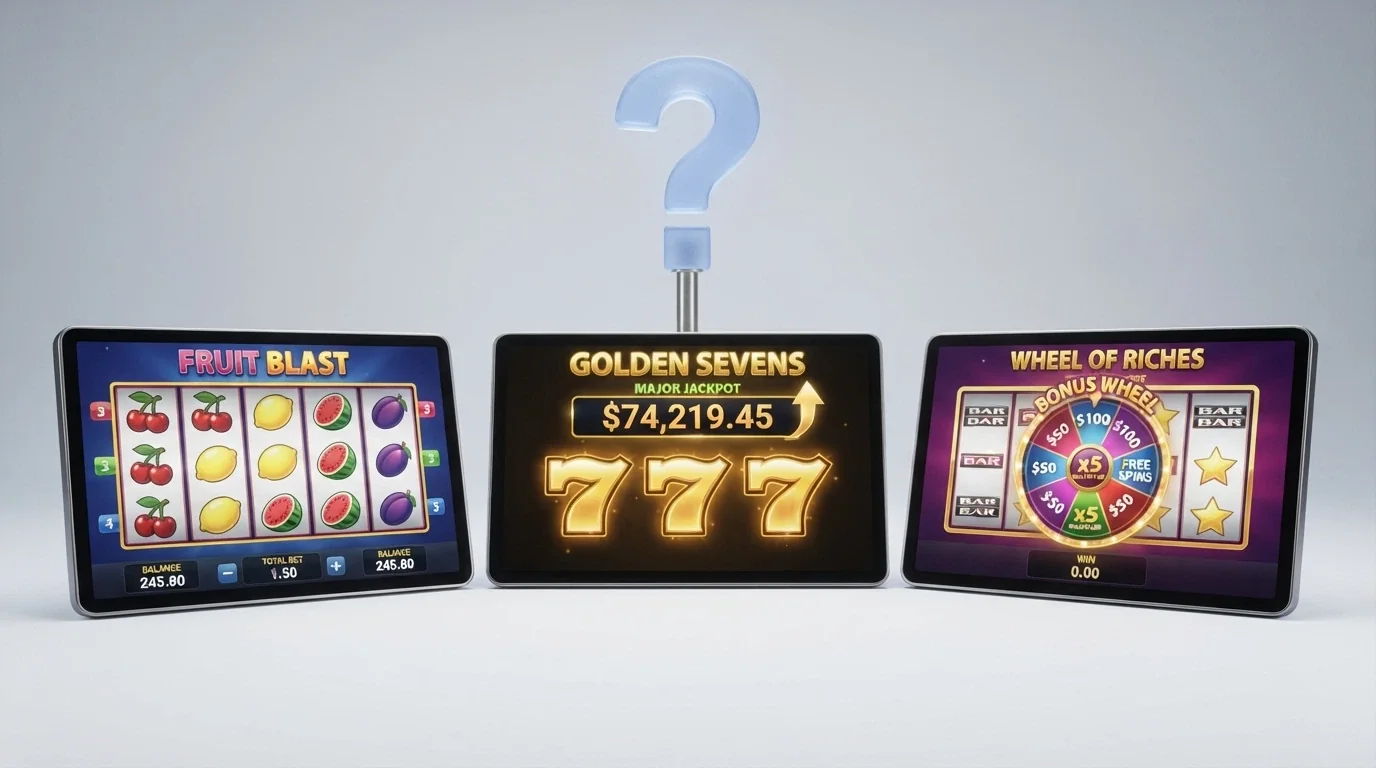
The RTP maximiser wants the highest return and is willing to accept a progressive mechanic to get it. Mega Joker at 99% RTP is the answer. The progressive jackpot carries no win cap, which means the upside is uncapped. The session volatility is medium-high, which means a flat bankroll will see longer dry stretches than a low-volatility title. The right player is one who values the long-run return over the smoothness of the session.
The feature-curious player wants the rare 3-reel title that does something other than spin and pay. Fruit Shop at 96.7% RTP and a free-spins round is the answer for someone who wants the classic format with a small modern mechanic added. Fire Joker at 96.15% RTP with a Respin of Fire and a Wheel of Multipliers up to x10 is the answer for someone who wants the mechanics more prominently. Both sit at the higher end of the surveyed RTP range and both break the “3-reel means no features” rule.
The cabinet purist wants the closest thing online to a land-based stepper. Red, White and Blue at 93.98% RTP is the answer. The trade-off is the lowest RTP in the set. The single fixed payline, the absence of wilds, scatters, free spins and bonus rounds, and the medium-high volatility are exactly what the player is signing up for. The format is the appeal.
The first step that costs nothing is the demo. Pick a title from the RTP table, find it at one of the featured operators, and load the fun-play version. Play for a fixed session — fifty spins is enough to see the volatility pattern — without depositing a cent. Decide whether the format suits before funding the account.
The framing the rest of the page makes should also be made here: every operator on this page is offshore, no AU consumer protection applies, and the player carries the risk. The reward is the game. The risk is everything around it.
Frequently Asked Questions
Which 3-reel pokie should an Australian player try first in 2026?
Mega Joker at 99% RTP is the highest-returning 3-reel title in the surveyed set, and the obvious starting point for a player who wants the best long-run return. Load the demo at any of the featured operators that hosts NetEnt, play fifty free spins to see the volatility pattern, and only then decide whether to deposit.
Is it legal to play online pokies for real money in Australia?
No — online casino games and online pokies are prohibited to persons in Australia under the Interactive Gambling Act 2001, and no Australian online casino licence exists. The Act targets the provider, not the individual player, so an Australian who plays is not personally prosecuted, but the product is prohibited and the offshore casino accepting them is acting illegally in supplying it.
What is BetStop and how does it affect online pokies players?
BetStop is the National Self-Exclusion Register, live since August 2023. One registration excludes a person from every Australian-licensed online and phone wagering service in a single step. It does not cover offshore casinos — a self-excluded person can still deposit at every operator on this page — which is a critical limit for any 3-reel pokie player to understand.
How do I deposit and withdraw using PayID at an online casino?
PayID and Osko are legal Australian deposit routes for online wagering, alongside debit card, bank transfer and BPAY. Credit cards and crypto are banned for online wagering since 11 June 2024. An Australian player funding an offshore casino uses PayID where supported, completes identity verification, and waits for the operator’s withdrawal processing time.
What should I do if I think I have a gambling problem in Australia?
Call the National Gambling Helpline on 1800 858 858 — free, confidential, 24/7. Use the self-assessment tool at gamblinghelponline.org.au. Register with BetStop if a longer break is needed. For offshore accounts, contact each operator directly to request self-exclusion, since BetStop does not bind offshore casinos.
Do any 3-reel pokies offer bonus rounds or free spins?
A few break the format’s usual no-features pattern. Fruit Shop at 96.7% RTP has free spins. Fire Joker at 96.15% RTP has a Respin of Fire and a Wheel of Multipliers up to x10. Black Diamond at 95.95% RTP substitutes two progressive jackpots for a traditional bonus round — one across paylines 1 through 8, the top prize on payline 9 at max bet.
Created by the ”Welcome Bonus Casinos AU” editorial team.