Where Australian players gamble when the casino sits offshore in 2026
 Available in AU
Australia has no online casino licence. Not federally, not in any state or territory, not for any product you would recognise as a casino. The Interactive Gambling Act 2001 has made it an offence for almost twenty-five years to provide online pokies, roulette or blackjack to a person in Australia, and the 2017 amendments gave the regulator real teeth. None of that stops Australians from playing. The market is real; the operators are almost entirely offshore; the consumer protections most readers assume apply do not follow the player across the border.
This page ranks the ten offshore casinos Australian players actually use in 2026, sets out what each is actually worth, and walks through the cost — financial and otherwise — of the choice. None of these operators is licensed in Australia. None can be. The product this page is about does not exist legally here.
Data current as of 18 October 2026, verified against the Australian Communications and Media Authority register and the National Self-Exclusion Register.
Table of Contents
- Why Australians Play at International Casinos in 2026
- The 10 Best International Casinos for Australian Players — Ranked
- What You Can Actually Play: Games, Pokies and Live Tables
- No-Deposit Bonuses: The Small Print That Costs You Real Money
- Are International Casinos Legal in Australia? The Short Answer is No
- Staying in Control: Responsible Gambling When Nobody is Watching
- How We Selected and Ranked These International Casinos
- What This Means for You: Playing Offshore With Your Eyes Open
- Frequently Asked Questions
Why Australians Play at International Casinos in 2026
The domestic gap is the whole story. Walk into a Crown casino in Melbourne and the experience is heavily regulated, taxed and supervised. Open a laptop and try to find an Australian-licensed site offering a hand of blackjack, and there is nothing. Wagering on sport and racing is licensed. Lotteries are licensed. The casino product is not. That absence is why “international casino” is not a niche preference for Australian players; it is the only option for online casino play.
The term itself does a lot of work. International casino, offshore casino, foreign casino — this page treats all three as the same product, an online casino licensed somewhere outside Australia that accepts Australian customers. Every operator on this ranking sits in that category. Every Australian who deposits real money at one of them has chosen to play outside the local regulatory perimeter.
The growth in this market has happened despite the prohibition, not because of any official sanction. The market exists because demand exists, and offshore operators are happy to meet it. Review sites have become the de facto gatekeeper: a Google search for the term returns roughly the same ten operators on roughly the same affiliate pages, with very little variation between them. That sameness is itself part of the problem — when every review page ranks the same brands in the same order, it becomes harder to know which claims to trust. The point of the ranking below is to take that overlap apart and judge each operator on what it actually delivers.
The scale is not small. The first operator on this page sits on 9.4 per cent of the Australian offshore casino market by attribution data; the tenth on 0.57 per cent. Between them, more than a quarter of all attributed offshore play by Australians passes through operators reviewed here. That is a substantial slice of an unsanctioned market.
Online vs Land-Based: Why the Screen Wins
The shift from physical to online is not specific to Australia, but the domestic structure makes it sharper here. Australian land-based casinos — Crown Melbourne, The Star Sydney, the Queensland clubs — operate under state licences and offer a full service: tables, machines, restaurants, hotels. The experience is regulated, taxed and integrated with harm-minimisation measures like state-level self-exclusion registers and the cashier-set deposit limits that licensed venues must offer.
The reason players move to a screen is not quality. It is access. An offshore casino is open at three in the morning on a Tuesday; a poker machine in a pub is not. The library size is the second gap: a pub gaming floor might hold a couple of hundred pokie titles; an offshore casino typically carries three to five thousand. The dress code is a non-issue. The travel is zero. For Australians outside the capital cities — and there are a lot of them — the closest casino might be a flight away. The offshore option is in the next browser tab.
The native term matters. Australians do not say “slots”; they say “pokies”, short for poker machines, and the term has carried over to the digital product. A “real money pokies” search is the AU equivalent of “real money slots” elsewhere, and offshore operators know it. Most leading offshore casinos serving Australian players localise the term in their marketing, in their game categories and in their no-deposit offers — a 30 free spins on Fu Long Treasures offer reads differently to an Australian reader than a 30 free spins on a generic Western slot would.
The trade-off is everything that comes with it. A pub pokie in New South Wales sits inside a state framework with problem-gambling counselling on the wall, mandatory display of the helpline number and a state-level self-exclusion register. An offshore casino carries none of those obligations. The convenience is genuine. So is the absence.
How We Evaluate International Casino Sites
The line between a review worth reading and a marketing page is whether the reviewer names the things that make an offer worse than it looks. The criterion set used on this page is narrow by design: licence transparency, offer fairness, payment speed and market presence, in roughly that order. Every operator below is measured against the same yardstick.
Licence transparency is first because it is the part most reviews skip. An offshore licence from Curacao, Anjouan or a similar foreign regulator is not equivalent to an Australian licence — there is no Australian licence for the product — but it is the only licence any of these operators can hold. The question is whether the operator names the licence, names the licence number and links to the regulator’s register. Where that information is not visible on the operator’s footer or in its terms, the page says so rather than guessing.
Offer fairness is the second test. A 35x wagering requirement on a A$100 bonus is a number; what it costs a player is the test. Where the offer includes a maximum cashout, a time window or a game restriction, that limit is given the same weight as the headline figure. A “free” offer with a A$180 cashout cap and a seven-day rollover is reported as what it is — a small promotional token with sharp constraints — not as a welcome gift.
Payment speed is the third criterion, because it is the moment the promise meets reality. A casino can offer the best bonus in the market and still be a bad operator if the withdrawal takes ten business days. The benchmarks used are: e-wallet withdrawals in under twenty-four hours (excellent), one to three days (good), three to five days for bank transfer (typical), longer (a flag).
Market presence is the fourth, and it is the one criterion this page measures with an external yardstick. The Australian market share figures cited below come from an attribution dataset that tracks where Australian offshore casino traffic actually lands, not where operators claim it does. A 9.4 per cent share means roughly one in eleven Australian players using a tracked offshore casino is using that brand. It is not a vote of confidence from this page; it is a measure of how many Australians the operator has already convinced.
Real-Money Play: What is at Stake
The phrase “real money” does work the marketing copy does not always earn. At an offshore casino, real money means a player’s own Australian dollars, deposited through a payment method the player chooses, into an account the player can lose entirely. It is not a free-play demo. It is not the casino’s house money. The player can win; the player can lose; and the player has nobody to complain to if the operator refuses to pay out.
That last point is the one most review pages skip past. The individual player is not prosecuted under the Interactive Gambling Act — the Act targets the provider, not the consumer. That is the legal floor of the situation. The legal ceiling is different. An offshore casino gives Australian players no Australian consumer protection and no Australian complaints body; the ACMA cannot recover anyone’s money. The site can be blocked at any time, with a balance still on it. Since November 2019, ACMA has had 1,564 illegal gambling and affiliate websites blocked by Australian ISPs, as at March 2026.
The asymmetry is the point. The offshore operator accepts the player’s deposit and pays out — or does not — under its own rules. The Australian player has entered a transaction with an entity that is illegal to provide the very service being sold, with no local regulator to call if things go wrong. Real money at an offshore casino is real in every direction — the wins, the losses and the absence of recourse.
Crypto Casinos: Faster but Riskier for Australian Players
The fastest payout method at most offshore casinos is cryptocurrency, and the difference is dramatic. Bank transfers at offshore casinos typically take three to five business days. A Bitcoin or Ethereum withdrawal can be processed in minutes — described in the industry as the gold standard for speed. Crypto-friendly operators actively market to Australian players on this basis.
What crypto also does is signal that the operator sits outside Australian rules. Credit cards, credit-related products and digital currency are banned as payment for online wagering in Australia, effective 11 June 2024 under the Interactive Gambling Amendment (Credit and Other Measures) Act 2023. An operator that accepts Bitcoin from an Australian customer is, by definition, not an Australian-licensed wagering service. The penalty for an Australian-licensed operator that breached the credit and crypto ban was set at up to A$247,500 per breach.
For Australian players who use crypto, the practical effect is faster access to winnings and a payment method that bypasses the Australian banking system entirely. The risk is that the same bypass means no Australian bank can later intervene on the player’s behalf. From 1 January 2027, banks and payment providers gain express authority to block transactions to illegal gambling operators; crypto makes that harder to enforce. The trade-off — speed against recourse — is the same trade-off the offshore decision presents in every other dimension, just more concentrated.
Mobile Access: Pokies in Your Pocket
More than two-thirds of Australian online casino traffic now arrives on a mobile screen. The shift happened quickly; it was not the case five years ago. Offshore operators responded by rebuilding their lobbies for a phone-sized viewport, and most leading brands now run their entire game library inside a mobile browser. A dedicated app is the exception rather than the rule at offshore casinos serving Australian players — the App Store and Google Play do not generally carry real-money casino apps targeting Australian customers, and operators have settled on browser-based delivery.
The performance gap that used to exist between desktop and mobile pokies is essentially gone. Pragmatic Play, NetEnt and Evolution all build their games in HTML5 first, and the same titles that ran on a laptop two years ago now run on a five-year-old Android. Live-dealer tables stream at standard definition on a 4G connection without a noticeable lag, and the betting interface overlays without obscuring the dealer.
The implication for Australian players is that the offshore decision no longer comes with a convenience penalty. The same 3,000-game library is available at the kitchen table as at the home office. The same no-deposit offer is claimed with two taps. The same withdrawal is initiated from the lock screen. The convenience that drove the original shift from pubs to laptops has now driven a second shift from laptops to phones, and the offshore product is fully adapted to it.
The 10 Best International Casinos for Australian Players — Ranked
The ranking below is ordered by Australian market share, descending. It is not a recommendation; none of these operators is recommended over any other, and none of them is licensed in Australia. What the share figure gives is a measure of how many Australians already use the brand, which is the single best predictor of how well the operator has solved the things Australian players actually need solved — banking options in AUD, payment-method flexibility, game localisation, support hours that line up with Australian time zones.
| Operator | AU Market Share | Licence Status | BetStop Coverage |
|---|---|---|---|
| Rocket Play | 9.4% | Offshore — jurisdiction unconfirmed | No |
| Skycrown | 8.55% | Offshore — Curacao licence confirmed | No |
| Royal Reels | 2.51% | Offshore — jurisdiction unconfirmed | No |
| WinSpirit | 1.55% | Offshore — jurisdiction unconfirmed | No |
| Stake | 1.28% | Offshore — Curacao licence confirmed | No |
| Rainbet | 1.28% | Offshore — jurisdiction unconfirmed | No |
| Scream Casino | 0.99% | Offshore — jurisdiction unconfirmed | No |
| FairGO | 0.80% | Offshore — jurisdiction unconfirmed | No |
| Bizzo Casino | 0.57% | Offshore — Curacao licence confirmed | No |
| Rocket Casino | 0.57% | Offshore — jurisdiction unconfirmed | No |
The table is a one-line summary; the write-ups below fill in what the cells cannot. The licensed Australian bookmakers — Sportsbet, TAB, Bet365, Ladbrokes, Betr, PointsBet, Neds, Picklebet — are excluded by design, because they offer wagering on sport and racing, not the casino product this page covers.
How the Rankings Work: What “Best” Means for Australian Players
“Best” is doing a lot of work in that heading. No Australian-licensed online casino exists, so “best” cannot mean “best licensed”. It cannot mean “safest by Australian standards”, because none of the operators below meets Australian regulatory standards. What it can mean is: most-used by Australians with the most verifiable offer terms and the most transparent banking.
The criteria weighting is qualitative. Licence transparency is weighted heavily because it is the cheapest signal to fake and the easiest to verify. Offer fairness is weighted heavily because the gap between the headline figure and the real cost is where most players lose the most money. Payment speed is weighted because it is the moment of truth. Market presence is the tiebreaker — when the other three are similar, the operator that more Australians already use is the one with the most settled product.
What “best” cannot mean at an offshore casino, even the best of them, is what “best” means at a Sportsbet or a Crown. There is no Australian complaints body. There is no BetStop coverage. There is no consumer protection regime that follows the player offshore. The decision to play at any of these operators is a decision to play outside the Australian regulatory perimeter, full stop. The ranking below helps the reader choose which operator to play at within that perimeter. It does not change the perimeter.
Rocket Play
Rocket Play sits at the top of the Australian offshore market by some distance, claiming 9.4 per cent of attributed traffic. That is the largest single share among the operators on this list and roughly 1.6 times the share of the next operator. The brand has solved the practical problems Australian players actually face — Australian dollar support, PayID deposits where available, a library of pokies from Pragmatic Play and the usual provider stable — and it has done so consistently enough that the player base has compounded.
What the brand has not done, in this run at least, is confirm its offshore jurisdiction. The footer of the operator site identifies an offshore licence without naming the regulator or the licence number to the standard a verification check would accept. That is not unusual for offshore operators at this scale; it is, however, the most material gap in the dossier. A reader who treats the licence claim as the equivalent of an Australian licence is making a category error; a reader who treats it as completely unverified is also over-reading. The honest position is somewhere between the two.
Rocket Play is not connected to BetStop. That is true of every operator on this list and not a specific criticism of the brand; it follows from being offshore. For a reader who has registered on the National Self-Exclusion Register, the brand is still a deposit-taking option. The two systems do not speak to each other.
The unverified licence status is the best single argument for keeping the first deposit small until the reader has tested a withdrawal personally. Rocket Play is worth the AU market’s attention as the largest of the offshore options, and the verdict for a reader who has already decided to play offshore is that the brand’s market position is the best single argument for trying it.
Skycrown
Skycrown holds 8.55 per cent of the Australian offshore market and is one of three operators on this list with a Curacao licence confirmed across multiple sources. That confirmation matters more than it might at first glance: a Curacao licence is not Australian and does not give Australian players Australian recourse, but it does give the operator a register entry that can be checked, a regulator that can in principle act on complaints, and a licence number that the operator cannot easily fake. Skycrown’s licence passes that test.
What the brand has not made verifiable in this run is the specific number of no-deposit free spins for Australian players. Free spins for new accounts are mentioned on the operator site and in third-party tracking; the exact number, the qualifying game and the rollover terms have not been pinned down to a level this page will quote. The honest position is that the offer exists; the dishonest position would be to invent a number to fill the table cell.
Skycrown’s BetStop status is the same as every other operator on this list: not connected. A Skycrown account is not an Australian wagering account, and the National Self-Exclusion Register does not reach it. For a reader who has registered with BetStop and is honouring that decision, Skycrown is not a path back.
The licence is the harder claim to verify; Skycrown has done that work. The free-spin offer is the easier claim to verify; Skycrown has left it vague. For players prioritizing confirmed licensing over granular bonus detail, Skycrown remains a pragmatic choice.
Royal Reels
Royal Reels sits at number nine in the Australian offshore market with 2.51 per cent of attributed traffic — a meaningful presence at roughly a quarter of the size of the leader. The brand is recognisable to Australian players through its pokies-first marketing and its use of Australian-friendly payment methods, but the public-facing information on its licence is thin enough that this page cannot confirm which offshore regulator issued it.
That gap is the dominant feature of the Royal Reels dossier. The market presence is real; the licence status is not verifiable to the standard the rest of this ranking applies. A reader who weights licence transparency heavily — and the methodology here says it should be weighted heavily — is right to treat Royal Reels with more caution than Skycrown or Stake.
No BetStop coverage. No Australian consumer protection. No complaints body. The standard offshore caveats apply, and they are not specific to this brand.
For a reader who has decided to play offshore and is choosing among operators at this share tier, Royal Reels is a credible option on game library and payment method, and a less credible one on licence transparency. The first deposit, as with any operator the reader has not personally tested, should be small.
WinSpirit
WinSpirit is the smallest operator on this list to have a specific no-deposit offer confirmed in the research. Thirty-five free spins, no deposit required, with a seven-day rollover window and a positioning that explicitly names crypto-suitable players. The offer sits inside a brand with 1.55 per cent of the Australian offshore market — too small to call mainstream, large enough to have a stable product.
The seven-day rollover is the key constraint. Most no-deposit free-spin offers give the player fourteen or thirty days; seven days is short, and the winnings from the spins must be wagered within that window or they expire. The constraint is not arbitrary — it is the operator’s defence against exactly the kind of player who would otherwise lock in a no-deposit win and walk. For a casual player who logs in once or twice a week, the seven-day window is workable. For a player whose schedule is unpredictable, the window is a real limit.
The licence is offshore; the specific jurisdiction is not confirmed in this run. The BetStop status is the same as every other operator on this list: not connected. Crypto is supported, which makes WinSpirit a candidate for the reader who wants to deposit and withdraw without touching the Australian banking system.
For a reader who plays frequently enough to clear seven days without trouble, WinSpirit is a useful option. For a player whose play is intermittent, the rollover is a real risk.
Stake
Stake is the most globally recognisable brand on this list, with a footprint that extends well beyond Australia. The brand holds 1.28 per cent of the Australian offshore market — modest in AU terms, enormous globally — and operates under a confirmed Curacao licence. The global presence means the platform’s product is mature; the AU-specific presence means the localisation is shallower than Australian-focused operators.
The product is crypto-native. Stake was built around Bitcoin and has stayed there; the cashier is dominated by crypto options, with Australian-dollar support through a smaller number of routes. For an Australian player who already holds crypto and wants an operator that treats it as a first-class payment method, Stake is the clearest fit on this list. For a player who prefers AUD deposits through PayID or a local debit card, the fit is weaker.
Free-spin detail for Australian players is not verified in this run. The brand offers promos of various kinds; the specific free-spin offer for Australian players has not been pinned down to a number this page will quote. The honest position is that promos exist; the dishonest position would be to invent one.
BetStop does not apply. The site is offshore. The standard caveats apply.
Stake is worth considering for the crypto-native reader who values a global, mature product over Australian-specific localisation. For a reader who wants the most Australian-friendly cashier and the most localised support, the more AU-focused brands higher on the list are a better fit.
Rainbet
Rainbet sits at number thirteen in the Australian offshore market with 1.28 per cent of attributed traffic — tied with Stake at the same share figure, despite being a much smaller global brand. The Australian presence is real; the global footprint is modest.
What is verifiable about Rainbet in this run is thin. The market share is attributable, which means the brand has Australian customers; the specific offshore jurisdiction is not confirmed. The bonus detail for Australian players is not pinned down. The brand’s overall positioning is mainstream offshore casino rather than specialist in any vertical.
BetStop status: not connected. Standard offshore caveats apply.
Rainbet is on this list because the market share data places it there. For a reader choosing among operators at this share tier, Rainbet’s case is its accessibility — a smaller share often means a less crowded cashier, faster support and more responsive bonus terms. That is a hypothesis, not a confirmed finding; the test is a small first deposit.
Scream Casino
Scream Casino holds 0.99 per cent of the Australian offshore market — close to the lower bound of the operators reviewed on this page. The brand is a smaller offshore operator with a presence large enough to be tracked but small enough that the public dossier is thin.
What is known is the market position. What is not known, in this run, is the specific offshore jurisdiction, the bonus detail for Australian players, and any other verifiable specification beyond the share figure. Scream Casino passes the basic market-presence test (Australian players use it in measurable numbers); it does not pass the licence-transparency test to a standard this page will quote.
BetStop: not connected. Standard offshore caveats apply.
Scream Casino passes the basic market-presence test and fails the licence-transparency test. For a reader with a low tolerance for the second, this is the operator to skip; for a reader with a low tolerance for the first, this is the operator to try.
FairGO
FairGO is one of two operators on this list with a specific no-deposit offer confirmed to the level this page will quote. Thirty free spins, no deposit required, on the Fu Long Treasures pokie, with a maximum cashout of A$180 and a validity window running until 25 August 2026. The offer is one of the clearest-specified on this page and the constraint set is unusually explicit.
The A$180 maximum cashout is the key number. Even a player who hits a sizeable line payout on the Fu Long Treasures pokie during the free spins is capped at A$180 on withdrawal — any winnings above that figure stay with the operator. The cap is the operator’s defence against a player who would otherwise convert a no-deposit spin into a large withdrawal. For a player who treats the offer as a way to test the cashier and the game library, the cap is workable. For a player who sees the offer as a path to a meaningful win, the cap is the limit.
The licence is offshore; the specific jurisdiction is not confirmed in this run. The market position is 0.80 per cent of the Australian offshore market, which places FairGO in the bottom third of the operators reviewed here. The BetStop status is not connected; standard offshore caveats apply.
The A$180 cap is the deal-breaker for anyone whose expectations exceed it. The cap is also, fairly clearly, the point.
Bizzo Casino
Bizzo Casino sits at number nineteen in the Australian offshore market with 0.57 per cent of attributed traffic, and is the second operator on this list to have both a confirmed Curacao licence and a confirmed bonus specification. The welcome bonus is a A$100 match with a 35x wagering requirement; the minimum deposit is A$10; the e-wallet withdrawal time is sixteen to twenty-two hours. The numbers are specific enough to do arithmetic with — which the no-deposit section below does.
The minimum deposit of A$10 is one of the more accessible thresholds on this list. The 35x wagering requirement is on the lower end of the offshore norm (40x is more common). The e-wallet withdrawal time of sixteen to twenty-two hours is faster than the bank-transfer baseline of three to five business days. None of these specifications is industry-leading; together, they form a reasonable entry-point offer.
The licence is Curacao and confirmed. BetStop is not connected. The standard offshore caveats apply. The market position is small; the operator’s specifications are clearer than most at this share tier.
For a reader who wants a small first deposit to test an offshore cashier and a confirmed Curacao licence to anchor the operator’s identity, Bizzo is a reasonable entry point. The 35x wagering requirement is the main thing to read carefully before claiming; the calculation in the section below shows what that requirement actually costs.
Rocket Casino
Rocket Casino sits at the bottom of this list with 0.57 per cent of attributed Australian offshore traffic — tied with Bizzo Casino at the same share figure but with a much thinner public dossier. The brand is recognisable from the name overlap with Rocket Play but is, as far as this page can verify, a separate operator.
What is verifiable is the market position. What is not verifiable, in this run, is the specific offshore jurisdiction, the bonus detail for Australian players, and any other specification beyond the share figure. Rocket Casino passes the basic market-presence test; it does not pass the licence-transparency test to a standard this page will quote.
BetStop: not connected. Standard offshore caveats apply.
Rocket Casino is on this list because the market data places it there, not because the dossier is fuller than the operators above. For a reader who wants the bottom-of-list data to mean anything, Bizzo Casino is the better-tested alternative at the same share figure.
What You Can Actually Play: Games, Pokies and Live Tables
The game library is the part of the offshore product that genuinely does compete on quality. The best-known offshore casinos serving Australian players carry three to five thousand titles from the major studios — Pragmatic Play, NetEnt, Play’n GO, Yggdrasil, Thunderkick, Nolimit City, Evolution for live-dealer — and the depth of the catalogue is the single best reason the offshore option has compounded despite the legal status. A pub pokie floor carries a couple of hundred titles; a leading offshore casino carries more games than were released in the entire history of pub poker machines.

What the player gets, in practice, is a library dominated by pokies, with a substantial table-game section and a live-dealer vertical run by Evolution. The shape of the library varies a little by operator, but the broad outline is consistent. Pokies occupy the bulk of the lobby and the bulk of player attention; live-dealer tables have grown fastest over the past three years; RNG table games sit in the middle and are typically underplayed.
The question that matters is not the size of the library but the return on it. Return to player (RTP) is the percentage of all wagered money a game is programmed to return to players over the long run, expressed as a percentage. A 96 per cent RTP pokie returns 96 cents per dollar wagered, on average, over millions of spins. The remaining four cents is the house edge. The house always has an edge. The variation across games is what a player can actually do something about.
The Pokies Australians Actually Search For
The table below covers the highest-RTP pokies Australians actually search for at offshore casinos. The figures are the default configurations published by the studios; some operators run the same titles at lower RTP settings, which is a separate issue covered in the provider section below.
| Pokies | Provider | RTP (default) | Volatility | Max Win |
|---|---|---|---|---|
| Gates of Olympus | Pragmatic Play | 96.50% | High | 5,000x stake |
| Big Bass Bonanza | Pragmatic Play | 96.71% | Medium–High | 2,100x stake |
| Sweet Bonanza | Pragmatic Play | 96.49% | High | 21,175x stake |
| Book of Dead | Play’n GO | 96.21% (max configuration) | High | 5,000x stake |
RTP is half the story; volatility is the other half. Gates of Olympus, Sweet Bonanza and Book of Dead are high-volatility games — long dry stretches punctuated by occasional large wins. Big Bass Bonanza is medium-to-high volatility, which sits between the two extremes. A player who wants frequent small wins and longer session time is better served by a lower-volatility game; a player who wants the chance at a large payout from a small stake is better served by a high-volatility title.
Book of Dead carries an asterisk. The 96.21 per cent figure is the highest configuration Play’n GO offers for the title; the studio also makes the game available to operators at 96, 94, 91, 87 and 84 per cent. A player who loads Book of Dead at an offshore casino and sees a lower figure than 96.21 per cent is not looking at a different game; they are looking at the same title configured down. The configurable-RTP trap is covered in the provider section below; it is the single most important thing a player can learn to check.
Max-win figures are the headline number the marketing tends to lead with — Sweet Bonanza’s 21,175x is the largest of the four. Max wins are theoretical caps tied to the game’s mechanic and are realised with vanishing rarity. A player should treat them as the game’s ceiling, not its expected outcome.
Table Games: Roulette, Blackjack and Beyond
RNG table games at offshore casinos cover the standard set: European roulette, American roulette (with its higher house edge from the double zero), blackjack in several rule variants, baccarat, casino hold’em, three-card poker, and a long tail of less-common titles. The house edge on these games is fixed by the rules and is generally lower than the house edge on pokies.
European roulette with a single zero carries a house edge of 2.7 per cent. American roulette with the double zero carries 5.26 per cent. A player who loads roulette at an offshore casino and does not check the variant is potentially giving the house twice the edge it would otherwise have. The rule is the rule; the variant is the variant.
Blackjack house edges depend on the rule set. A standard single-deck game with the dealer standing on soft 17 carries a house edge under 0.5 per cent for a player using basic strategy; rule variations push the edge up. Offshore casinos tend to run blackjack with the dealer hitting on soft 17, which raises the edge slightly. A player who treats blackjack as a casual game rather than a studied one is paying for the casualness.
Baccarat is the simplest of the three: bet on banker, player, or tie. The banker bet carries the lowest house edge (around 1.06 per cent), the player bet is slightly higher (1.24 per cent), the tie bet is a poor proposition (over 14 per cent). The game’s simplicity is part of its appeal at the live tables.
The distinction between RNG and live-dealer matters here. RNG table games are software — the wheel spin, the card deal, the dice roll is generated by a random number generator. Live-dealer games are streamed from a studio with a real dealer, real cards, real wheels. The two carry the same mathematical edge; the experience is different.
Live-Dealer Tables: The Closest Thing to a Real Casino Floor
Live-dealer is the fastest-growing segment at international casinos serving Australian players, and the gap between live-dealer and RNG has widened over the past three years. The dominant provider is Evolution, which operates studios across Europe, North America and Latin America and streams hundreds of tables simultaneously. Pragmatic Play Live runs a smaller competing vertical; Playtech Live is present at some operators.
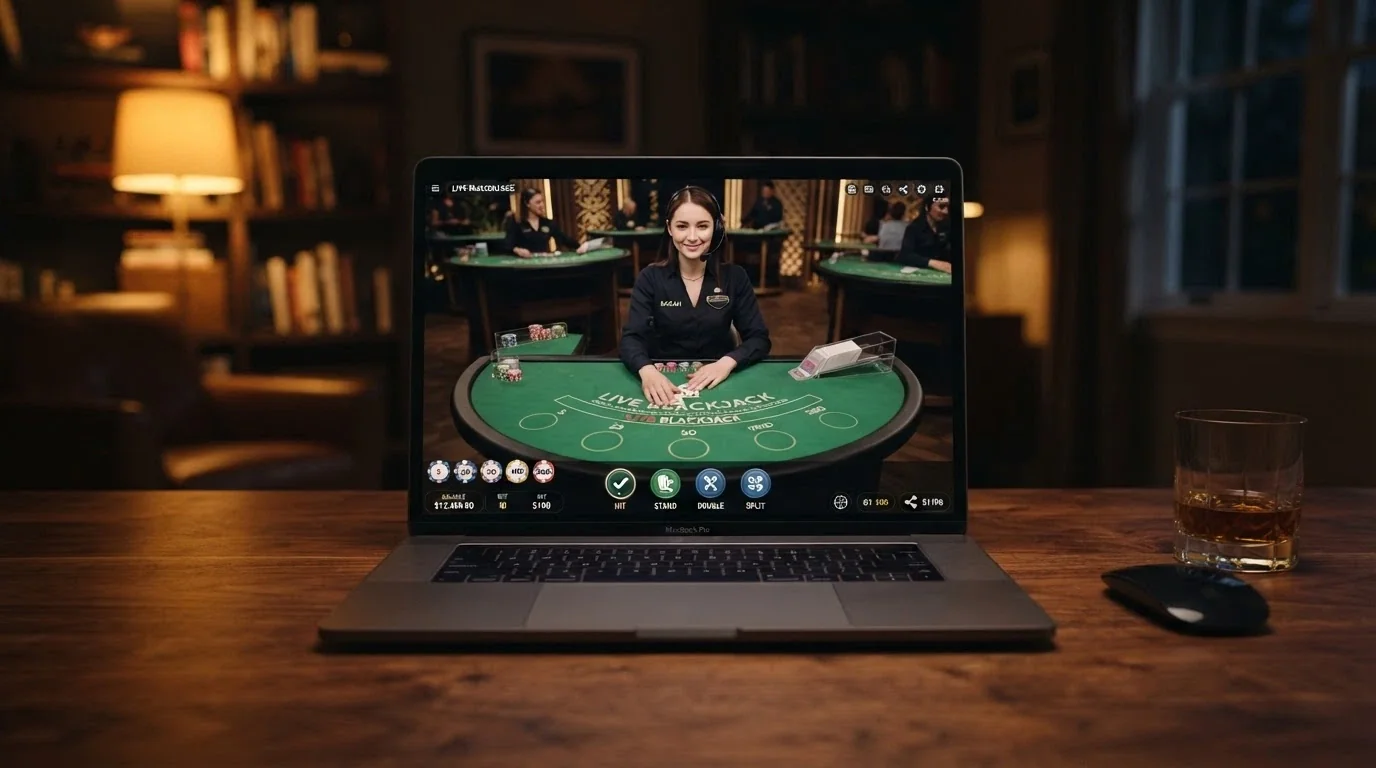
The product is closer to a real casino floor than anything the online product has previously offered. A live-dealer blackjack table shows a real dealer on a real felt, with a betting interface overlaid on the player’s screen. Cards are dealt from a real shoe; the player clicks to hit, stand, double or split, and the result is decided by the cards actually drawn. The streaming is standard definition at minimum, with most tables offering HD, and the latency on a modern connection is low enough that the experience reads as continuous.
Game-show-style titles have expanded the live vertical. Evolution’s Dream Catcher, Monopoly Live, Crazy Time and Lightning Roulette all use a wheel-based mechanic with bonus rounds and a presenter; the format is a hybrid between a table game and a TV game show. The max wins are large (Crazy Time has a 20,000x top prize); the house edge is higher than the standard table games; the entertainment value is the point.
Live-dealer tables have per-table RTP figures that vary by game and bet type, and the figures are not always published at the table level in the way pokie RTPs are. A player who wants the exact edge on a specific live title needs to check the game’s help screen, where the studio usually publishes the figure. The methodology this page applies to pokies — figure from research, no-data marker if not surfaced — applies to live-dealer as well.
Which Providers Supply the Games — and Why It Matters
The studios behind the games are the second front on which the offshore product competes. A player who knows the providers can read a casino’s library before signing up; a player who doesn’t is at the mercy of whatever the operator has loaded. The studios matter because their catalogue-average RTPs tell a player how much house edge they are playing against on average.
NetEnt’s catalogue-average RTP is the highest among thirteen studios compared in a 2026 dataset of 3,311 catalogue records, at 96.39 per cent. The range across NetEnt’s portfolio runs from 94.0 per cent to 99.0 per cent. A player who picks a NetEnt-heavy casino is, on average, playing a tighter house edge than at most other studios.
Pragmatic Play’s RTP range runs from 93.5 per cent to 99.0 per cent. The studio is the dominant supplier at most offshore casinos serving Australian players, and the range is wide enough that the specific title and configuration matter more than the studio average. Gates of Olympus at 96.50 per cent is a different proposition from a 94 per cent Pragmatic Play title.
Yggdrasil’s average RTP is 96.2 per cent, with a range between 94.0 per cent and 99.0 per cent. Thunderkick’s average is 96.3 per cent, range 94.0 per cent to 98.0 per cent. Nolimit City’s average is 96.2 per cent, range 94.0 per cent to 98.5 per cent. The four studios cluster tightly around the same average; the range is where the difference lies.
The configurable-RTP issue is the trap. Play’n GO publishes Book of Dead at a 96.21 per cent maximum configuration but makes the title available to operators at 96, 94, 91, 87 and 84 per cent. Other studios have similar configurations. A player who loads a familiar title at an unfamiliar casino and does not check the RTP figure on the game’s help screen is potentially playing the same game at a much higher house edge than they expect. The check is one click; the cost of not making it is real.
Provider reputation signals game fairness in a different way. The major studios — Pragmatic Play, NetEnt, Play’n GO, Evolution — hold licences in multiple jurisdictions and submit their games to independent testing labs. A casino that stocks games from these studios is sourcing from operators whose games have been audited; a casino that stocks games from unknown studios is sourcing from operators whose games have not been. The presence of the major studios in a casino’s library is a soft signal but a useful one.
No-Deposit Bonuses: The Small Print That Costs You Real Money
No-deposit offers are the marketing centrepiece of the offshore casino product for Australian players, and they are also the part where the gap between the headline and the real cost is widest. A “free” offer with a 40x wagering requirement and a A$100 cashout cap is free in the sense that the player does not deposit; it is not free in the sense that the player can convert it into a meaningful withdrawal without first turning over several thousand dollars at the casino’s house edge.

The offers confirmed for Australian players are listed in the section below. The wagering math is in the section after that.
No-Deposit Free Spins: What is Actually on Offer Right Now
The confirmed no-deposit free-spin offers for Australian players, with their real constraints:
- WinSpirit: 35 free spins, no deposit required, rollover within seven days, positioned as suitable for crypto players.
- FairGO: 30 free spins on Fu Long Treasures, no deposit required, maximum cashout A$180, valid until 25 August 2026.
- BitStarz: 50 free spins, no deposit required, 40x wagering requirement, maximum cashout A$100.
- CashLounge: 20 free spins on Bank Maker by Mancala, no deposit required, 40x wagering requirement, maximum cashout €20.
- CasinoJoy: 20 free spins on Book of Helios by BetSoft, no deposit required, 40x wagering requirement.
The cashout caps are the most-read constraint and the most often missed. A player who hits a large line payout on Fu Long Treasures during the FairGO offer is capped at A$180 on withdrawal; any winnings above that figure stay with the operator. The cap is the operator’s defence against a player who would otherwise convert a no-deposit spin into a large withdrawal. The cap is also, fairly clearly, the point.
Wagering Requirements: Why a “Free” Bonus is Never Free
A 35x or 40x wagering requirement turns a handful of free spins into a multi-thousand-dollar turnover before a cent is withdrawable. The math is straightforward and the conclusion is the same at every multiplier.
Take the Bizzo Casino welcome offer as the worked example: a A$100 bonus with a 35x wagering requirement asks the player to turn over A$3,500 before a cent is withdrawable. Wagered on a single pokie at a 96.50 per cent RTP — Gates of Olympus at its default configuration is the representative figure — the expected loss on that turnover is around A$122.50. That A$122.50 is the bonus’s real cost, the average amount the house keeps from the turnover needed to clear the wagering requirement. It is a statistical estimate, an average over many spins under the stated assumptions, not a guaranteed outcome for any single player. A player who runs hot will give back less; a player who runs cold will give back more.
The “free” framing in the marketing copy is doing exactly the work it claims not to. The bonus is not free to the player; it is free to claim. The wagering requirement is where the operator is paid, and the cashout cap is where the payment is bounded. A player who reads both numbers before claiming knows what the offer is worth; a player who reads neither knows what the offer costs.
The 40x wagering requirement at BitStarz and CashLounge raises the expected loss proportionally. A A$100 bonus at 40x is A$4,000 of required turnover, which at a 96.50 per cent RTP yields an expected loss of A$140. The cashout caps at A$100 (BitStarz) and €20 (CashLounge) bound the upside; the wagering requirement bounds the downside. The combination is the offer’s real shape, and the headline number is the bait.
Are International Casinos Legal in Australia? The Short Answer is No
The short answer is the headline. The longer answer takes the rest of the section. Online casino is prohibited in Australia. There is no licence for the product, anywhere in the country. The Interactive Gambling Act 2001 makes it an offence to provide online casino games, online pokies or in-play sports betting to a person in Australia, and that prohibition has been in force for almost twenty-five years. The operators on this page are not licensed in Australia because they cannot be — the licence does not exist for the product they offer.

The player is not the target. The Act is aimed at the provider, not the consumer, and no individual Australian has been prosecuted for playing at an offshore casino. That is the legal floor of the situation. The legal ceiling is what the player gives up by playing outside the Australian regulatory perimeter, and it is a substantial ceiling.
The Interactive Gambling Act: What It Actually Prohibits
The Interactive Gambling Act 2001 makes it an offence to provide online casino games, online pokies or in-play sports betting to a person in Australia. The offence is on the provider; the consumer is not the target of the Act. There is no Australian licence for online casino anywhere in the country — not federally, not in any state or territory. A page promising “the best licensed online casinos in Australia” is describing something that does not exist.
The Act was strengthened in 2017 by the Interactive Gambling Amendment Act 2017, which closed loopholes offshore operators had used to serve Australian customers without falling foul of the prohibition. The 2017 amendments gave the regulator — the Australian Communications and Media Authority, or ACMA — its enforcement and blocking powers. More than 225 illegal services have withdrawn from the Australian market since 2017.
The 2026 reform takes the next step. The Interactive Gambling Amendment (Gambling Reform) Bill 2026 passed Parliament on 19 August 2026; its measures commence on 1 January 2027.
ACMA Enforcement: Blocked Sites, Fines and What They Cannot Do
The Australian Communications and Media Authority enforces the online prohibition. ACMA investigates complaints, issues formal warnings, runs civil penalty proceedings and directs ISPs to block illegal sites. Since November 2019, ACMA has had 1,564 illegal gambling and affiliate websites blocked by Australian ISPs, as at March 2026. The blocking is DNS-level: an Australian customer who types a blocked domain into a browser receives an ACMA notice instead of the site. The block is real; the workarounds are well-known and the regulator does not chase the workarounds.
What ACMA cannot do is recover money. The regulator blocks sites, enforces advertising restrictions and runs civil penalty proceedings against providers; individual players are not prosecuted, and the regulator has no power to compel an offshore operator to pay a disputed withdrawal. The Australian Communications and Media Authority blocks some websites and enforces advertising restrictions, but individual players are not prosecuted.
The asymmetry is what makes the offshore decision expensive when it goes wrong. A player who is refused a withdrawal at an Australian-licensed operator has the ACMA, the state regulator and ultimately the courts to escalate to. A player who is refused a withdrawal at an offshore operator has the operator’s own internal dispute process, and after that, the offshore regulator named in the licence terms — which may or may not respond. There is no Australian complaints body for offshore casino disputes.
The 225 illegal services that have withdrawn from the Australian market since 2017 are not the same as 225 operators that have been shut down. Many of the withdrawals are quiet exits — an operator deciding that the cost of serving Australian customers is no longer worth the regulatory exposure. The effect is the same: those operators no longer accept Australian players. The ones that remain are the ones that have decided to absorb the regulatory cost.
The 2026 Reform: What Changes on 1 January $$CY+1$$
The Interactive Gambling Amendment (Gambling Reform) Bill 2026 passed Parliament on 19 August 2026; its measures commence on 1 January 2027. The reform is the most significant change to Australian gambling law in a generation, and most of it targets licensed wagering operators rather than offshore casinos. The licensed operators absorb the bulk of the new obligations; the offshore operators absorb almost none of them.
The advertising restrictions are the headline. From 1 January 2027, no more than three wagering ads per hour between 6:00 am and 8:30 pm on broadcast television; no wagering advertising from fifteen minutes before a live sporting event until five minutes after it ends; no wagering advertising inside sports venues or on uniforms; no radio wagering ads during school drop-off and pick-up times; no broadcasting of sporting odds; online wagering ads shown only to logged-in, age-confirmed users with an opt-out. Athletes, celebrities and influencers are barred from promoting wagering products.
The inducement restrictions are the second headline. From 1 January 2027, direct marketing of inducements is prohibited for fourteen days after a customer signs up, for three months after a person deregisters from BetStop, and indefinitely for customers identified as at risk of gambling-related harm. The inducement blackout is targeted at the bonus-and-promotion machinery that licensed wagering operators use to acquire customers.
The bank-blocking power is the third headline. From 1 January 2027, banks and payment providers gain express authority to block transactions to illegal gambling operators. The practical effect on offshore casinos serving Australian customers is significant: a player who pays through an Australian bank may find the transaction declined at the bank’s discretion. Crypto and other non-bank rails remain outside that authority, which is part of the reason crypto-friendly offshore operators have been marketing harder to Australian players since the reform was announced.
The reform does not change the offshore casino decision for Australian players. The product remains prohibited. The operators remain unlicensed. The player remains not prosecuted. The reform changes the surface — what licensed operators can advertise, what banks can block, what inducements can be marketed — and the surface change matters most for readers who were going to play at a licensed wagering operator and are weighing inducements. For readers who have already decided to play at an offshore casino, the reform is a tightening of the perimeter, not a softening of it.
Offshore vs Licensed: What the Australian Player Gives Up
The comparison below is the practical answer to “what do I lose by playing offshore?”. The licensed column describes what an Australian-licensed wagering service provides under state and territory conditions; the offshore column describes the corresponding gap at every operator on this page.
| Aspect | Licensed AU Wagering | Offshore International Casino |
|---|---|---|
| Self-exclusion (BetStop) | Bound by BetStop registration; account frozen | Not connected; self-exclusion does not apply |
| Consumer protection | State/territory regulator, ACMA complaints process | No Australian consumer protection; no complaints body |
| Complaints body | State/territory regulator can compel response | Operator’s internal process only; offshore regulator may or may not respond |
| Withdrawal disputes | Regulator can mediate; courts as last resort | No Australian recourse; balance can be lost |
| Site blocking | Not blocked; licensed to operate | Can be blocked at any time with balance on it |
| Payment methods | Debit, bank transfer, PayID, BPAY (credit and crypto banned since 11 June 2024) | Debit, e-wallets, crypto, often credit |
| Identity verification | Required (KYC) | Required by most serious operators; varies |
| Game RTP auditing | Independent testing required | Varies; major studios audit their own games |
| Advertising restrictions | From 1 January 2027: ad cap, blackout, inducement ban | Not subject to Australian advertising rules |
The table is a side-by-side. The story it tells is that every cell in the licensed column has a corresponding weakness in the offshore column, and the offshore player absorbs each of those weaknesses without anyone to escalate to. The licensed product is not free — point-of-consumption tax, identity verification, deposit-limit obligations all add friction — but the friction is the price of the protections that sit behind it.
Staying in Control: Responsible Gambling When Nobody is Watching
The Australian responsible-gambling infrastructure is built for the licensed market, and most of it stops at the offshore border. The tools that work for a Sportsbet or a Crown account — BetStop, customer-set deposit limits, activity statements — do not work for an offshore casino account. The tools that work for an offshore casino account are the ones the player sets for themselves, with no operator obligation to enforce them. The asymmetry is the point.
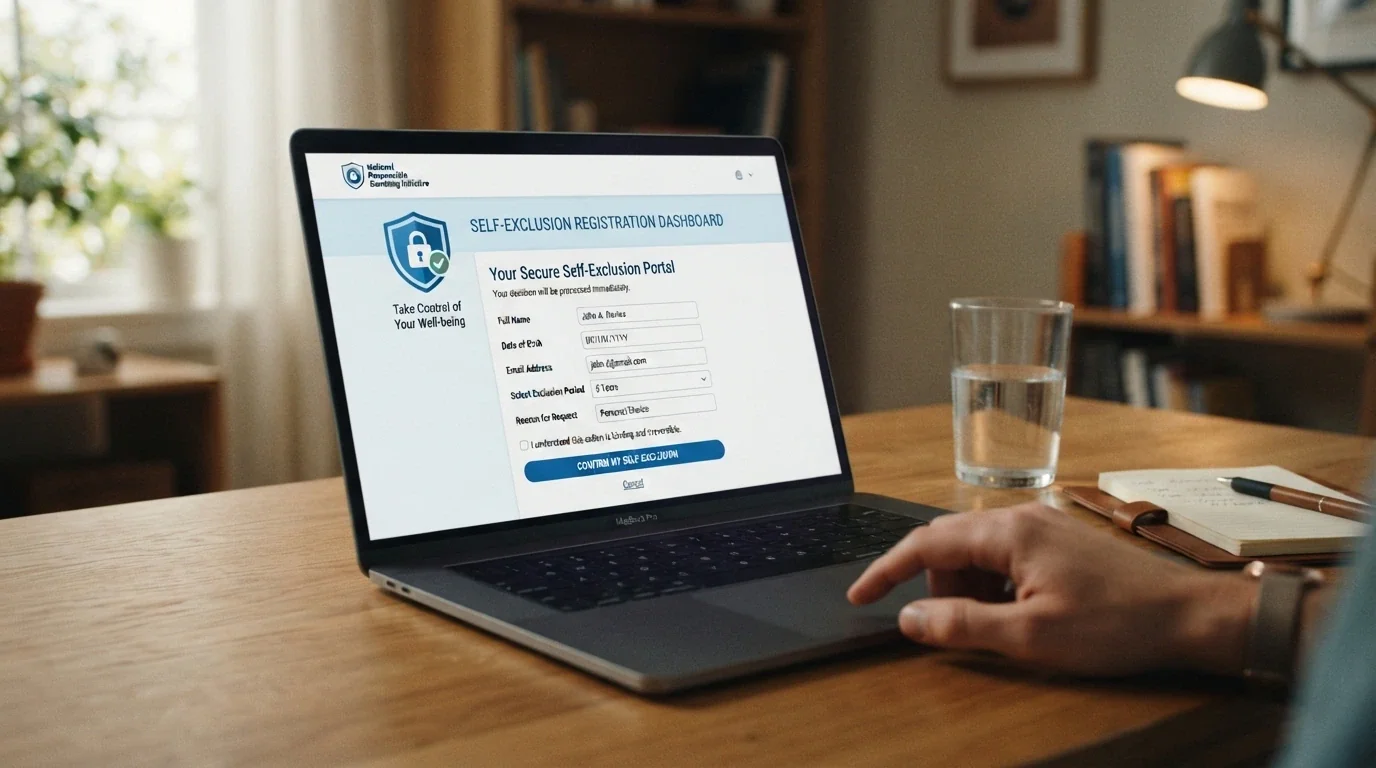
Help is the part that crosses every border. The National Gambling Helpline (1800 858 858) is free, confidential and staffed 24 hours a day, 7 days a week. Gambling Help Online (gamblinghelponline.org.au) provides chat and counselling. The lines are open whether the player is having trouble with a licensed operator or an offshore one; the harm is the same regardless of where the bet was placed.
BetStop: What It Does and Why It Cannot Help You Offshore
BetStop is the National Self-Exclusion Register. It has been live since August 2023 and has had 67,480 registrations as at 31 July 2026, with 41,290 exclusions still active. Seventy-eight per cent of registrants were under 40, and 38 per cent chose lifetime exclusion. The register binds every Australian-licensed wagering service, and it works: a registered player cannot open a new account with a licensed operator, and a registered player’s existing accounts are frozen.
What BetStop cannot do is reach an offshore casino. BetStop binds Australian-licensed wagering services only; offshore casinos are not connected. A person who has registered with BetStop and then opens an account at an offshore casino has found the gap in the system — and the offshore casino will accept the deposit, accept the bets and process the withdrawals without checking the register. The system was not designed to cover the offshore product because the offshore product is not licensed in Australia and does not interface with the register.
From 1 January 2027, the 2026 reform adds a three-month marketing blackout after a person deregisters from BetStop. The blackout prevents licensed operators from sending inducements to a person who has just left the register. The blackout does not extend the reach of the register to offshore casinos; it tightens the perimeter around the licensed operators the register already binds.
For a reader who has registered with BetStop and is honouring that decision, the offshore casino is not a path back. For a reader who has not registered but is considering it, the register is a real and effective tool for licensed wagering and a useless tool for offshore casino play. The honest framing is that BetStop is half a system, and the offshore half is missing.
Deposit Limits and Player Controls You Set Yourself
Australian-licensed wagering operators offer customer-set deposit limits and activity statements under state and territory conditions. A player at Sportsbet or Ladbrokes can set a daily, weekly or monthly deposit cap; the operator is required to honour the cap. Activity statements are available on request, summarising deposits, withdrawals and net position over a chosen period.
Offshore casinos have no Australian obligation to offer either tool. Some do. Most offer a deposit-limit feature in the cashier, but the limit is set by the player and enforced only as far as the operator chooses to enforce it — there is no Australian regulator to escalate to if the operator ignores a self-imposed limit. Activity statements are available at some offshore operators and not others.
The practical effect is that the offshore player is their own risk manager. A player who wants a deposit cap needs to set one at the cashier, verify that it has been applied and assume that the operator will honour it until proven otherwise. A player who wants an activity statement needs to ask the support team, accept that the answer may be no, and keep their own records.
There is no federal deposit, loss or stake ceiling for online gambling in Australia — and that is not because the regulator decided a high ceiling was appropriate. It is because the product those ceilings would govern is banned outright. The state-level consumer protections exist for the licensed wagering market; the offshore casino market sits outside them.
Where to Get Help: Helplines, Chat and Counselling
The National Gambling Helpline is 1800 858 858, free, confidential, 24 hours a day, 7 days a week. Online chat and counselling are available through Gambling Help Online at gamblinghelponline.org.au. Both services are open to anyone who needs them, regardless of where they play. The lines are staffed by counsellors trained in problem-gambling intervention; the chat and counselling offer a private channel for players who do not want to speak on the phone.
The Australian Institute of Health and Welfare put problem gambling at 2.1 per cent of Australian adults — roughly 430,000 people — in 2022. High-risk gambling was at 1.8 per cent. The figures are for the population as a whole and are not stratified by offshore versus licensed play. The point that matters is the size of the affected population and the corresponding reach of the help services.
A self-assessment tool is available through Gambling Help Online for players who want a structured way to think about their own play. The tool is not a diagnosis; it is a prompt. For a player who is concerned about their own gambling or someone else’s, the help line is the first call. The offshore casino decision is irrelevant to the help line’s willingness to listen.
How We Selected and Ranked These International Casinos
The selection and ranking of the ten operators on this page rests on a single external yardstick — the Australian market share attribution data — and a set of qualitative checks against that yardstick. The market share data is what placed the operators in the order they appear; the qualitative checks are what populated the licence, offer, payment and BetStop columns.
The sources consulted were the ACMA blocked-site register (to confirm that no operator on this list is currently blocked, which would be a strong signal against inclusion), the operator’s own terms and footer (to identify the named offshore licence where one is given), and third-party tracking sites for offer specifics. Where the operator’s terms did not name a specific offshore regulator to a verifiable standard, the licence cell was marked accordingly.
The criteria ordering is licence transparency first, offer fairness second, payment speed third and market presence fourth. The ordering is editorial — this page has decided that an unverified licence matters more than a slightly better bonus — and is not derived from a numeric weighting. A reader who weights the criteria differently is reading a different page, and the ranking would change accordingly.
Operators that are tracked in the Australian attribution data but are not in the top twenty by share were excluded by scope. Operators outside the offshore casino category — Australian-licensed wagering brands that do not offer casino products — were excluded by definition; they are a different product for a different reader, and conflating them with the offshore casino product is the error this page is built to avoid.
The qualitative basis of the ranking is also its limitation. A reader who wants a numeric score for each operator on each criterion will not find it on this page; the scoring is the editorial judgement of the writer, applied consistently across the same ten operators and disclosed in the methodology section above.
What This Means for You: Playing Offshore With Your Eyes Open
The verdict this page has built toward is not a recommendation. None of the ten operators above is recommended over any other; none is recommended at all. The decision to play at an offshore casino is a decision to play outside the Australian regulatory perimeter, and no ranking within that perimeter changes the perimeter itself.

What the page does is give the reader the tools to make the decision honestly. The ten operators are the ones Australians actually use; the licensing gaps are flagged where they exist; the offer terms are spelled out where they are verifiable; the legal reality is set out in full. A reader who has read the page knows what the offshore product is worth, what it costs and what it does not give them. A reader who has not made the decision can now make it with their eyes open.
The practical checklist for a reader who decides to proceed is short. Confirm the operator’s named offshore licence and check it against the regulator’s register where possible. Read the bonus terms — the wagering multiplier, the cashout cap, the validity window — before claiming. Make a small first deposit and test a withdrawal before committing further. Set a deposit limit at the cashier and keep a personal record of session spend; the operator is not obliged to police the limit for you. Keep the National Gambling Helpline (1800 858 858) and Gambling Help Online (gamblinghelponline.org.au) bookmarked; the lines are free and confidential and open to anyone who needs them.
From 1 January 2027, the perimeter tightens further. Banks gain authority to block transactions to illegal gambling operators; crypto remains outside that authority, which is part of why crypto-friendly operators are marketing harder to Australian players. The reform does not change the offshore decision; it changes the surface around it. A reader who has weighed the surface change against the underlying prohibition has weighed the right question.
The five questions every Australian should answer before depositing a dollar at an international casino are: which licence does this operator actually hold and where is it registered; what does the bonus really cost in turnover and cashout cap; how fast can a withdrawal realistically arrive and through which method; what is the player’s own deposit limit and how will it be enforced; and what is the player’s plan if the offshore product stops working — site blocked, withdrawal refused, balance frozen. The page has answered the first four in the sections above. The fifth is the reader’s own.
Frequently Asked Questions
Can I use Australian dollars (AUD) at offshore online casinos?
Most offshore casinos serving Australian players accept AUD deposits through debit cards, bank transfer, PayID and e-wallets. Some operators default to USD or EUR and convert at the cashier, which adds a foreign-exchange margin. AUD-native is the better choice — the conversion fee is invisible otherwise. The bonus terms are quoted in AUD at most operators targeting Australian customers, but check the cashier before depositing to be sure.
What payment methods do international casinos accept from Australia?
Most operators accept Visa, Mastercard, Skrill, Neteller and cryptocurrency. Bank transfers are widely supported but slow — three to five business days for withdrawals is typical. Crypto withdrawals can process in minutes. Note that credit cards and crypto are banned as payment for Australian-licensed wagering; an operator that accepts credit or crypto from an Australian customer is, by definition, offshore. The minimum deposit is usually A$10 at the smaller-stakes end (Bizzo, Neospin) and higher elsewhere.
How do I know if an offshore casino is safe and trustworthy?
Check three things: the named offshore licence and the licence number against the regulator’s own register; the bonus terms — wagering multiplier, cashout cap, validity window — in plain English before claiming; and a withdrawal test with a small deposit before committing further. None of the three is a guarantee, but each is a filter. The ACMA blocked-site register tells you which operators have been kicked out of Australia; an operator on that register is one to avoid. A reader who cannot verify the licence should treat the operator with the caution that uncertainty deserves.
How long do withdrawals take at international casinos for Australians?
E-wallet withdrawals at the better-tested offshore operators arrive in sixteen to twenty-two hours (Bizzo Casino is the verified example); crypto withdrawals can process in minutes; bank transfers take three to five business days. The variation is wide and the operator’s stated timeline is best treated as the optimistic case. A small test withdrawal is the only reliable check.
Will I be taxed on my winnings from an offshore casino in Australia?
No. Betting and gambling winnings are not assessable income under section 6-5 of the ITAA 1997, and gambling losses are not deductible under section 8-1 — unless the person is carrying on a business of betting or gambling. The Australian Taxation Office treats casual gambling as non-assessable, which means the winnings are tax-free in the hands of the player and the operator’s tax position is separate. Professional gamblers — people whose primary income is from betting — are taxed differently, but that is a different conversation.
Written by the editors at Welcome Bonus Casinos AU.