
Casinos That Accept Litecoin in Australia: How the Offshore Market Actually Works in 2026
Australian players who want to deposit with Litecoin have one path, and it leads offshore. No operator licensed in Australia offers online casino games, accepts crypto, or runs the pokies you can play at a Litecoin casino — the Interactive Gambling Act 2001 prohibits the product outright. The ten operators ranked below are accessible from an Australian IP, accept LTC deposits, and run a Curaçao or Anjouan licence — nothing more. They are not licensed in Australia, and the consumer protections that come with an Australian licence do not reach them.
Verified against ACMA enforcement records and Curaçao/Anjouan operator registers as of 28 October 2026.
Table of Contents
- What a Litecoin Casino Actually Is — and Why It Sits Offshore
- The 10 Litecoin Casinos Australians Are Playing at in 2026
- Is It Legal? The IGA, the ACMA and Why Your Casino Has No Australian Licence
- Playing Safely When the Safety Net Doesn’t Reach Offshore
- What Litecoin Brings to the Casino That Fiat Money Cannot
- Why Your 2026 Litecoin Casino Bonus Is Smaller Than It Looks
- Getting Your Litecoin In and Out: Speed, Limits and the Fine Print
- Pokies, Live Dealer and the Games You’ll Actually Find
- Litecoin Casinos on Your Phone: What Works and What Doesn’t
- New Litecoin Casinos in 2026: Fresh Sites, Same Risks
- How We Selected and Ranked These Litecoin Casinos
- Your Litecoin Casino Checklist: What to Check Before You Deposit
- Frequently Asked Questions
What a Litecoin Casino Actually Is — and Why It Sits Offshore
A Litecoin casino is an online casino that accepts deposits and pays withdrawals in LTC. The mechanics are simple: an LTC wallet sends coins to a casino deposit address, the blockchain confirms the transaction in roughly two and a half minutes, and the casino credits a balance denominated in LTC. Withdrawals reverse the flow.
What separates a Litecoin casino from a fiat online casino is not the games — the pokies, blackjack tables and live-dealer rooms at offshore LTC sites are the same products offered everywhere else. The difference is the payment rail. Litecoin transactions settle in minutes and cost fractions of a cent in network fees, against the bank-transfer processing times and card surcharges that fiat casinos carry.
Why every Litecoin casino accessible to Australian players sits offshore is straightforward. The Interactive Gambling Act 2001 prohibits the supply of online casino games to people in Australia. There is no licence category — federal, state or territory — under which an Australian operator could offer online pokies, blackjack or roulette to Australians. The Interactive Gambling Amendment (Credit and Other Measures) Act 2023, which commenced on 11 June 2024, then closed the payment side: credit cards, credit-related products and digital currency are now banned as funding methods for licensed Australian wagering services. Cryptocurrency gambling is explicitly banned in Australia for licensed operators — that is not a grey area, it is a written prohibition.
None of which leaves the individual player exposed. The IGA targets the provider, not the customer — Australians using offshore casinos are not prosecuted for doing so. What they give up is the architecture that sits around a licensed operator: no Australian consumer law, no BetStop coverage, no recourse through an Australian regulator if the operator refuses a withdrawal.
How to Get Started: Depositing Litecoin and Playing
The flow from fiat wallet to casino balance runs in three steps. First, an LTC wallet. Mobile options like Trust Wallet, Exodus and the dedicated Litewallet hold LTC and let a player scan QR codes to send payments. Second, the AUD-to-LTC exchange. Australian exchanges CoinSpot and Swyftx sell LTC directly to bank-funded balances, and either will do for a player who already has an account. Third, the casino deposit. The casino generates a deposit address or QR code; the player sends LTC from the wallet to that address; the casino credits the balance after a small number of confirmations.
Two mechanics matter. The Litecoin network settles blocks in roughly 2.5 minutes, against Bitcoin’s 10 minutes, and the average network fee is around US$0.002 per transaction. Most casinos accept LTC deposits as low as 0.01 LTC — a fraction of an Australian dollar at current rates — with minimum withdrawals usually around 0.02 LTC. For anyone moving meaningful bankrolls, the network fees are essentially zero and the deposit window is a coffee break, not a day.
The tax paper trail is real. CoinSpot and Swyftx report to the ATO, and any AUD-to-LTC-to-AUD conversion can trigger capital gains events in their own right. Gambling winnings remain tax-free for Australian residents; the exchange-rate movement on the underlying LTC is a separate ATO matter.
Real Money vs Demo Mode: What You Can Actually Do
Every casino on this page offers real-money play with Litecoin. Most also offer some version of demo or fun-play mode, where a player can spin a pokie without staking a real balance — but the consistency varies. Demo availability is patchy at offshore crypto casinos: a game that demos on a fiat site may require a registered account and a deposit before it demos at an LTC site. Live-dealer tables rarely demo anywhere; blackjack and roulette with a live dealer require a real bet.
Demo mode uses the same maths engine as real-money play, so the experience is genuinely representative. A player can test volatility, free-spin frequency and feature triggers on the same reels they will play for real. Where the demo is locked, the only path is to deposit a small amount of LTC, play it conservatively, and treat that stake as the cost of testing the casino.
What is not available anywhere is a regulated “play money” right — there is no AU licence under which any of these games are offered, so the existence of a demo mode is a casino-side decision rather than a player entitlement. It exists where the casino wants it to exist.
The 10 Litecoin Casinos Australians Are Playing at in 2026
The ten operators below are ranked by overall fit for the LTC-AU reader — Litecoin acceptance confirmed, Australian IP not blocked at the time of review, bonus terms transparent enough to be summarised honestly. None holds an Australian licence; all operate under Curaçao or Anjouan offshore regulation. The table covers licence, welcome offer, wagering multiple, free-spin inclusion and overall game count where research carries a real figure.

| Operator | Licence | Welcome Bonus | Wagering | Free Spins | Game Count |
|---|---|---|---|---|---|
| Stake | Curaçao | 200% up to US$2,000 | 40x | None in welcome | 6,000+ |
| RocketPlay | Curaçao | 100% up to A$1,500 + 100 FS | 40x | 100 FS | — |
| FairGo | Curaçao | 100% up to A$200 × 5 (A$1,000 total) | 30x | None | 280+ |
| Rainbet | Anjouan | 250% up to US$1,750 + 60 FS | 40x | 60 FS on Sweet Bonanza | 7,000+ |
| BitStarz | Curaçao | 50 no-deposit FS + up to 5 BTC + 180 FS | 40x | 50 no-deposit + 180 | 6,300–7,000+ |
| Wild.io | Curaçao | 400% up to US$10,000 + 300 FS | 40x | 300 FS | 7,600+ |
| Skycrown | Curaçao | 100% up to A$750 + 100–200 FS | 35x | 100–200 FS | — |
| Casino Rocket | Curaçao | Crypto bonus, amount unspecified | 45x | — | — |
| BC.Game | Curaçao | Up to 20,000 USDT + 100 FS | 40x | 100 FS | 7,200+ |
| 7Bit Casino | Curaçao | 175% match + 300 FS across 3 deposits | 40x | 300 FS | — |
The wagering column is dominated by 40x, with three outliers at 30x (FairGo), 35x (Skycrown) and 45x (Casino Rocket). What those multiples do not show is the validity window, the max-bet-during-wagering rule, or the max-cashout cap that several offers carry. The welcome bonus comparison further down this page carries those columns, and is the table that actually decides which offer is worth taking.
Stake
Stake is the biggest name in crypto gambling and the only operator in this set whose name is a market byword. The headline is a 200% first-deposit match up to US$2,000, with 40x wagering on the combined deposit and bonus. There is no maximum cashout limit on the deposit bonus — a rarity among crypto offers — and the casino carries 6,000-plus games from Pragmatic Play, Evolution, Hacksaw Gaming, Nolimit City and Push Gaming.
Two mechanics filter who Stake suits. The minimum qualifying deposit is US$100, which excludes the casual $20 punter. KYC Level 2 is required — that is full identity verification, not the soft registration-only step that most offshore casinos offer. Anyone who opened a Stake account from an Australian IP before KYC was triggered cannot withdraw winnings without completing the verification, and Stake has actively enforced that gate on Australian users in the past.
Stake’s KYC Level 2 gate makes it the only brand in this set where the verification step is published up front — privacy-conscious players read that as a con, transparency-minded players read it as a pro.
RocketPlay
RocketPlay is the AUD-denominated operator of the list and the one with the tightest published LTC limits. The welcome is 100% up to A$1,500 plus 100 free spins on the first deposit, with a 200% up to A$1,000 second-deposit offer behind it. Wagering is 40x on bonus and free-spin winnings, with a five-day bonus validity and a maximum bet during wagering of A$7.50. The casino supports six cryptocurrencies, and the LTC rails are clearly published: minimum deposit 0.01 LTC, minimum withdrawal 0.33 LTC, maximum withdrawal 100 LTC, processing instant, no platform fee.
The five-day bonus validity and the A$7.50 max-bet cap are the terms that catch players out — at 40x on an A$1,500 bonus, A$60,000 of wagering has to clear in five days without exceeding A$7.50 a hand. That math does not work for a low-volume player; it works for someone running a session.
A max-bet cap of A$7.50 sounds permissive until the maths catches up — at 40x on an A$1,500 bonus, A$60,000 of qualifying play must clear in five days, and the cap is what makes that timetable unrealistic for anyone but a grinder.
FairGo
FairGo is the RTG-exclusive casino in the set. The welcome runs 100% up to A$200 on each of the first five deposits, totalling A$1,000 across five top-ups, with 30x wagering on the combined deposit-plus-bonus and a minimum deposit of A$20. A separate A$15 no-deposit free chip carries 60x wagering and a A$180 maximum cashout — the chip is the headline, the cap is the math.
The game library is 280-plus RTG pokies, against the multi-thousand lobbies the rest of the set offers. RTG is a real provider with a back catalogue that includes Achilles, Aztec’s Millions and the bubble-bubble series; what it does not offer is the daily new-release cadence of Pragmatic Play or Hacksaw.
FairGo crypto withdrawals run 15 to 45 minutes during business hours, with a minimum withdrawal threshold of A-denominated welcome, not for someone chasing 7,000-plus game lobbies.
Rainbet
Rainbet is the two-path operator on this page, the one that does not force a single choice. The headline is a 250% welcome package total across three deposits (100%/50%/100%) up to US$1,750 plus 60 free spins on Sweet Bonanza, with 40x wagering on deposit-plus-bonus and a US$30 minimum deposit. A second “No Wager Lock” path offers a 100% first-deposit match released incrementally — there is no fixed wagering multiple, and bonus funds unlock in tranches as the player wagers. The casino carries 7,000-plus games from Pragmatic Play, Hacksaw and Nolimit City, and supports more than 20 cryptocurrencies including Litecoin.
The catch is the affiliate-and-promo-code clause: any bonus claimed with a promo code is capped at a US$50 cashout, with anything above that forfeited once wagering is cleared. Rainbet’s own LTC specifics are reasonable — withdrawals run 5 to 15 minutes with player-selectable network fees under US$0.05.
Two paths, where most of the rest offer one: the headline 250% with 40x, or the no-wager-lock release that trades the multiplier for slower payout.
BitStarz
BitStarz is the veteran of the set, launched in 2014, and the one operator with a meaningful no-deposit offer on the table. The carrot is 50 no-deposit free spins, no deposit required, on registration. The deposit welcome is up to 5 BTC or 500 LTC across four deposits, starting at 125% up to 1 BTC plus 180 free spins. Wagering is 40x on bonus and free-spin winnings, the bonus validity is seven days, and the minimum deposit is US$20. The game count is 6,300 to 7,000-plus across multiple providers, including BitStarz Originals.
The math on the 50 no-deposit spins is in the max-cashout cap: US$100. Whatever the spins pay, above US$100 is forfeited. That makes the 50 no-deposit spins a try-before-you-deposit window rather than a route to a real payout.
50 no-deposit spins is the carrot, the US$100 cap on what those spins can pay out is the math.
Wild.io
Wild.io is the headline-number play of the set. The welcome is 400% up to US$10,000 plus 300 free spins for crypto deposits including LTC, with 40x wagering on the bonus. The minimum deposit is US$20 and the minimum withdrawal is US$10. The casino carries 7,600-plus games.
The number on the offer is enormous. The number on the validity window is the problem: bonus funds and free spins expire after one day unless otherwise stated. A 40x wagering requirement on a bonus that size is mathematically punishing inside a 24-hour window. The free spins alone run 300 across multiple days, but the bonus balance itself is one-day.
A 400% match that sounds enormous and a 1-day bonus window that means most readers will not clear it.
Skycrown
Skycrown is the broad-provider casino in the set and the one with the lowest headline wagering. The welcome is 100% up to A$750 plus 100 to 200 free spins (the count varies by region and offer), with 35x wagering on the bonus. The minimum deposit is A$30. Providers include BGaming, Evolution Gaming, Apricot, NetEnt, Big Time Gaming, Play’n GO, Playson, Yggdrasil and Amatic — twenty-plus in total.
The ceiling on the offer is the max-cashout rule: 25x the combined deposit-plus-bonus. A A$750 bonus on a A$750 deposit comes with a maximum cashout of A$37,500 — generous on paper, but a player who clears the wagering and lands a feature win above that ceiling sees the surplus forfeit.
The 35x multiple is the lowest wagering of the set — and the 25× deposit-plus-bonus max-cashout ceiling is where that saving actually goes, if the player lands a big enough win to hit it.
Casino Rocket
Casino Rocket is the outlier, and not in a flattering direction. The casino accepts crypto including LTC, but the published welcome bonus amount is not specified anywhere in the operator’s publicly indexed terms. The wagering multiple is 45x on the bonus amount, with free-spin winnings also wagered at 45x before withdrawal — the highest wagering requirement on this page. Minimum deposit is 20 USDT or crypto equivalent, and the casino holds a Curaçao licence.
What the player gets in exchange is unclear. With nine other operators publishing bonus amounts and wagering terms plainly, the choice to not publish one is itself information.
45x is the highest wagering on the page, and the bonus amount is not even published; readers chasing transparency should look elsewhere.
BC.Game
BC.Game is the high-volume operator and the one with the strongest LTC speed data on this page. The welcome runs up to 20,000 USDT across four deposits plus 100 free spins, with 40x wagering on deposit-plus-bonus and a minimum deposit of US$20. Free-spin winnings carry a US$200 max cashout. The casino carries 7,200-plus games.
What sets BC.Game apart is the speed. Average LTC deposit time runs 4.8 minutes, average withdrawal 8.3 minutes — the fastest LTC rails in this ranking, and the figure comes from independent platform testing in January 2026. A player moving bankroll in and out frequently will notice the difference.
BC.Game suits the player who treats a casino cashier like infrastructure. The headline bonus is large; the tested 4.8-minute deposit and 8.3-minute withdrawal is what the bankroll-churner actually values.
7Bit Casino
7Bit Casino is the multi-deposit match with a same-day free-spin catch. The welcome runs 175% plus 300 free spins across the first three deposits, with 30 USDT minimum per deposit and 40x wagering on bonus and free-spin winnings. 7Bit confirms SegWit support for LTC, which lowers the already-low network fee further. Average LTC deposit time is 5.9 minutes, average withdrawal 9.1 minutes.
The expiry on the free spins is the catch: the spins are credited in batches and each batch expires after one day. The bonus balance itself also expires after one day unless stated otherwise — the same one-day window as Wild.io, on a much smaller headline number.
The 175% match across three deposits suits someone spreading bankroll across sessions, not someone chasing a single fat first deposit.
Is It Legal? The IGA, the ACMA and Why Your Casino Has No Australian Licence
The Interactive Gambling Act 2001 prohibits the supply of online casino games — pokies, blackjack, roulette, baccarat and the rest — to people in Australia. There is no licence category, federal or state, under which an Australian operator could run an online casino product. Sports betting before an event begins is licensable; lotteries and keno are licensable; everything that sits behind the door at the operators on this page is not.
The regulator is the Australian Communications and Media Authority. The ACMA investigates complaints, issues formal warnings, refers providers for civil penalty proceedings, and directs Australian ISPs to block illegal services at the DNS level. Since November 2019, the ACMA has had 1,788 illegal gambling and affiliate websites blocked, and more than 230 illegal services have withdrawn from the Australian market entirely since enforcement was strengthened in 2017.
The civil penalties for providing a prohibited interactive gambling service run to A$2,475,000 per day for an individual and A$12,375,000 per day for a corporation. The ACMA uses them. In January 2026 it issued eight infringement notices to Tabcorp Holdings — a licensed Australian wagering operator, not an offshore casino — totalling A$158,400 for providing a prohibited in-play betting service. The penalty is on the provider, not on the punter who placed the bet.
The credit card and crypto ban that took effect on 11 June 2024 closes the payment side. Credit cards, credit-related products and digital currency are now banned as funding methods for licensed Australian wagering services, with penalties of up to A$247,500 for non-compliance. An Australian asked for a crypto deposit by a gambling site is being served by someone outside Australian rules — the payment method itself is the tell.
The individual player is not prosecuted under the IGA. The Act targets the provider. What the player gives up is the architecture around the licensed operator: no Australian consumer law, no BetStop coverage, no Australian regulator to escalate a complaint to, and no guarantee the site will be reachable tomorrow. The ACMA’s warning is direct: services that look legitimate lack important customer protections, and Australians who use illegal gambling services risk losing their money.
The Offshore Licensing Reality: Curaçao, Anjouan and What They Actually Mean
Every operator on this page holds either a Curaçao or an Anjouan offshore licence — Rainbet is the only Anjouan-licensed brand in the set, the other nine are Curaçao. Neither licence gives an Australian player the protections that come with an Australian licence.
What a Curaçao licence does give is a regulator to file a complaint with. Curaçao-licensed operators fall under the Curaçao Gaming Authority since the 2023 restructuring; complaints can be filed through the operator’s designated contact, escalated to the regulator if unresolved. What it does not give is the same dispute resolution an Australian-licensed punter can access through the ACMA or a state tribunal, and there is no guarantee an Australian player can enforce a Curaçao ruling in an Australian court. Anjouan operates a similar model with a thinner track record.
What an Australian player actually relies on at an offshore casino is the operator’s own terms and its reputation in player forums. A Curaçao licence is a permission slip, not a safety net. The “ACMA is reminding consumers that even if a service looks legitimate, it’s unlikely to have important customer protections” guidance applies to every brand on this page.
Playing Without KYC: What You Gain and What You Give Up
“No KYC” is shorthand for the registration flow that lets a player deposit and play without uploading a passport, driver’s licence or proof of address. Most offshore crypto casinos market themselves as no-KYC at the deposit stage, and the operators on this page mostly fall into that bucket.
What “no KYC” actually means is “no KYC until the casino decides it wants KYC”. The trigger is almost always the withdrawal stage, and the threshold varies. Stake — the only operator in this set whose KYC requirement is publicly stated up front — requires Level 2 identity verification on every account, with no AU-friendly workaround. The other operators in the set operate on a tiered basis: deposit and play freely, but expect to upload documents at the first withdrawal above a certain threshold, or at the first withdrawal after a big win, or at the first withdrawal that triggers a manual review.
The trade-off is privacy against recourse. No-KYC means no name attached to the balance, which is the privacy claim. It also means no name to attach a complaint to when the operator refuses the withdrawal — and the operator knows this. ACMA DNS blocking is the next layer: if the regulator blocks the casino domain, a player whose withdrawal was in flight has no Australian path to recover it.
The 2026–27 Reform: What Changes and What Stays the Same
The Interactive Gambling Amendment (Gambling Reform) Bill 2026 passed Parliament on 19 August 2026. Its measures commence on 1 January 2027 and tighten the screws on licensed Australian wagering operators — not on offshore crypto casinos.
The headline changes for the licensed market: a cap of three wagering ads per hour between 6am and 8:30pm, a live-sport blackout for wagering advertising, a ban on athletes and celebrities promoting wagering, and a ban on direct marketing of inducements for fourteen days after a customer signs up, for three months after a person deregisters from BetStop, and indefinitely for customers flagged as at risk. Banks and payment providers gain express authority to block transactions to illegal gambling operators from 1 January 2027. Online keno and foreign-matched lotteries are banned outright.
None of that reaches the offshore Litecoin casino. The ad cap, the inducement marketing ban and the celebrity-promotion ban are all enforced against licensed operators. The bank-blocking authority is the only measure that touches offshore — if an Australian bank chooses to block transactions to known illegal operators, an AUD-funded crypto purchase at CoinSpot or Swyftx can still flow to a casino, but a direct AUD transfer to an offshore casino account becomes harder.
The shape of the market does not change. The ten operators on this page will still be offshore, still be accessible, still be unlicensed in Australia. What changes is the friction around getting AUD to them.
Playing Safely When the Safety Net Doesn’t Reach Offshore
Australian responsible-gambling infrastructure is among the most developed in the world. BetStop — the National Self-Exclusion Register — went live in August 2023 and lets a person self-exclude from every Australian-licensed online and phone wagering service in a single step, with exclusions ranging from three months to lifetime. As at 31 July 2026, BetStop had 67,480 registrations in three years of operation, of which 41,290 exclusions were still active. Seventy-eight per cent of registrants are under forty, and thirty-eight per cent chose lifetime exclusion.
The infrastructure problem is that all of this stops at the Australian border. The ACMA enforcement actions, the BetStop register, the state-based self-exclusion schemes — none of it binds an offshore operator. A person who has self-excluded through BetStop can still deposit at any Litecoin casino on this page.
The scale of the underlying problem is real. About 2.1% of Australian adults — roughly 430,000 people — experience problem gambling, and the Australian Institute of Health and Welfare put high-risk gambling at 1.8% in 2022. Over 7% of Australians are at risk of gambling-related harms. For anyone using an offshore casino, the protective infrastructure is whatever they build themselves.
BetStop Won’t Cover You Here — What That Actually Means
BetStop registration requires a mobile phone number, an email address and an Australian driver’s licence or Medicare card. The exclusion takes effect across every AU-licensed service simultaneously. The minimum exclusion period is three months, and a person can extend to six months, twelve months or lifetime.
None of this flows to a Curaçao or Anjouan casino. The register does not bind operators that are not connected to it, and offshore operators are not connected. A self-excluded Australian who logs into an offshore casino the day after registering with BetStop will be accepted, deposited into and offered bonuses as if nothing has happened. That is the gap — and it is the gap the offshore market relies on.
Where to Get Help: The Numbers and Services That Work
Free, confidential, 24/7 support is available to every Australian regardless of where they gamble. The relevant services:
- National Gambling Helpline: 1800 858 858 — free, confidential, staffed around the clock
- Gambling Help Online: gamblinghelponline.org.au — live chat, email support, self-help resources
- National Debt Helpline: 1800 007 007 — for financial difficulties linked to gambling
- Lifeline: 13 11 14 — for crisis support
What Litecoin Brings to the Casino That Fiat Money Cannot
Litecoin’s casino advantage is the underlying mechanics, not the brand. Three properties matter: transaction cost, settlement speed, and the architecture that makes provably fair gaming possible.
The network fee is essentially zero — average US$0.002 per transaction, against Bitcoin’s US$3 to US$5 and Ethereum’s gas fees that swing with congestion. Block settlement runs at 2.5 minutes, against Bitcoin’s 10-minute target. The combined effect is that a player can move bankroll in and out of a casino in the time it takes to make a coffee, with no fee bite worth calculating.
What fiat rails cannot offer is the same combination. A bank transfer takes a day or more and may carry a fee on either end. A credit card deposit is instant but the issuer may block gambling transactions outright, and the credit-card ban for licensed AU wagering since June 2024 closes that route for any locally licensed service. The crypto-native casino is fast in a way that the fiat-native casino is not.
Provably Fair: The Crypto Casino Feature That Fiat Casinos Cannot Offer
Provably fair is the trust mechanism unique to crypto casinos. The mechanics: the casino generates a server seed and shows the player a hash of that seed before the bet is placed. The player’s browser generates a client seed. A third input — a nonce — increments with every bet. The game outcome is derived from all three. After the bet, the casino reveals the unhashed server seed; the player can verify that the pre-bet hash matches the revealed seed, and can independently recompute the outcome from the three inputs.
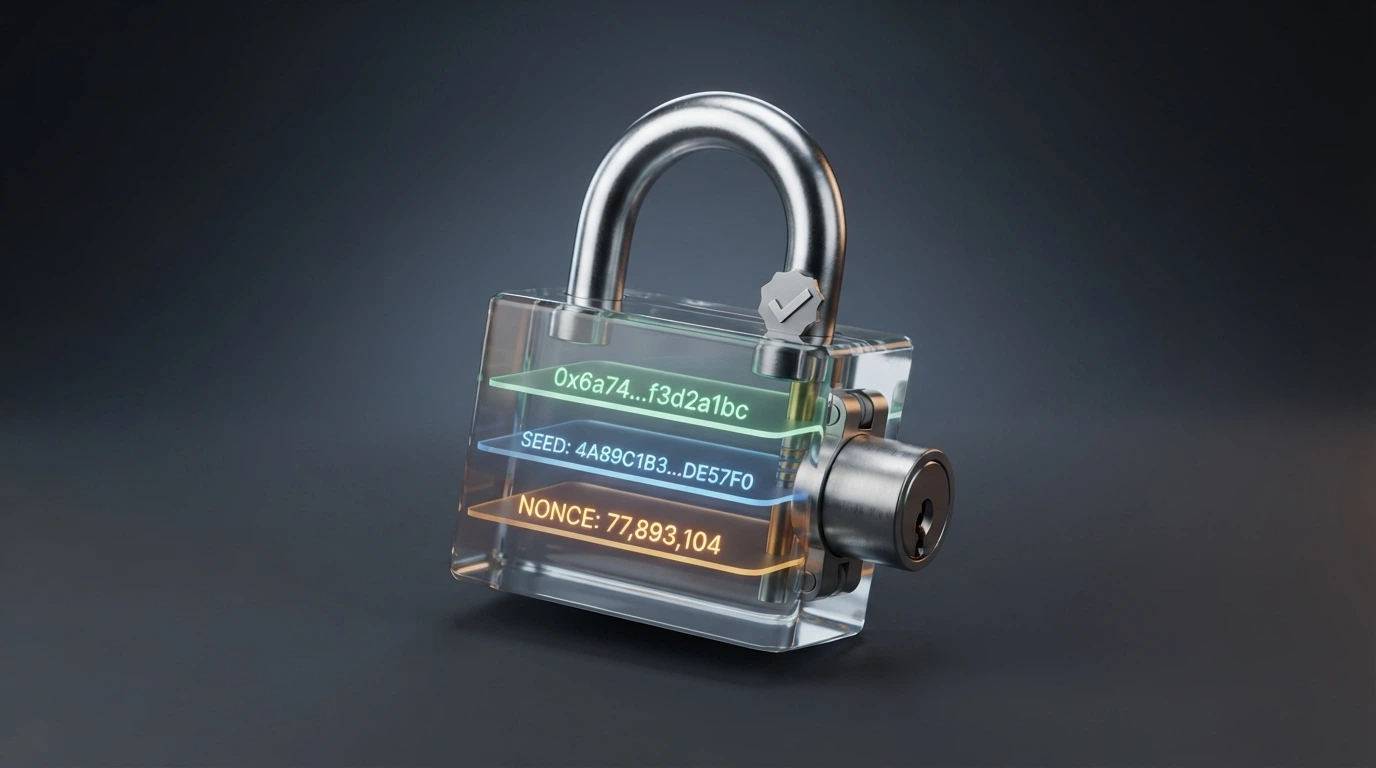
What that gives the player is a way to confirm the casino did not change the outcome after seeing the bet. A fiat casino cannot offer this — there is no public ledger to anchor the verification to. A crypto casino that offers provably fair publishes a verification tool alongside each game, and a player who bothers to check can confirm the bet was fair.
Which operators on this page offer provably fair in volume varies. Several of them advertise the feature on in-house titles; the multi-provider pokies from Pragmatic Play, NetEnt and the rest run on the provider’s own certified RNG and are audited by the provider’s lab, not by the casino. The trust mechanism is different: lab certification rather than player verification, but the underlying math is no weaker.
Why Your 2026 Litecoin Casino Bonus Is Smaller Than It Looks
The headline number on a casino welcome offer is the marketing word, not the value. What determines what a player actually keeps is three further numbers: the wagering multiple, the validity window, and the max-cashout cap.

Across the ten operators on this page, the wagering multiple runs from 30x (FairGo) to 45x (Casino Rocket), with 40x as the modal value. Validity windows range from one day (Wild.io, 7Bit Casino) to seven days (BitStarz), with several offers publishing no expiry at all. Max-cashout caps apply to no-deposit and promo-code bonuses almost universally — BitStarz caps the no-deposit free spins at US$100, Rainbet caps promo-code bonuses at US$50, RocketPlay caps no-deposit winnings at A$75.
Take RocketPlay’s headline as the worked example. A A$1,500 first-deposit bonus with 40x wagering requires A$60,000 of qualifying play before any of the bonus converts to withdrawable cash. Assuming only the bonus amount is wagered, on a pokie with the 96% midpoint of the online pokies return band, that A$60,000 carries an expected loss of A$2,400. The bonus’s average cost is the house edge on the wagering the offer demands — not the face value of the headline.
That A$2,400 is a statistical estimate. It is the average loss across many players clearing the bonus, not the outcome for any single session. The punter who hits a feature win early sees a smaller loss; the punter who grinds through 60,000 spins of dead reels sees a larger one. The figure is the centre of gravity.
Welcome Bonuses Compared: The Table That Cuts Through the Headlines
The comparison table below sets the headline bonus alongside the numbers that decide what a player keeps — wagering multiple, validity, max-cashout cap, free-spin inclusion.
| Operator | Wagering Multiple | Bonus Validity | Max Cashout Restriction | Free Spins Included |
|---|---|---|---|---|
| Stake | 40x | — | None stated on deposit bonus | None |
| RocketPlay | 40x | 5 days | A$75 on no-deposit bonus | 100 FS |
| FairGo | 30x | — | A$180 on no-deposit chip | None |
| Rainbet | 40x (No Wager Lock: no fixed multiple) | — | US$50 on promo-code bonuses | 60 FS on Sweet Bonanza |
| BitStarz | 40x | 7 days | US$100 on no-deposit FS | 50 no-deposit + 180 FS |
| Wild.io | 40x | 1 day | — | 300 FS |
| Skycrown | 35x | — | 25× deposit+bonus | 100–200 FS |
| Casino Rocket | 45x | — | — | — |
| BC.Game | 40x | — | US$200 on free-spin winnings | 100 FS |
| 7Bit Casino | 40x | 1 day | — | 300 FS |
The spread that jumps out is the validity window — Wild.io and 7Bit Casino both run 40x wagering with a one-day expiry, which is mathematically punishing against an offer that needs sixty days of casual play to clear. BitStarz’s seven days is the most generous in the set, and even that is tight against the volume required.
No-Deposit Bonuses and Free Spins: The Offers That Cost Nothing to Claim
Two of the ten featured operators offer a no-deposit bonus — and they are the only two in the set.
BitStarz credits 50 no-deposit free spins on registration. The spins are real, the wins are real, and the winnings carry 40x wagering with a US$100 maximum cashout. A player who lands the cap on those 50 spins sees the full US$100 once wagering clears.
FairGo credits a A$15 no-deposit free chip on signup. The chip carries 60x wagering and a A$180 max cashout. At 60x on a A$15 chip, the player has A$900 of qualifying play to grind through to reach the cap.
The other eight operators on this page do not carry a no-deposit offer in their current terms. A player who values the no-deposit route is choosing between BitStarz and FairGo, full stop.
Wagering Terms That Catch Players Out: Max Bet, Validity and Game Weighting
Three terms buried in the fine print decide whether a bonus survives a session.
The first is the max bet during wagering. RocketPlay’s bonus terms cap bets at A$7.50 while the wagering requirement is active. A single spin above that limit — accidental or otherwise — voids the bonus and the winnings from it. Most operators enforce this through software rather than honour-system, so the cap is real, not theoretical.
The second is the validity window. Wild.io’s one-day bonus expiry is the extreme end; BitStarz’s seven days is the generous end. A 40x wagering requirement on an A$1,500 bonus needs A$60,000 of play. At A$7.50 per spin, that is 8,000 spins — and at 5 seconds per spin, roughly 11 hours. Compressing that into a one-day window is not realistic; compressing it into seven days requires multiple long sessions.
The third is game weighting. Slots typically contribute 100% of each bet to the wagering requirement; table games often contribute 0 to 10%; live dealer games may not contribute at all. The bonus is cleared on pokies, not on blackjack. A player who runs the bonus bankroll through a live-dealer table sees the wagering meter barely move — and burns the bonus balance doing it.
Getting Your Litecoin In and Out: Speed, Limits and the Fine Print
Litecoin’s 2.5-minute block time is fast in absolute terms, and the casino’s own processing is the layer that actually sets the pace. Across the operators on this page, tested LTC deposit times run from 4.8 minutes (BC.Game) to 7.2 minutes (Bitcasino) and tested withdrawal times from 8.3 minutes (BC.Game) to 12.4 minutes (Bitcasino), based on independent platform testing in January 2026. A broader sample of 31 Litecoin gambling sites found an average LTC deposit time of 2.5 minutes and withdrawals clearing in under fifteen minutes at 23 of those platforms.

For a player comparing LTC to other cryptocurrencies at the casino cashier, the cost line is striking. The average LTC network fee per transaction is A$0.08, against Bitcoin’s A$4.80 and Ethereum’s A$12.50. The fee gap is real, and it widens the more often a player moves funds.
Deposit Methods: How Your Litecoin Gets to the Casino Floor
The deposit path runs from an Australian exchange account to a casino balance. CoinSpot and Swyftx sell LTC direct to bank-funded AUD balances, and either exchange will handle the AUD-to-LTC conversion. The player then sends LTC from the exchange wallet (or a private wallet funded from the exchange) to the casino’s deposit address.
Minimum deposit thresholds at the casinos on this page are typically 0.01 LTC — a fraction of an AUD at current rates, which means the practical floor is set by the exchange’s minimum trade size rather than the casino’s. Confirmation requirements vary from one to six blocks; most operators credit after one or two, which means the deposit window is two to fifteen minutes from the player hitting “send”.
Two frictions sit at the deposit stage. The first is exchange-rate exposure: the LTC price moves between the moment the player buys and the moment the casino credits, and the player carries the spread. The second is the credit-and-crypto ban for AU-licensed operators since June 2024, which is precisely why no locally licensed casino is on this page — the offshore path is the only one open.
Withdrawal Speed, Caps and the Limits That Restrict High-Volume Players
Withdrawal speed at the tested operators runs 5 to 15 minutes for the LTC-specific data. BC.Game averages 8.3 minutes from request to funds leaving the casino. 7Bit averages 9.1 minutes. Bitcasino sits at 12.4 minutes. Rainbet’s published window is 5 to 15 minutes with player-selectable network fees under US$0.05. FairGo’s crypto withdrawals run 15 to 45 minutes during business hours.
The cap is where the volume players feel the friction. RocketPlay’s published LTC ceiling is 100 LTC per withdrawal — generous for an average player, restrictive for a high-roller. Daily caps across the broader offshore market range from 50 to 200 LTC. A player withdrawing a five-figure AUD bankroll in LTC is hitting those ceilings and waiting through multiple cycles.
The gap between casino processing and blockchain confirmation is real but small. The casino debits the balance internally, broadcasts the LTC transaction, and the network confirms in 2.5 minutes. The total elapsed time at the faster end of this set is the sum of those two — around ten minutes for a fast operator like BC.Game.
Pokies, Live Dealer and the Games You’ll Actually Find
The game libraries at offshore Litecoin casinos overlap heavily — Pragmatic Play, NetEnt, Hacksaw, Nolimit City, BGaming and Evolution are the names that come up most. What varies is the count: FairGo carries 280-plus RTG titles, the multi-provider operators carry 6,000 to 7,600-plus.
For pokies, the headline RTP band is 94% to 97% — the norm across online slots. Land-based pokies in NSW are required to return 85% to 92%, which is a meaningful gap against online. Above that band sit a small number of high-RTP titles that publish figures well into the 98% to 99% range.
The Highest-RTP Pokies You Can Play With Litecoin
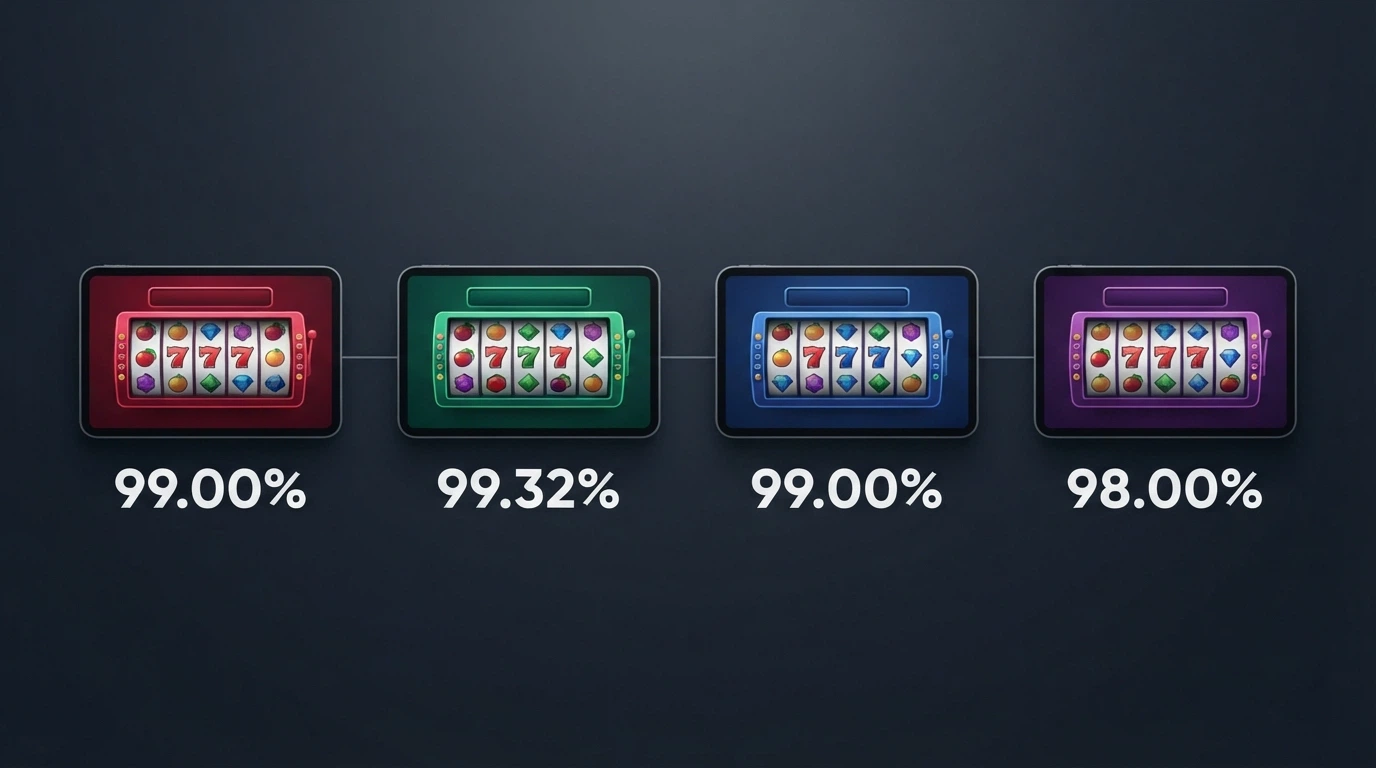
Four pokies stand above the 97% RTP ceiling with publicly published return figures.
| Pokie Title | RTP | Provider |
|---|---|---|
| Mega Joker (supermeter mode) | 99.00% | NetEnt |
| Goblin’s Cave | 99.32% | Playtech |
| Book of 99 | 99.00% | Relax Gaming |
| Blood Suckers | 98.00% | NetEnt |
RTP — return to player — is the percentage of all wagered money a pokie pays back over its lifetime. A 99% pokie keeps 1% on average across millions of spins; a 96% pokie keeps 4%. The difference is not large per spin, but it compounds. A player running A$60,000 of bonus-clearing play on a 99% pokie loses A$600 in expectation; on a 96% pokie, A$2,400. The four titles above are the pokies to find when the wagering clock is running.
Live Dealer Tables: What Litecoin Casinos Offer in Real Time
Live dealer is the casino-floor experience streamed over a video link — real dealers, real cards, real roulette wheels, with bets placed digitally. The dominant providers are Evolution Gaming and Pragmatic Play Live; both are stocked across most of the featured operators.
Stake and Skycrown both confirm Evolution as a stocked provider. RocketPlay lists Evolution alongside BGaming, NetEnt and Pragmatic Play. FairGo’s RTG-only library does not extend to live dealer. The live-dealer catalogue at a typical multi-provider offshore casino runs blackjack (multiple rule variants), roulette (European, American, speed, immersive), baccarat, and game-show titles like Dream Catcher, Monopoly Live and Crazy Time.
Live dealer tables do not run on demo mode anywhere on this page. Minimums at live tables are typically higher than at the digital equivalent — A$1 to A$5 per hand at the low end, much higher at the high-roller tables. The wagering contribution for clearing a bonus is usually 0% to 10%, which is why serious bonus-clearing runs through the pokies, not the live lobby.
The Providers Behind the Reels: Who Makes the Games at LTC Casinos
Five provider names carry most of the weight at the operators on this page.
Pragmatic Play is the widest-distributed — its pokies (Gates of Olympus, Sweet Bonanza, the Big Bass series) and live tables show up at almost every multi-provider offshore casino. NetEnt carries the high-RTP classics (Mega Joker, Blood Suckers, Starburst) and is the brand behind some of the strongest published return figures. Evolution is the live-dealer default; its game-show titles define the category. Hacksaw Gaming and Nolimit City are the high-volatility specialists — the studios behind the bonus-buy and extreme-volatility titles that have driven the offshore market’s recent growth.
BGaming and Big Time Gaming carry weight at specific operators — BGaming is the provider list at Skycrown and RocketPlay, Big Time Gaming (the studio behind the Megaways mechanic) is at Skycrown. RTG, or RealTime Gaming, runs FairGo exclusively; its catalogue is older and its graphics are dated, but its jackpot pokies (Aztec’s Millions, Megasaur) keep it in rotation. Play’n GO, Playson, Yggdrasil and Amatic round out the Skycrown list. Push Gaming appears on the Stake roster.
Litecoin Casinos on Your Phone: What Works and What Doesn’t
Mobile Litecoin play is browser-first. The operators on this page run mobile-optimised sites that load in Safari and Chrome without an app install; the casino runs in the browser tab and the wallet runs in a separate app. Dedicated casino apps exist for some offshore brands, but they are not distributed through the Apple App Store or Google Play — they are sideloaded from the operator’s site, which means they sit outside the store review process.
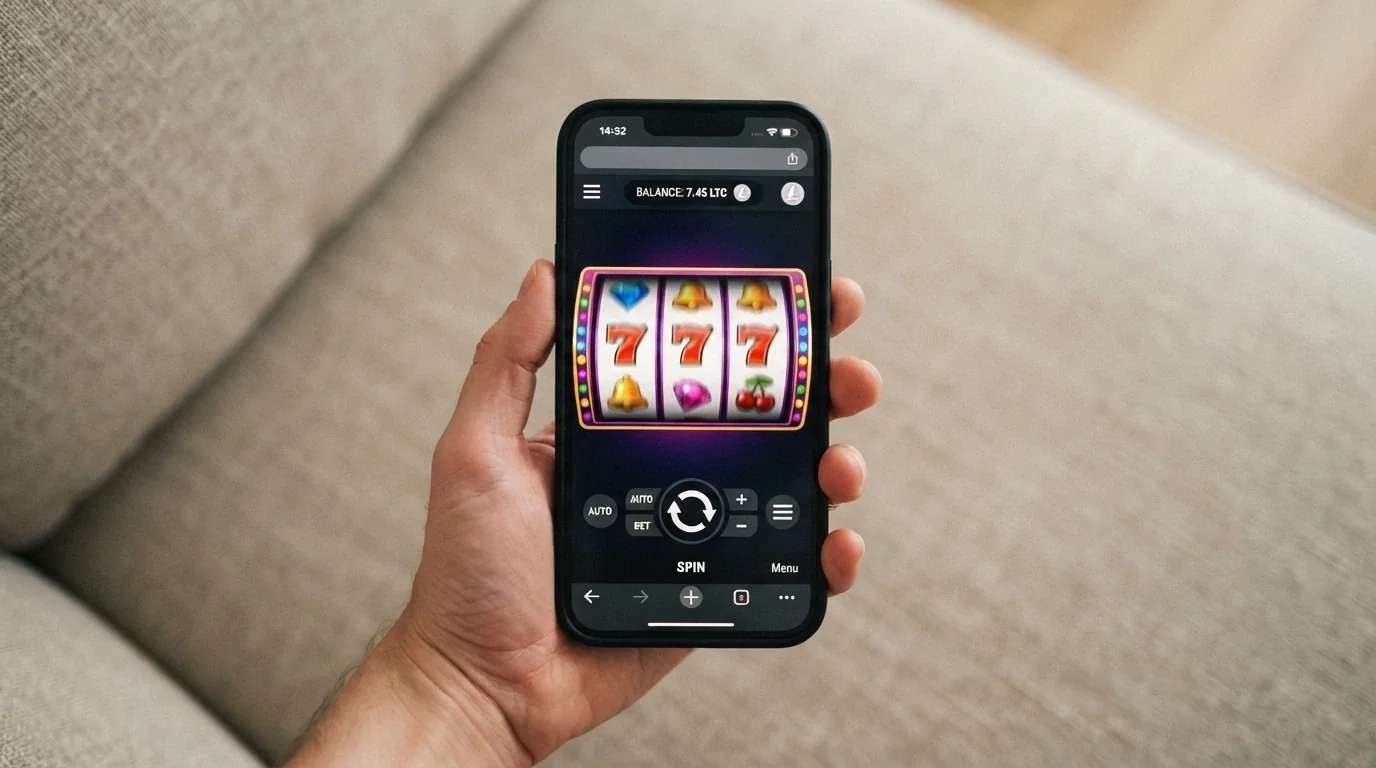
For a player who already has Trust Wallet, Exodus or Litewallet on their phone, the deposit flow is QR-code driven: the casino generates a deposit address and QR code, the wallet app scans it, the player confirms the send. The browser tab on the casino refreshes when the network confirms.
Depositing Litecoin From Your Phone: The Mobile Payment Flow
The mobile deposit runs in three taps once the wallet app is open. The player opens the casino in their mobile browser, opens the cashier, and copies or scans the deposit address. They open the wallet app, paste the address or scan the QR code, enter the amount, and confirm.
The friction point is the app-switching — switching between the casino browser tab and the wallet app to confirm a send, then back to the casino to check the credit. On a 2.5-minute block time, that is fine; on a busy network, the player may have to wait through several confirmation cycles before the casino credits the balance.
The other friction is exchange-rate timing on mobile. The LTC price moves between the moment the player buys on CoinSpot or Swyftx and the moment the casino credits the deposit. On a five-minute window the move is usually small, but it is not zero, and it is the player who carries the spread.
New Litecoin Casinos in 2026: Fresh Sites, Same Risks
New Litecoin casinos enter the offshore market every month. The pattern is consistent: a brand launches with a large welcome offer — 300%, 400%, even 500% matches — and aggressive free-spin bundles to compete for sign-ups against the established names. The offers get bigger as the market gets more crowded.

What does not change with recency is the licensing situation. Every new entrant is offshore — Curaçao or Anjouan — and none can acquire an Australian licence for an online casino product. The IGA prohibition is structural, and a brand that launched last week is bound by the same prohibition as one that launched in 2014. The licensing section of this page applies equally to the newest brand on the market.
How to Vet a New Litecoin Casino Before You Deposit
A five-point checklist applies to any new entrant:
- Verify the licence. Curaçao and Anjouan operators are listed on the regulator’s register; check the licence number on the casino’s footer against the regulator’s database.
- Read the withdrawal terms. Minimum, maximum, processing time, any fees — these are the numbers that decide whether the operator can actually pay.
- Confirm the provider list. A casino running 7,000-plus titles from Pragmatic Play, NetEnt, Evolution and the rest is a real multi-provider platform; a casino running 200 generic-looking titles may be a scam.
- Search player forums. Recent payout complaints, withdrawal delays, account closures — community track record is the only reputation data the regulator’s register does not cover.
- Check the ACMA blocklist. The ACMA publishes blocked domains; a casino on the list is already inaccessible to some Australian ISPs.
How We Selected and Ranked These Litecoin Casinos
The operators on this page were checked against official Curaçao and Anjouan licence registers, the ACMA’s published blocklists, and independent platform testing data from Casipto (January 2026) and Casinozoid. Bonus terms were sourced from operator sites, independent testing platforms and affiliate reviews where the operator’s own terms were unclear.
Ranking criteria were, in order: confirmed Litecoin acceptance and active LTC cashier; Australian IP accessibility at the time of review; bonus terms transparent enough to be summarised honestly — operators whose welcome offers could not be verified in published terms were excluded or de-ranked; withdrawal speed data where independent testing exists; game count and provider quality for the multi-provider operators.
The limits are worth stating. Licence dates were not independently verified against the regulator’s database for every operator this run — the Curaçao register was not fully fetched, and the licence date column is omitted rather than guessed. Per-operator RTP data is not available for the bulk of game titles; the high-RTP pokies table carries the four titles where research gave a published figure. The offshore status is the same for every operator on the page and applies equally to brands not listed.
Your Litecoin Casino Checklist: What to Check Before You Deposit
Seven points before any LTC leaves the wallet.
Verify the licence jurisdiction — Curaçao or Anjouan, confirmed on the regulator’s register. Read the withdrawal terms — minimum, maximum, processing time, any fees, and the max-cashout cap on the welcome bonus. Calculate the real cost of the welcome offer using the expected-loss formula — the bonus amount, the wagering multiple, and the RTP of the games you actually play are the three inputs. Check whether the casino is on the ACMA blocklist — a casino already blocked at the DNS level is one a player may not be able to reach. Confirm the game providers and the published RTP on the titles you play — a 99% pokie and a 94% pokie are not interchangeable for clearing a bonus. Set a deposit limit before the first deposit — the responsible-gambling tools at offshore casinos exist; they are rarely as robust as BetStop, but the deposit-limit setting still works. Know the help numbers — 1800 858 858 is the National Gambling Helpline, and BetStop does not cover offshore casinos, so the offshore player is the player most likely to need the external support.
Frequently Asked Questions
What is the fastest Litecoin casino for withdrawals in Australia?
Based on independent testing in January 2026, BC.Game’s average LTC withdrawal time is 8.3 minutes from request to funds leaving the casino — the fastest in the featured set. 7Bit averages 9.1 minutes and Bitcasino 12.4 minutes. Casino processing is the main variable; the Litecoin network itself confirms in roughly 2.5 minutes regardless of operator.
How does Litecoin compare to Bitcoin for casino deposits?
Litecoin is faster and cheaper at the cashier. Block settlement runs at 2.5 minutes against Bitcoin’s 10-minute target, and average network fees are around US$0.002 per transaction against Bitcoin’s US$3 to US$5. Eighty-three per cent of tested crypto casinos accept Litecoin — Bitcoin is more widely available, Litecoin is cheaper to send.
Are Litecoin casino winnings taxable in Australia?
Gambling winnings are tax-free for Australian residents. The taxable event is the AUD-to-LTC-to-AUD conversion if it triggers a capital gain — CoinSpot and Swyftx report to the ATO, so the purchase and disposal history is on file. A player who converts back at a profit has a CGT event in their own right.
What happens if an offshore Litecoin casino blocks Australian users?
ACMA blocks at the DNS level — Australian ISPs refuse to resolve the casino domain. A player with a balance when the block lands has no Australian regulator to escalate to; the casino’s own KYC terms and withdrawal queue are the only path. Offshore casinos have been slow processing withdrawals for accounts caught in enforcement. Withdraw before any block.
How does BetStop protect me if I use an offshore crypto casino?
BetStop does not. The National Self-Exclusion Register binds Australian-licensed wagering services only — offshore crypto casinos are not connected. A person registered with BetStop is excluded from AU-licensed services from the registration date forward, but can still register, deposit and play at any offshore Litecoin casino. BetStop is one layer; it does not cover this page.
Anonymity and Litecoin: How Private Is Your Play?
Litecoin is pseudonymous, not anonymous. Every LTC transaction is recorded on a public ledger; the wallet address is visible, the real-world identity behind it is not — unless someone connects the address to a KYC’d exchange account. That is the gap a player should understand.
MWEB — the MimbleWimble Extension Block upgrade that activated on the Litecoin network — adds a confidentiality layer. Transactions within an MWEB block hide the amounts by default, and the addresses involved are not publicly linkable in the same way. MWEB does not make Litecoin anonymous; it makes Litecoin transactions harder to trace.
What the casino still sees regardless of MWEB is the player’s IP address, device fingerprint, browser metadata, and the withdrawal address the player sends funds to. A casino that requests KYC at withdrawal links those technical signals to a verified identity. A casino that does not request KYC holds the technical signals only — which is privacy, until the operator decides it is not.