Best Casino in Adelaide: The Licensed Venue and the Offshore Brands Targeting Australian Players
 Available in AU
There is exactly one licensed casino in South Australia. SkyCity Adelaide sits on North Terrace, inside the heritage-listed former railway station, and it is the only venue in the state where a player can walk in, show ID and sit down at a real table or machine with the full protection of Australian consumer law behind them. Every other brand that ranks in Australian search results for online casinos operates offshore, holds no Australian licence, and is prohibited from offering its product here under the Interactive Gambling Act 2001. That is the entire frame this page sits inside, and everything that follows is read against it.
Currency of comparison: data current as of 19 October 2026, verified against the South Australian Consumer and Business Services casino register, the ACMA interactive gambling register, and the Casino Act 1997 framework.
Table of Contents
- SkyCity Adelaide: South Australia’s Only Casino, Inside a Heritage Landmark
- Why SkyCity Is Your Only Legal Casino Choice in Adelaide
- SkyCity Adelaide
- Rocket Play
- Skycrown
- Royal Reels
- Stake
- WinSpirit
- Rainbet
- Scream Casino
- FairGO
- Bizzo Casino
- SkyCity Rewards: Five Tiers, Points on Every Dollar You Spend
- The Rules Behind Every Bet: SA Casino Law and the 2026 Reforms
- Staying Safe: Responsible Gambling Tools and Where to Get Help
- How We Evaluated Adelaide’s Casino Options
- What This Means for Your Next Visit to Adelaide
- Frequently Asked Questions
SkyCity Adelaide: South Australia’s Only Casino, Inside a Heritage Landmark
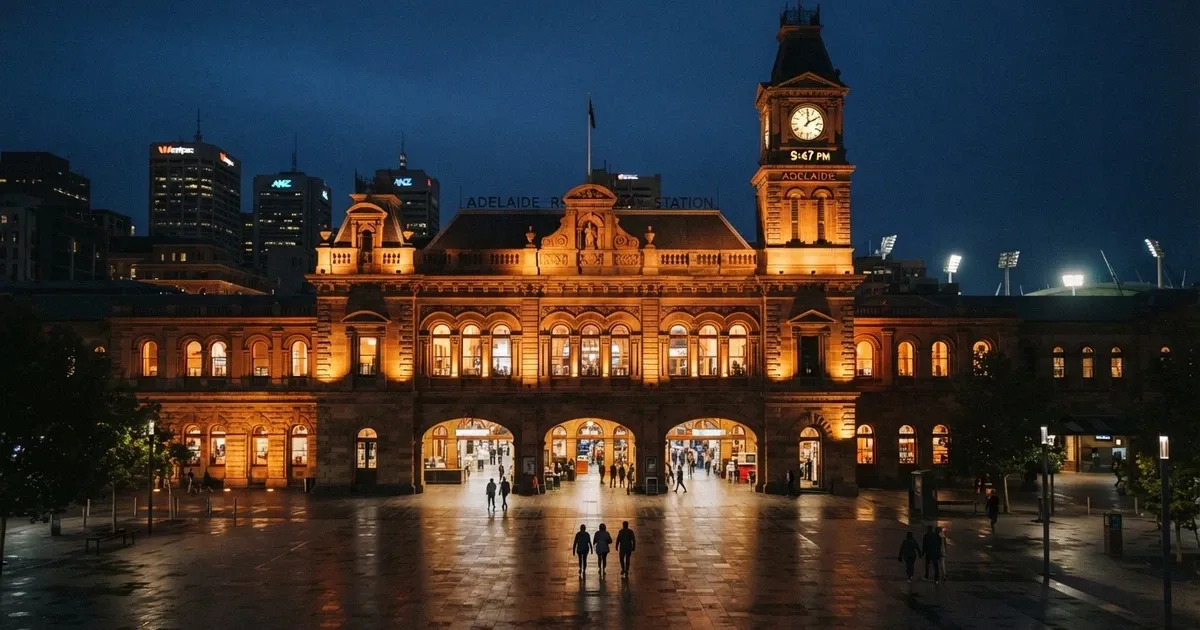
Adelaide’s casino is not, strictly speaking, a casino at all in the way most Australian cities know one. It is a heritage sandstone building that happens to hold the only casino licence the state has issued since 1999, and the building itself is the first thing a visitor notices. The old Adelaide Railway Station was stripped back to its bones and rebuilt around a gaming floor of roughly 129,000 square feet spread across four levels, with 90 table games and somewhere between 950 and 995 gaming machines, depending on which industry count you read. Add a five-star hotel above it, ten restaurants and bars, a working microbrewery and a rooftop pool, and what was once a place where South Australians caught the train is now the only legal gambling house in a state of 1.8 million people.
That licence carries a long horizon. It was granted on 25 November 1999 and runs to 30 June 2085, with exclusive casino rights inside South Australia locked in until 2035. For the next decade there is no competitor venue the licence holder has to worry about, and for the next sixty years there is no second licence waiting to be issued. That exclusivity is the reason Adelaide has one casino and not five, and it shapes what kind of venue the city gets: a single destination, built to compete with interstate operators on amenity rather than on price.
What and Where: The Heritage Railway Station on North Terrace
The address is North Terrace, Adelaide SA 5000 — the city’s cultural spine, where the State Library faces the South Australian Museum across a sweep of lawns. The casino occupies the original Adelaide Railway Station building on this terrace, and the heritage sandstone façade has been preserved as the venue’s street frontage. Access is through the Festival Plaza entrance, which puts the complex on the same pedestrian axis as the Adelaide Festival Centre and the Convention Centre. North Terrace is also the address of Parliament House and Government House, which gives a sense of how deliberate the placement was: the casino sits inside the city’s civic core, not on its fringe.
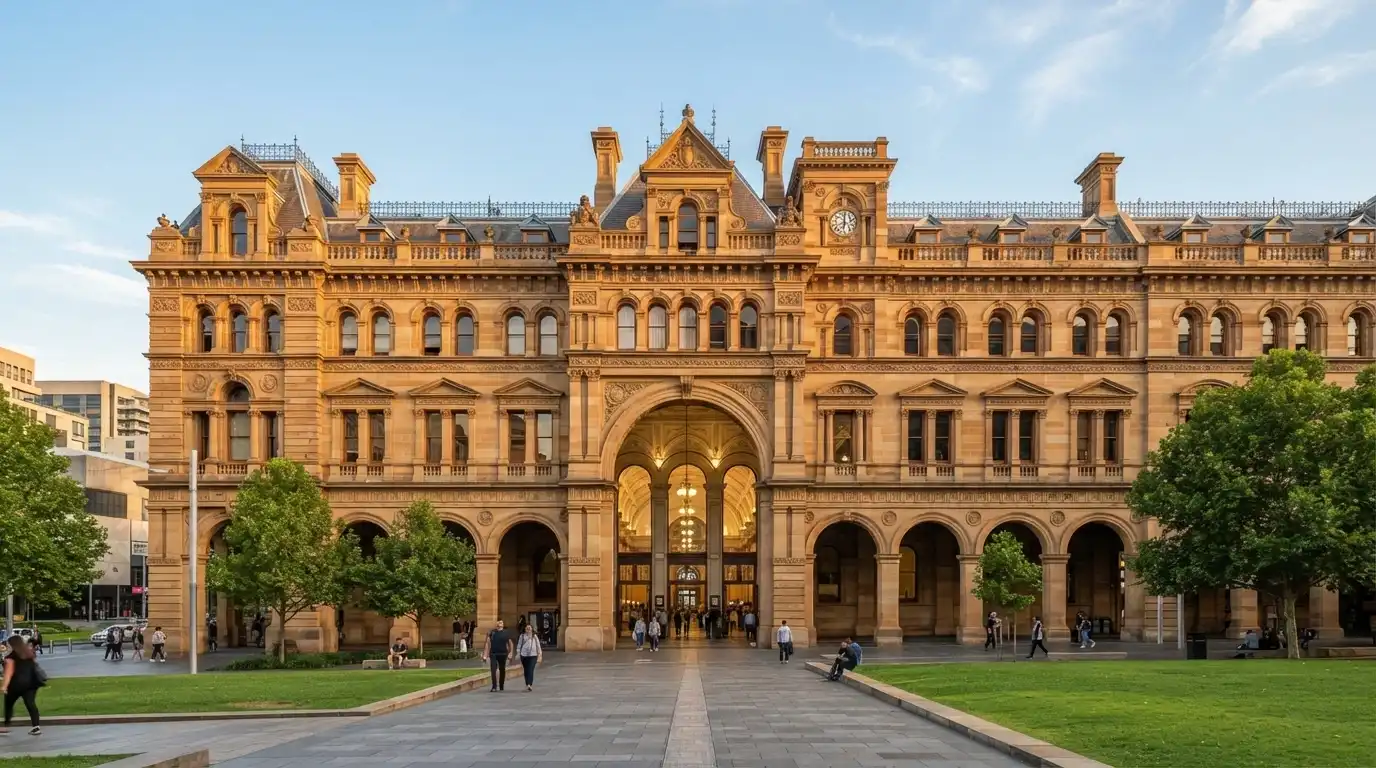
The heritage status is not a marketing line. The former railway station is heritage-listed, which means the sandstone walls, the arched windows and the high ceilings were protected through the conversion. For a visitor this reads as scale and material — the gaming floor feels like a public building rather than a shed — and for the operator it constrains what can be demolished and what cannot.
Gaming Floor: 90 Table Games and 950+ Machines Across Four Levels
Four levels of gaming under one roof. The main floor and the upper levels carry 90 table games across the standard spread — blackjack, roulette, baccarat, craps — and somewhere between 950 and 995 electronic gaming machines, depending on whose count you trust. The industry sources disagree by 45 machines, which sounds small until you scale it: that gap is the difference between a medium-sized pub and a dedicated gaming lounge. The venue operates with 950 to 995 gaming machines, and the exact figure changes as machines are rotated in and out.
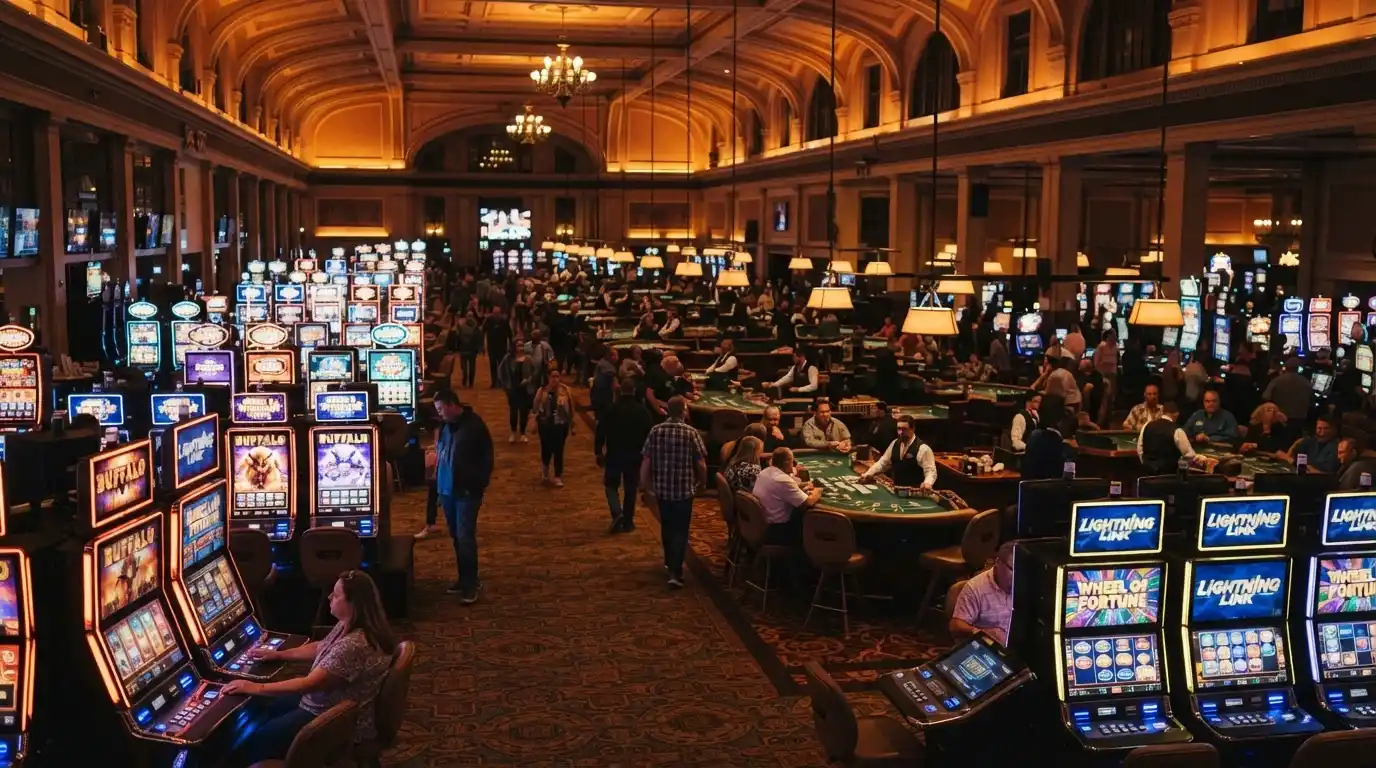
The split across levels matters for a visitor planning a session. Pokies dominate the floors with the highest machine density, while premium table games tend to cluster on the level with the dedicated VIP rooms. The District poker room sits on Level 1, and the rooftop level carries the hotel and pool rather than additional gaming space.
The District Poker Room: Cash Games, Tournaments and a Microbrewery
Adelaide has a real poker scene and The District is its centre. Nine permanent tables run year-round, and the room expands significantly when major festivals come through town. For a casual visitor the daily cash games start accessible — $2/$3 and $2/$5 No-Limit Hold’em — and the weekly tournament backbone gives regular players something to plan around. Tuesday carries a $200 re-entry event with a $10,000 guaranteed prize pool, and Thursday runs a $100 freezeout. The freezeout structure means you buy in once and play until you either win the event or get eliminated, which keeps the field small and the pace sharp.
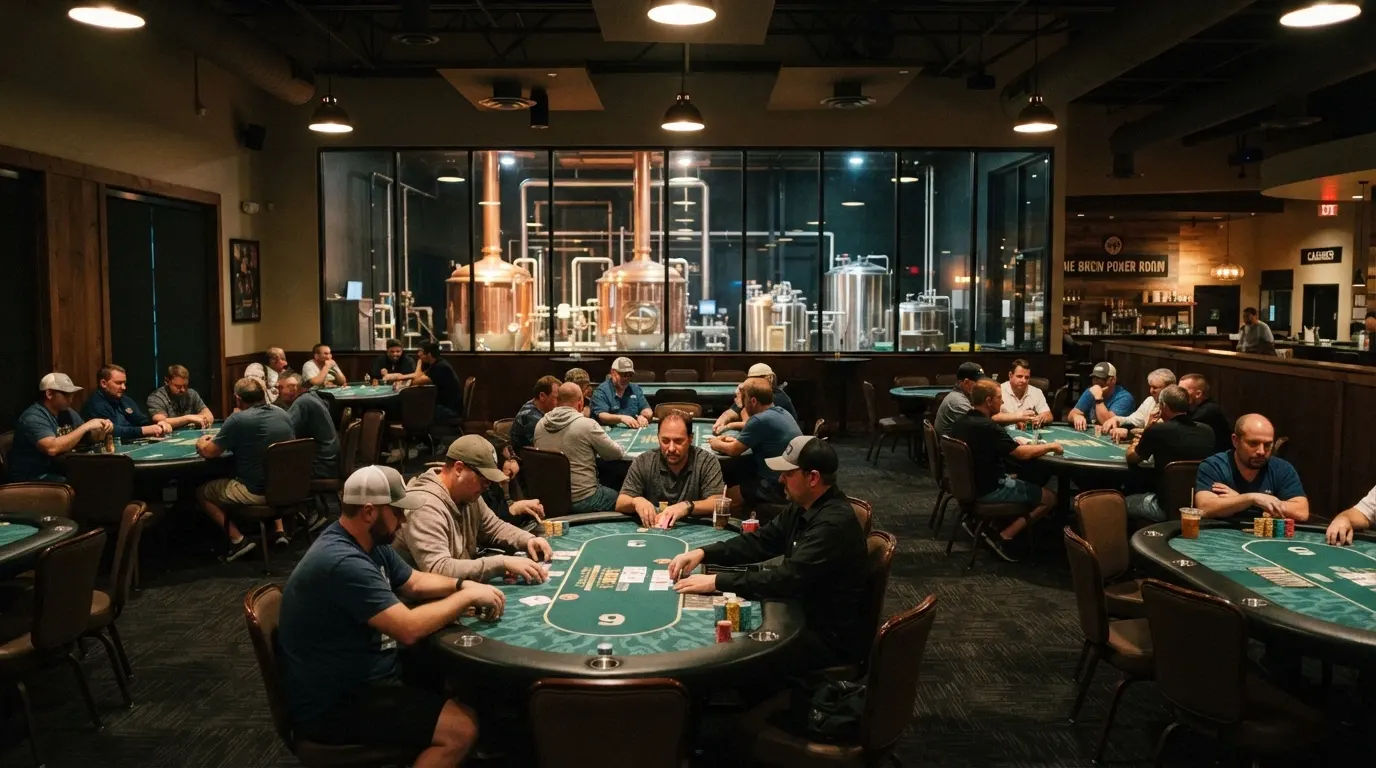
The unusual feature is what sits on the other side of the room: Pirate Life Brewing, a fully functioning microbrewery that operates inside the casino complex — the first of its kind in an Australian venue. Most casinos pour beer from a contract brewery’s tankers. The District pours it from its own equipment, which means the menu is genuinely local and the production is genuinely visible. For a poker player this turns a long tournament session into a different kind of evening.
Ten Restaurants and Bars: From Rooftop Dining to a Sports Bar
The dining offering is broad rather than narrow. Sol Bar and Restaurant anchors the rooftop with skyline views and a cocktail program aimed at the after-work crowd. iTL Italian Kitchen covers serious pasta and wood-fired pizza for those who want a sit-down dinner rather than bar food. The Guardsman, Sean’s Kitchen and Madame Hanoi carry the premium end of the spectrum — Sean’s Kitchen runs an Adelaide institution reputation, Madame Hanoi covers modern Vietnamese, The Guardsman sits closer to a private club menu. Lucky Noodle handles quick Vietnamese and pan-Asian, and Westward rounds out the casual end of the floor.
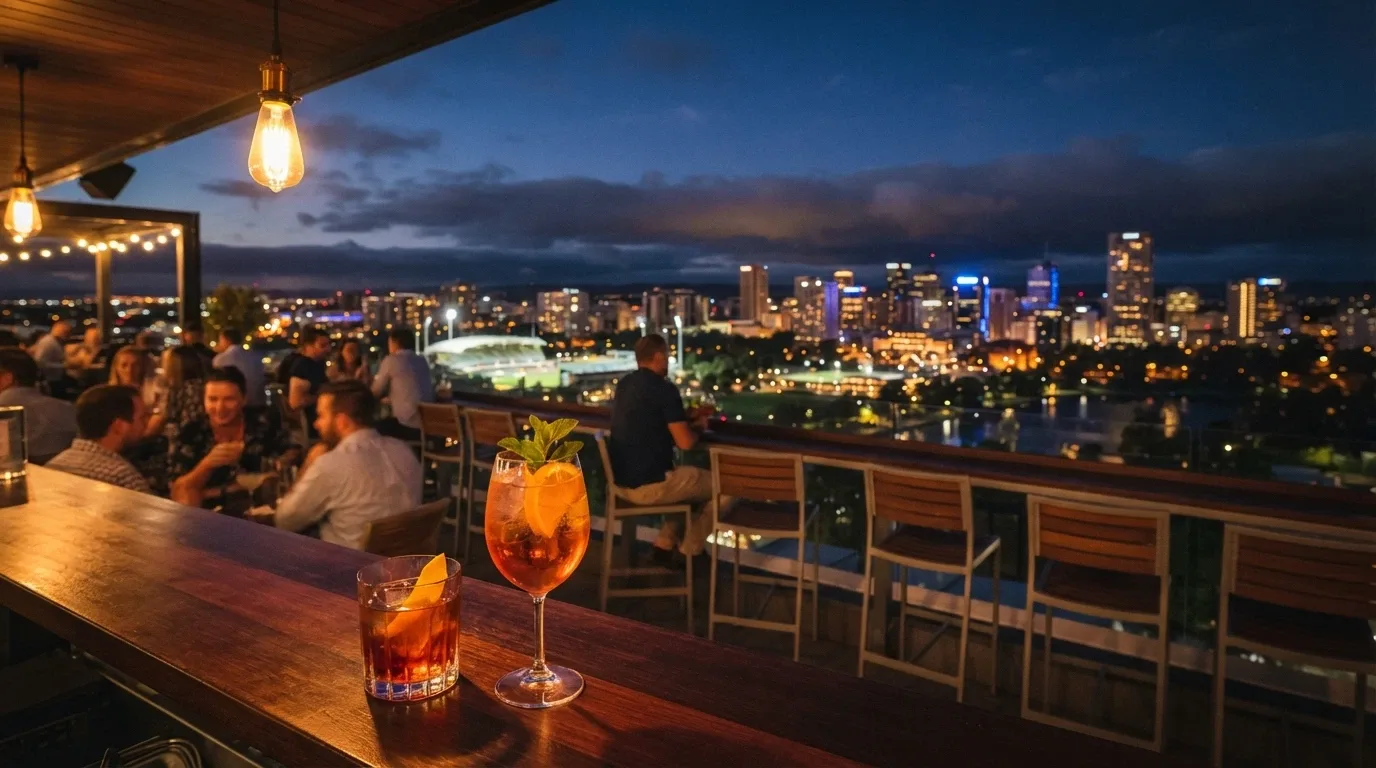
The District itself functions as the sports bar, with the brewery as its centrepiece. Its hours run Monday to Wednesday 4pm to 10pm, Thursday 4pm to midnight, Friday 2pm to 4am, Saturday 11am to 4am, and Sunday 11am to 10pm — which makes it the longest-running night venue inside the complex. The total sits at roughly ten restaurants and bars across the venue, and the spread runs from a quick noodle bowl between sessions to a rooftop dinner that does not need the gaming floor as an excuse.
Eos by SkyCity: The 120-Room Luxury Hotel Above the Casino
The 2021 expansion added Eos by SkyCity, a 120-room five-star boutique hotel sitting directly above the casino floor, with a rooftop bar and pool that doubles as the venue’s leisure centre. The room tiers start at the Allure Room, at 40 to 57 square metres — generous by city hotel standards — and climb through the Oasis Suite at roughly 84 square metres, the Radiance River View Suite at 94 to 129 square metres, and the Grace Villa at the top.
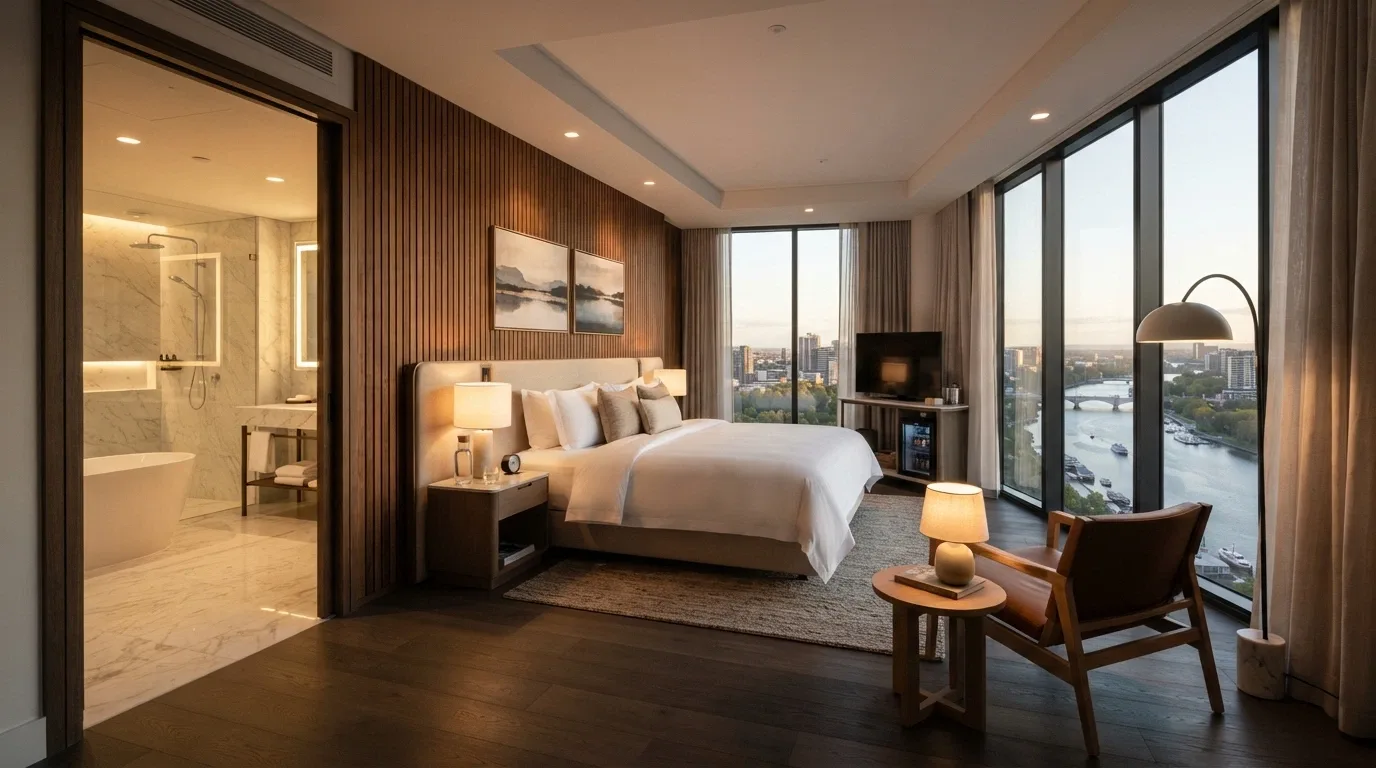
The Grace Villa is 305 square metres with marble baths and a personal butler, and it sits in a category of its own. Complimentary breakfast at Sol Bar comes with the Villa booking, which converts the rooftop restaurant into a private morning venue. For a visitor who treats the casino as part of a longer Adelaide stay rather than a single evening, the hotel changes what kind of trip is possible — a weekend at the casino, with a daytime wine region run and an evening gaming session, becomes a normal itinerary rather than a logistical puzzle.
Opening Hours, Entry Rules and What to Wear
The gaming floor runs long. LOCO, the Opal Bar and the Opal Zone operate 24 hours a day, seven days a week. The first floor and the gaming areas north of Marble Hall open Sunday to Thursday from 10am to 4am, and Friday and Saturday from 10am to 6am. Two days of the year the whole venue is closed: Good Friday and Christmas Day. Outside those two dates, a visitor can walk in at almost any hour and find something open.
The gatekeeping is two checks: age and ID. Every customer must be 18 or older to enter a gaming area, and any patron who appears to be 25 or younger is asked for valid photographic ID. The accepted forms are a current Australian driver’s licence, a current South Australian proof of age card, or a current Australian or international passport. The 25-year threshold is the venue’s own policy — it errs on the side of checking anyone who could plausibly be under-age rather than waiting for the borderline case to argue the toss.
The dress code reads “smart, neat and clean” — which is operator language for “no thongs, no singlets, no visibly torn clothing” rather than “suit and tie”. Management reserves the right to refuse entry at the door, and the higher-stakes Grange Room runs a tighter standard: dress trousers and a collared shirt for men, after-five or a smart business suit for women. The Grange Room is invitation-only and sits above the standard gaming floor, so most visitors never reach that bar.
Parking at SkyCity: Valet, Early Bird and Festival Car Park
Three parking options, with three different price points and three different conditions. Valet parking costs $20 for a 24-hour period, with special offers available for Action cardholders — the venue’s internal loyalty card for table-game play, distinct from the broader SkyCity Rewards programme. The UPark early bird deal is $6.00 for a weekday, and the conditions are tight: enter before 9:30am, exit before 7:00pm, Monday to Saturday. Outside those windows the standard UPark rates apply, and the saving collapses.
The Festival Car Park connects to the venue for VIP members and offers the longest complimentary parking window at the property — up to 12 hours per day for Gold VIP loyalty cardholders. For a visitor driving in from the suburbs, the early bird is the practical option if the visit starts in the morning; for a late-evening session, the valet is the simpler one. The Festival Car Park is reserved for loyalty tiers above the standard walk-in.
Events, Functions and Wellness Facilities
Beyond the gaming floor, the complex carries a function and events operation that hosts conferences, weddings, concerts and touring shows. Research does not carry a current events calendar, so the practical read is that the venue runs a working events business across its function spaces — the size of the operation and the frequency of programming are visible to anyone who walks past on a Friday evening — without a fixed schedule a guide can quote.
Wellness sits at the Eos end. The rooftop pool and bar are the visible leisure layer, and the spa and gym facilities extend the hotel’s offering into a full resort rather than a casino with rooms attached. The complex is owned by SkyCity Entertainment Group Limited, a New Zealand company listed on both the NZX and the ASX, with the Adelaide operation held through SkyCity Adelaide Pty Ltd (ACN 082 362 061). For a reader comparing ownership structures, the cross-Tasman parent is the relevant fact: New Zealand shareholders, Australian operation, South Australian regulator.
Why SkyCity Is Your Only Legal Casino Choice in Adelaide
South Australia has one casino licence. Online casino games, online pokies and in-play sports betting are prohibited under the Interactive Gambling Act 2001, and no Australian licence exists for an offshore operator to hold. That makes the comparison table below odd in a way that needs stating up front: it is not a comparison of competing legal options, because there are no competing legal options. It is a comparison of the one legal option against nine illegal ones that nonetheless rank in Australian search results and accept Australian players.
| Operator | Australian casino licence | Operator type | Australian regulator | Australian player protections |
|---|---|---|---|---|
| SkyCity Adelaide | Yes (Casino Act 1997, SA) | Land-based casino | Liquor and Gambling Commissioner (CBS) | Full — Code of Practice, host responsibility, on-site complaints |
| Rocket Play | None | Offshore online casino | None | None — outside IGA, outside BetStop, outside CBS |
| Skycrown | None | Offshore online casino | None | None |
| Royal Reels | None | Offshore online casino | None | None |
| Stake | None | Offshore online casino | None | None |
| WinSpirit | None | Offshore online casino | None | None |
| Rainbet | None | Offshore online casino | None | None |
| Scream Casino | None | Offshore online casino | None | None |
| FairGO | None | Offshore online casino | None | None |
| Bizzo Casino | None | Offshore online casino | None | None |
The Australian regulator column drops to “None” for every offshore brand because that is what it is: no Australian regulator has authority over a Curacao- or Malta-licensed operator accepting Australian players. The Australian player protections column does the same. The two columns collapse to the same fact, expressed twice — and that collapse is the point.
The Offshore Alternative: Nine Online Casinos Targeting Australian Players
Despite the prohibition, offshore brands hold measurable Australian market share. The ACMA has had 1,564 illegal gambling and affiliate websites blocked by Australian ISPs since November 2019, and more than 225 illegal services have withdrawn from the Australian market since 2017 — which means the operators that remain have chosen to keep operating in a market that is actively trying to push them out. They run on DNS-level blocking as the practical risk: a site can disappear from Australian access overnight, with any balance a player has on it.
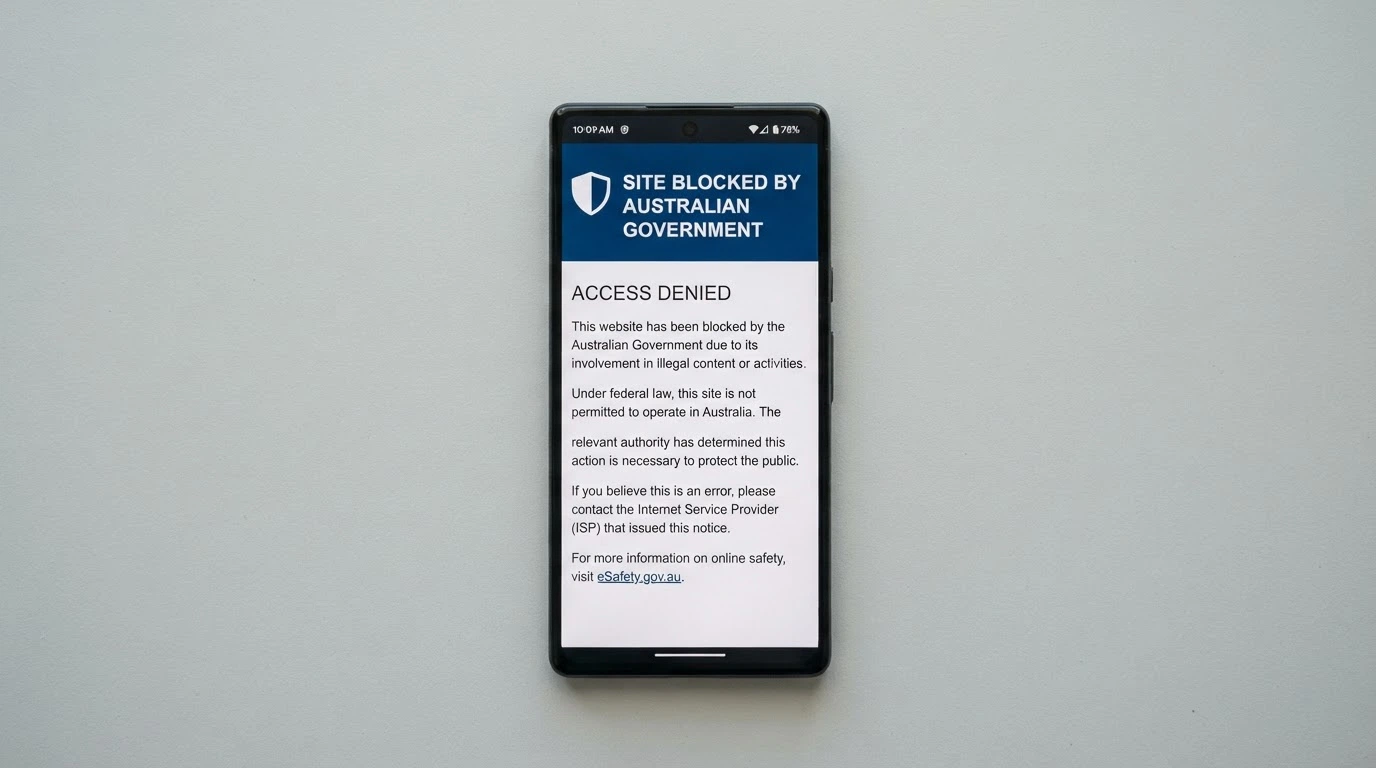
What Australian players lose by going offshore is the full Australian consumer protection framework. No BetStop coverage — the National Self-Exclusion Register binds licensed wagering services, not offshore casinos. No Consumer and Business Services recourse if a withdrawal is refused or a win is voided. No Australian complaint mechanism, no Australian court that will hear a small claim against a foreign operator without prohibitive cost. The operator’s own regulator — wherever it sits — is the only regulator that applies. From 1 January 2027, banks and payment providers gain express authority to block transactions to illegal operators, which adds a second layer of friction on top of the DNS-level blocks. The convenience is real, and so is the price.
SkyCity Adelaide
SkyCity Adelaide is the only licensed casino in South Australia and the only one with a regulator a South Australian player can call. The licence was granted by the Governor on 25 November 1999 under section 5(2) of the Casino Act 1997, runs until 30 June 2085, and gives the operator exclusive casino rights inside the state until 2035. That exclusivity is not a marketing line: the licence holder cannot be outpriced by a new entrant, and the regulator cannot be asked to license a competitor during the exclusivity window. The Brian Martin AO KC independent review under section 22(2) of the Casino Act 1997 concluded in August 2025 that SkyCity Adelaide remains suitable to hold the licence, and the report was released on 12 August 2025.
The venue itself delivers what a single-licence market produces: a full resort. The 129,000-square-foot gaming floor runs 90 table games and somewhere between 950 and 995 gaming machines across four levels. The District poker room operates nine permanent tables with a year-round tournament calendar. The 120-room Eos by SkyCity hotel sits above the floor. Roughly ten restaurants and bars spread from a rooftop fine-dining venue to a working microbrewery. The SkyCity Rewards loyalty programme runs five tiers and offers the kind of value layer that a venue with no competitor is not strictly required to offer. For a reader choosing what to do on a given Adelaide evening, this is what is on offer, and it is the only legal offer.
The regulatory history carries weight. AUSTRAC penalised SkyCity Entertainment Group AU$67 million in 2024 for anti-money-laundering and counter-terrorism-financing failures. The Brian Martin report identified shortcomings in governance, AML/CFT controls and gambling harm minimisation during the 2016 to 2022 period, finding that senior management had at times prioritised profit over compliance obligations. In June 2026 SkyCity reached a non-binding heads of agreement with the Commissioner for Liquor and Gambling to pay a total fine of A$21 million, structured in three equal instalments of A$7 million each. The settlement also mandates structural changes by 1 January 2028: a SkyCity Adelaide Board with a majority of non-executive directors independent of the parent group, a dedicated Adelaide CEO reporting to the local board, an independent compliance auditor reporting annually, a phase-out of cash transactions over A$4,999, and a formal prohibition on junkets (an activity SkyCity had already ceased in April 2021).
The combination — a regulator that fined the operator A$21 million and mandated governance reform, a suitability review that confirmed the licence despite scathing findings, and an ongoing multi-year Building a Better Business (B3) programme running to 30 June 2027 — reads as oversight that is doing its job rather than oversight that has been captured. For a reader deciding whether the regulatory environment protects them, the recent record is the evidence to weigh.
Rocket Play
Rocket Play holds the largest share of the Australian online casino market among the offshore brands tracked here, at 9.4%, with AU$632.69 million in revenue. The brand sits in the offshore category because it must: online casino is prohibited in Australia under the Interactive Gambling Act 2001, and no Australian licence exists for Rocket Play to hold. The product the operator sells to Australian players is one the Australian regulator says cannot lawfully be sold here.
What that means for a player is straightforward. No Australian regulator has authority over Rocket Play’s terms, complaints or withdrawal practices. No Australian consumer protection applies if a payout is refused or a bonus condition is enforced in a way the player disputes. No BetStop registration excludes the account, because BetStop binds licensed wagering services and offshore casinos sit outside its reach. The 1,564 sites blocked by the ACMA since November 2019 include operators in this category, and DNS-level blocking means the site can become inaccessible from an Australian IP address at short notice. The convenience of an offshore casino is genuine, and the absence of every Australian safeguard is the price.
Skycrown
Skycrown holds 8.55% of the Australian market and AU$436.07 million in revenue, putting it in second position among the featured offshore brands. The legal status is identical to Rocket Play: it operates without any Australian licence, regulator, or player protection framework. Online casino games are prohibited under the Interactive Gambling Act 2001, and the ACMA enforcement record — 1,564 blocked sites, 225-plus services withdrawn since 2017 — places operators like Skycrown in the active enforcement category rather than the tolerated one.
The practical picture for a player is the same as it is for any offshore brand. The bonus terms, the wagering requirements and the withdrawal conditions are written by an operator that answers to its own regulator, not to Consumer and Business Services or the ACMA. A complaint about a voided win cannot be escalated to an Australian body. A self-exclusion through BetStop does not touch the account. The site can be blocked at the DNS level by an Australian ISP at any time, which means a balance held with the operator can become inaccessible from inside Australia without warning.
Royal Reels
Royal Reels holds 2.51% of the Australian market and AU$243.99 million in revenue. The brand name carries a resonance with Australian identity — “Royal Reels” reads as patriotic slot-machine imagery — and that is worth naming as a marketing choice without making a claim about intent. The regulatory status is identical to all other featured offshore sites: it possesses no Australian licence, operates without local regulatory oversight, and offers zero Australian player protections.
The substantive point is the licence, not the name. A brand whose name suggests domestic connection holds no domestic licence, accepts Australian players in a market where online casino is prohibited, and operates under whatever regulator issued its actual licence — which is not an Australian regulator. From 1 January 2027, banks and payment providers gain express authority to block transactions to illegal operators, which will add a payment-rail layer on top of the existing DNS-level blocks. The combination of a recognisable name and a foreign licence is the marketing pattern this page is set up to deflate.
Stake
Stake holds 1.28% of the Australian market and AU$115.67 million in revenue, and it is the globally most-recognisable brand in the featured offshore set. The recognition cuts both ways: a player who has seen Stake advertised in international sports contexts knows what the product looks like, and that visibility cuts against the brand’s actual legal status in Australia. Online casino is prohibited under the Interactive Gambling Act 2001, Stake holds no Australian licence, and the ACMA enforcement regime applies.
The 1.28% share is small enough that Stake is not the dominant offshore brand in Australia, but the brand recognition makes it the one most readers have heard of. For a reader weighing offshore options, the question is the same as it is for every brand in this category: what recourse is available when an Australian regulator has none, and what happens to the balance when an Australian ISP starts blocking the domain.
WinSpirit
WinSpirit holds 1.55% of the Australian market and AU$110.3 million in revenue. The legal position is identical to every other brand in the offshore category — no Australian licence, online casino prohibited under the Interactive Gambling Act 2001, ACMA enforcement regime applies, no Australian player protections. The brand sits in the middle of the offshore pack on Australian market share, neither the largest nor the smallest among the nine operators featured here.
For a reader comparing WinSpirit to the alternatives in the offshore category, the only meaningful differentiator is the operator’s own terms and the regulator that issued its licence. The Australian-side calculation is the same across every offshore brand: no BetStop coverage, no Australian consumer protection, no Australian recourse for a complaint, DNS-level blocking as an active risk.
Rainbet
Rainbet holds 1.28% of the Australian market and AU$83.13 million in revenue. The brand sits in the lower tier of offshore Australian market share — the same position as Stake, on a smaller revenue base. The legal status is the same as every other offshore brand in this set: it lacks an Australian licence, regulator, or player protection framework, and its product is prohibited under the Interactive Gambling Act 2001.
The revenue figure is lower than the larger offshore brands by a factor of seven or eight, which means Rainbet operates at a smaller scale within the Australian market the ACMA is actively trying to push offshore operators out of. For a reader weighing brand size as a proxy for stability, the smaller revenue base is a fact worth holding alongside the absence of Australian regulatory standing.
Scream Casino
Scream Casino holds 0.99% of the Australian market and AU$94.87 million in revenue. The brand sits in the long tail of the offshore category — smaller market share than the top three, larger revenue than several brands ahead of it on share, which suggests a higher average spend per Australian customer rather than a larger customer base. The legal position is identical to every other offshore brand: no Australian licence, online casino prohibited in Australia, no Australian regulator, no Australian player protections.
For a reader choosing between offshore brands, Scream Casino sits in the same category as every other brand in this section. The Australian-side facts do not differentiate it from any other operator on the list, because none of the listed offshore brands hold an Australian licence, and the ACMA enforcement regime treats them identically.
FairGO
FairGO holds 0.8% of the Australian market and AU$69.11 million in revenue. The brand name resonates with Australian identity — “Fair Go” is a distinctively Australian colloquialism, and the spelling “FairGO” leans into it without claiming the phrase — and that is worth naming as a marketing observation rather than a claim about the operator’s intent. The regulatory status is identical to all other featured offshore sites: it possesses no Australian licence, operates without local regulatory oversight, and offers zero Australian player protections.
For a reader who noticed the name and read it as a signal of domestic standing, the actual regulatory picture is the same as it is for every offshore brand featured here. The product is prohibited under the Interactive Gambling Act 2001, the ACMA enforcement regime applies, and the operator’s own regulator — not an Australian one — is the only regulator that has authority over its terms and conduct.
Bizzo Casino
Bizzo Casino holds 0.57% of the Australian market and AU$51.38 million in revenue, the smallest share among the featured offshore brands. The legal status is the same as every other brand in this section: no Australian licence, no Australian regulator, online casino prohibited in Australia under the Interactive Gambling Act 2001, and no Australian player protections.
For a reader comparing across the nine offshore brands, Bizzo sits at the lower bound of the featured set on Australian market share, with the lowest revenue figure. The Australian-side facts do not differentiate it: every offshore brand holds no Australian licence, every offshore brand is subject to ACMA enforcement, and every offshore brand sits outside the BetStop and Consumer and Business Services frameworks that protect Australian players at licensed venues.
SkyCity Rewards: Five Tiers, Points on Every Dollar You Spend
SkyCity Rewards is free to join and runs five tiers — Bronze, Silver, Gold, Platinum and Black — with Black reserved for invitation. Members earn points on gaming machines at $3.08 of turnover per point in the non-VIP areas and $2.50 of turnover per point in the VIP areas, and food and beverage earns 1 point per $1 spent. At redemption, 100 points equals $1, and points are valid for six months from the date of issue.
The earning rate is the value layer the venue does not have to offer but does. A non-VIP player turning over $308 on the gaming floor earns 100 points, which converts to $1 in redemption value — a 0.32% return on turnover at the non-VIP rate, or 0.4% at the VIP rate. The food and beverage return is more generous at face value, but redemption applies across the venue rather than to specific purchases. For a regular visitor the programme is worth joining; for a one-off visitor, the cost of joining is zero and the return is small but real.
How the Tiers Work: Earning, Climbing and Redeeming
Every member starts at Bronze on sign-up. Climbing to Silver and Gold happens through point accumulation over time, with the Gold VIP threshold sitting at 4,350 points earned on gaming in a consecutive 61-day period — a sharp threshold that requires concentrated play rather than slow accumulation. At Gold, members unlock VIP gaming lounges, bigger bet limits and larger jackpots, two complimentary beverages per day at VIP bars, and complimentary parking at Festival Car Park up to 12 hours per day. Platinum and Black sit above Gold, with Black by invitation subject to regulated criteria.
The redemption mechanic is the simpler part of the programme to grasp. A member accumulates points, converts them at 100 points to $1, and spends the resulting credit inside the venue. Points expire six months after issue, which means a player who accumulates slowly will see older points lapse before they reach a meaningful threshold — a feature, not a bug, of the programme’s design.
The Thursday Promotions: $100K Cash Jackpot and Points Giveaways
Two recurring promotions anchor the weekly calendar. The $100K Thursday Cash Jackpot starts at $70,000 and grows by $5,000 each Thursday until it is claimed, eventually reaching $100,000. The draw runs every Thursday at 8pm in the Atrium near Festival Plaza, and since 2025 four jackpots have been paid out totalling $400,000. The structure rewards repeat play — the jackpot grows because nobody has claimed it, which means the longer the sequence runs the larger the prize, and the more concentrated the player activity that drives the growth.
Thursday Night Treasure runs alongside it, sharing 500,000 SkyCity Rewards points each Thursday between 7pm and 11pm among members playing electronic gaming machines with their Rewards card inserted. The promotion is built around carded play at the machines — a member who is not in the system, or is not playing during the window, is not in the draw. For a regular visitor the two Thursday promotions layer on top of the standard earning rate and turn a routine session into one with a prize attached.
The Rules Behind Every Bet: SA Casino Law and the 2026 Reforms
The single-licence reality in South Australia is the product of statute, not accident. The Casino Act 1997 (SA) is the primary instrument — it created the casino licence framework and sets the conditions under which the licence is held. The Gambling Administration Act 2019 (SA) provides the administrative framework, and the Liquor and Gambling Commissioner issues the Adelaide Casino Gambling Code of Practice under section 15 of the Gambling Administration Act, effective from 1 January 2025. Consumer and Business Services (CBS) provides the administrative support, contactable on 131 882 option 6 or at [email protected].
The Casino Duty Agreement (CDA) sets the operator’s tax obligation to the state on net gambling revenue and expires on 30 June 2035 — the same year the casino exclusivity ends. After 2035 the duty arrangement and the exclusivity arrangement both come up for review, and the regulatory framework that produced a single venue for the last quarter-century may look different in the next one.
Who Regulates the Adelaide Casino: The Casino Act and the Liquor and Gambling Commissioner
The Casino Act 1997 is the statute that created the licence and sets the suitability test. The Governor grants the licence on the recommendation of the Commissioner, and the Commissioner administers it day-to-day. The Gambling Administration Act 2019 provides the broader gambling administration framework and authorises the Commissioner to issue codes of practice that bind the licence holder. The Casino Gambling Code of Practice, effective 1 January 2025, is the operational document that sets the harm-minimisation, host responsibility and complaint-handling standards the casino must meet.
For a player with a complaint about conduct on the gaming floor, the pathway runs through the casino’s internal complaints process first and then through CBS if internal resolution fails. The Commissioner’s contact details are public and the regulatory framework gives the Commissioner the authority to investigate, require remediation and impose further conditions on the licence. The framework is not a paper one — the 2026 fine and the mandated governance reforms are evidence that the Commissioner uses the powers the statutes provide.
The 2026 Settlement: A$21 Million Fine and What Changes by 2028
The Brian Martin AO KC independent review under section 22(2) of the Casino Act 1997 ran through 2024 and 2025 and concluded that SkyCity Adelaide remains suitable to hold the casino licence. The report, released on 12 August 2025, also identified serious shortcomings in governance, anti-money-laundering and counter-terrorism-financing controls, and gambling harm-minimisation measures during the 2016 to 2022 period. The finding that mattered most was the conclusion that senior management had at times prioritised profit over compliance obligations — the kind of finding that cuts against a suitability conclusion but does not, on its own, vacate it.
AUSTRAC had already penalised SkyCity Entertainment Group AU$67 million in 2024 for AML/CFT failures, which set the financial baseline for what a federal regulator considered adequate. The South Australian settlement followed in June 2026, when SkyCity reached a non-binding heads of agreement with the Commissioner for Liquor and Gambling to pay a total fine of A$21 million, structured in three equal instalments of A$7 million each, with the first due within 28 days of the formal binding deed. The Commissioner’s statement on the settlement noted that the failings of the past have been taken seriously and that the Commissioner now has significant new powers to ensure they are not repeated. Jason Walbridge, CEO of SkyCity Entertainment Group, apologised for the failings identified by the report.
The structural changes mandated by 1 January 2028 are what make the settlement material for a reader comparing today’s venue to tomorrow’s. The SkyCity Adelaide Board must comprise a majority of non-executive directors independent of SkyCity Entertainment Group. A dedicated SkyCity Adelaide CEO will report to the local board rather than to the parent’s executive structure. An independent compliance auditor will report annually. Cash transactions over A$4,999 will be phased out, which closes a vector for money-laundering risk at the venue. A formal prohibition on junkets is mandated — an activity SkyCity had already ceased in April 2021 — and the multi-year Building a Better Business (B3) programme, approved by the Commissioner on 11 September 2024 and running to 30 June 2027, covers AML/CFT capability, gambling-related harm minimisation and cultural transformation.
For a reader who treats the recent regulatory record as evidence of how the framework performs under stress, the picture is that the framework worked: the operator was penalised, the governance structure was changed, the regulator gained new powers, and the licence holder remained suitable to operate. That is what an active regulator looks like in practice.
Online Casino in Australia: Why It’s Illegal and What That Means
The Interactive Gambling Act 2001 (IGA), strengthened by the Interactive Gambling Amendment Act 2017, prohibits providing online casino games, online pokies and in-play sports betting to a person in Australia. There is no licence for online casino anywhere in the country, which means every offshore brand that accepts Australian players is operating in a market where the product it sells is prohibited. The ACMA enforces this prohibition and has blocked 1,564 illegal gambling and affiliate websites by Australian ISPs since November 2019, with more than 225 illegal services withdrawn from the Australian market since 2017.
The payment picture sharpened in 2024. Credit cards, credit-related products and cryptocurrency are banned as payment for online wagering in Australia since 11 June 2024, with penalties of up to $247,500 for non-compliance. A reader who sees an offshore casino accepting credit card deposits is looking at an operator that is either routing around the Australian ban or operating from a jurisdiction that does not enforce it — and either way, the operator is outside the Australian payment framework.
The federal reform passed Parliament on 19 August 2026 and commences on 1 January 2027. From that date: a cap of three wagering advertisements per hour between 6am and 8:30pm; a live-sport blackout for wagering advertising from 15 minutes before to 5 minutes after live events; a ban on athletes and celebrities promoting wagering products; a ban on broadcasting sporting odds; online advertisements only to logged-in, age-verified users with opt-out; no advertisements inside sports venues or on player uniforms; direct marketing of inducements prohibited for 14 days after signup and three months after BetStop deregistration; and banks and payment providers gain express authority to block transactions to illegal gambling operators. These are law with a future start date, not proposals — they will bind from 1 January 2027.
The licensed wagering market sits with the Northern Territory Racing and Wagering Commission (NTRWC), through Licensing NT, with licences running for terms of up to 20 years. Sportsbet, bet365, Ladbrokes and similar brands are predominantly NT-licensed. No federal deposit, loss or stake ceiling exists for online gambling because the product those ceilings would govern is banned outright — there is no Australian equivalent of the German €1,000-per-month deposit cap because the prohibition removes the need for one.
Staying Safe: Responsible Gambling Tools and Where to Get Help
The scale of the problem sets the scale of the response. About 2.1% of Australian adults — roughly 430,000 people — experience problem gambling according to the Australian Institute of Health and Welfare in 2022, with high-risk gambling at 1.8%. These are not fringe numbers: they describe a population comparable to the resident population of a large regional Australian city. The tools below are designed for that population, not for a hypothetical minority.

BetStop — the National Self-Exclusion Register — has recorded 67,480 registrations since going live in August 2023, with 41,290 exclusions still active as at 31 July 2026. Seventy-eight per cent of registrants were under 40, and 38% chose lifetime exclusion. The numbers tell the story the prevention framework was built to address: a register dominated by younger adults, with a substantial minority committing to permanent exclusion.
Self-Exclusion, BetStop and What the Casino Must Do
BetStop binds Australian-licensed wagering services, which means it covers the licensed online bookmakers and the land-based casino — but not the offshore brands. A person who registers with BetStop is excluded from every Australian-licensed wagering service but is not automatically excluded from offshore casinos, because those casinos operate outside the Australian licensing framework. That asymmetry is the gap a player using offshore sites needs to understand before relying on self-exclusion as a control mechanism.
At the venue level, SkyCity Adelaide operates a self-exclusion programme separate from BetStop, and the Casino Gambling Code of Practice requires host responsibility obligations from staff — the obligation to identify and respond to patrons showing signs of gambling harm, and to offer or enforce exclusion where appropriate. The Code of Practice sets out the operational standards for these obligations, including take-a-break tools and deposit-limit mechanisms at the venue level. From 1 January 2027, the strengthened federal framework adds a three-month ban on direct marketing of inducements after BetStop deregistration, and the register itself operates under tightened rules.
For a player who wants to control their gambling at the venue level, the most effective step is to speak to a host responsibility officer on the floor. For a player who wants to exclude themselves from the broader Australian licensed wagering market, BetStop is the single registration that covers everything. For a player using offshore sites, neither mechanism fully applies.
Where to Get Help: Helplines, Counselling and SA Services
The National Gambling Helpline is 1800 858 858 — free, confidential and staffed 24 hours a day, seven days a week. Online chat and counselling are available through Gambling Help Online at gamblinghelponline.org.au. For South Australian residents, Gambling Harm Support SA — at gamblingharmsupport.sa.gov.au — runs the state-level services under the Investment Plan 2021 to 2026, which prioritises treatment (including intensive therapeutic services and the Gambling Helpline itself), financial and other therapeutic support services (including face-to-face counselling), and raising awareness among gamblers of available help.
The Office for Problem Gambling in South Australia sits alongside these services as the state-level harm-prevention body. For a player who has decided they need help, the fastest path is the National Gambling Helpline; for ongoing support, Gambling Help Online and the SA state services provide structured counselling and treatment. The scale of the support infrastructure matches the scale of the problem — these are not placeholder services.
How We Evaluated Adelaide’s Casino Options
The evaluation starts from a single regulatory frame and works outward. The South Australian casino licence register, maintained by Consumer and Business Services, is the authoritative list of operators authorised to run a casino in the state. As of the current data, the register contains one name: SkyCity Adelaide. Every other operator in this guide either holds no Australian licence at all or holds a licence for a product the IGA prohibits — and the IGA prohibition is not a soft rule, it is enforced through the ACMA’s blocking regime and the 1,564 sites blocked since November 2019.
The offshore operator data is drawn from Blask analytics and represents the Australian market share these brands actually hold, measured by traffic and revenue. The list is not exhaustive — there are more offshore brands accepting Australian players than these nine — but it covers the brands with measurable share and includes the largest by revenue (Rocket Play) down to the smallest in the featured set (Bizzo Casino). Each of them holds no Australian licence, and the ACMA enforcement regime treats them as illegal operators, not as grey-market competitors.
The criteria applied to each operator: legal status in Australia, consumer protections available to an Australian player, regulatory compliance history, venue scale and amenity breadth for the land-based operator, and the ACMA enforcement record for the offshore operators. Weightings are not invented; the evaluation is qualitative and rooted in the regulatory framework. A reader who wants to challenge the methodology can map each judgement back to a statute, an enforcement record or a market figure — the audit trail is the regulatory framework itself.
What This Means for Your Next Visit to Adelaide
The single-licence reality simplifies the decision in a way that does not always simplify the page that describes it. There is no genuine comparison inside South Australian borders — the choice is between the one licensed, regulated venue with full consumer safeguards and the offshore brands that offer none. For a South Australian resident planning a visit to a casino, the licensed venue is the only venue. For a South Australian resident considering an offshore online casino, the question is whether the convenience of an offshore product outweighs the absence of every protection Australian law provides — BetStop, CBS recourse, the Casino Gambling Code of Practice, and the right to complain to an Australian regulator.
The 2026 regulatory settlement is, on balance, a reason for confidence in the oversight of the licensed venue. The operator was fined A$21 million, the governance structure was mandated to change by 2028, and the regulator gained new powers to ensure the failings of the past are not repeated. A reader who treats the recent record as evidence of how the framework performs has reason to read the framework as working. A similar review of the operator’s performance identifies one that was caught, fined and required to reform. Both readings are true, and both belong in the assessment.
| Measure | Detail |
|---|---|
| Total Fine | A$21 million (3 x A$7m installments) |
| Governance Change Deadline | 1 January 2028 |
| Cash Transactions | Phased out for amounts >A$4,999 |
| Compliance Audits | Independent, reported annually |
The offshore market offers convenience and takes back protection. Nine brands rank in Australian search results for online casinos; all nine hold no Australian licence; all nine operate under their own regulator’s rules; all nine sit outside the Australian payment framework, the Australian self-exclusion register and the Australian consumer protection regime. The DNS-level blocking regime means any of them can disappear from Australian access at short notice. The 2027 federal reform adds a payment-rail layer to that risk. A reader who has decided the convenience is worth it knows what they have decided to forgo. A reader who has not yet decided now has the trade-off in front of them.
The SkyCity Rewards loyalty programme, the Eos by SkyCity hotel, the ten restaurants and bars, the gaming floor across four levels and The District poker room are the substance of what the licensed venue offers. The Brian Martin report, the A$21 million fine, the mandated governance reforms and the B3 programme running to 2027 are the substance of what the regulatory framework delivers. A reader planning an Adelaide evening that involves a casino has one venue to choose, and that venue has a regulator that is actively engaged with the question of whether it should.
Frequently Asked Questions
What are the opening hours for SkyCity Adelaide Casino?
The gaming floor at SkyCity Adelaide runs long. LOCO, the Opal Bar and the Opal Zone operate 24 hours a day, seven days a week. The first floor and the gaming areas north of Marble Hall open Sunday to Thursday from 10am to 4am, and Friday and Saturday from 10am to 6am. The whole venue is closed on Good Friday and Christmas Day. Outside those two dates, gaming is available at almost any hour a visitor cares to arrive.
Is there a dress code at Adelaide Casino and what identification do I need to bring?
The standard dress code requires smart, neat and clean clothing — operator language for no thongs, no singlets and no visibly torn clothing, rather than suit and tie. Management reserves the right to refuse entry at the door. Every customer must be 18 or older to enter a gaming area, and any patron who appears 25 or younger is asked for valid photographic ID: a current Australian driver’s licence, a current South Australian proof of age card, or a current Australian or international passport. The invitation-only Grange Room runs a higher standard.
What table games and poker machines are available at Adelaide Casino?
The gaming floor spans roughly 129,000 square feet across four levels and holds 90 table games — blackjack, roulette, baccarat and craps among the standard spread — alongside somewhere between 950 and 995 electronic gaming machines, depending on which industry source you read. The District Poker room on Level 1 runs nine permanent tables, with daily cash games from $2/$3 and $2/$5 No-Limit Hold’em, and a Tuesday $200 re-entry event with a $10,000 guaranteed prize pool.
How do I join the SkyCity Rewards loyalty program and what are the benefits?
SkyCity Rewards is free to join and runs five tiers: Bronze, Silver, Gold, Platinum and Black. Members earn points at $3.08 of turnover per point in non-VIP areas and $2.50 of turnover per point in VIP areas, with food and beverage earning 1 point per $1 spent. One hundred points converts to $1 at redemption, and points are valid for six months from the date of issue. Gold VIP status unlocks at 4,350 points earned on gaming over a consecutive 61-day period.
What happened with the SkyCity Adelaide suitability review and regulatory fine?
The Brian Martin AO KC independent review under section 22(2) of the Casino Act 1997 concluded in August 2025 that SkyCity Adelaide remains suitable to hold the casino licence, despite identifying serious shortcomings in governance, AML/CFT controls and harm minimisation during 2016 to 2022. In June 2026 SkyCity reached a non-binding heads of agreement with the Commissioner for Liquor and Gambling to pay A$21 million in fines, structured in three equal instalments, alongside mandated governance reforms due by 1 January 2028.
What responsible gambling tools and support services are available at Adelaide Casino?
SkyCity Adelaide operates a venue-level self-exclusion programme and follows the host responsibility obligations set out in the Casino Gambling Code of Practice effective 1 January 2025. The National Gambling Helpline is 1800 858 858, free and staffed 24/7, with online counselling at gamblinghelponline.org.au. Gambling Harm Support SA runs state-level treatment and counselling under the Investment Plan 2021 to 2026. BetStop — the National Self-Exclusion Register — covers licensed wagering services but does not bind offshore casinos.
Created by the ”Welcome Bonus Casinos AU” editorial team.