
How Much a $100 No-Deposit Bonus Really Costs in Australia
 Available in AU
Current as of 18 October 2026 · Verified against the Interactive Gambling Act 2001 and ACMA enforcement register
A $100 no-deposit bonus looks like free money. You register, the casino credits your account with $100 in bonus cash, you play, and if luck holds, you walk away with winnings you never deposited. The pitch works because it skips the middle — the wagering requirement, the max-cashout cap, the game restrictions, and the fact that the operator is offering the product from outside Australian law. Online casino games, online pokies and in-play betting are prohibited to people in Australia under the Interactive Gambling Act 2001, strengthened in 2017. No licence for online casino exists anywhere in the country — not federally, not in any state or territory. The bonus is real. The protection that would normally sit behind a regulated product is not.
This page is for an Australian who has searched for one of these offers and wants the full picture before signing up. It will not tell you to claim one. It will not tell you to leave one alone. It sets out what is on the table, what a $100 no-deposit bonus actually costs in time and expected loss, who the major offshore operators reaching Australian players are, and what you give up by playing with an operator that has no obligation to an Australian regulator. The arithmetic is unforgiving. The legal position is clear. The choice is yours.
Table of Contents
- A $100 No-Deposit Bonus in Australia? Here’s What You’re Really Being Offered
- The 10 Offshore Casinos Australian Players Flock To — Ranked by Market Share
- Why a $100 Free Bonus Almost Never Costs Nothing
- How Australians Actually Fund an Offshore Casino Account
- The Law Is Clear — Online Casino Is Prohibited in Australia
- Staying Safe When the Safety Net Wasn’t Built for Offshore Play
- How We Selected and Ranked These Operators
- So Should You Claim a $100 No-Deposit Bonus as an Australian?
- Frequently Asked Questions
A $100 No-Deposit Bonus in Australia? Here’s What You’re Really Being Offered
The phrase “$100 no-deposit bonus casino australia” sits at the intersection of two facts that pull in opposite directions. The first is the prohibition: no Australian-licensed online casino exists, and no offshore operator can lawfully offer online casino games to an Australian player without breaking the Interactive Gambling Act. The second is the volume of search and signup activity around these offers — enough that ten offshore brands each draw a measurable share of the Australian market, and the Australian Communications and Media Authority has blocked 1,564 illegal gambling and affiliate websites since its first blocking request in November 2019, with more than 225 illegal services having withdrawn from the Australian market since 2017.
The pitch works because it pairs a concrete number with a low-friction ask. Register an account, verify an email, perhaps enter a code — and a casino credits you $100 to play with. No deposit required. No risk to your bank balance. The thing the pitch does not say out loud is that you cannot withdraw the $100 as cash. You can only play with it, and the winnings you generate carry conditions that decide whether any of it is ever withdrawable.
What you are actually being offered is access to a prohibited product from an offshore operator that has chosen to target Australian players anyway. The Act targets the provider of the prohibited service, not the person accessing it — an Australian player is not prosecuted for claiming a bonus at an offshore casino. But the practical consequences for the player are large: no Australian consumer protection, no Australian authority that can recover funds in a dispute, no connection to Australia’s BetStop self-exclusion register, and the real possibility that the site is blocked by an Australian ISP at any time, with whatever balance remains on the account.
The Mechanics — How These Offers Are Structured
A no-deposit bonus is credit the casino gives a new account without requiring a deposit first. The trigger is registration alone: sign up, verify the email or phone number, sometimes enter a code, and the bonus lands in a separate balance. That balance is not the same as cash. Most no-deposit bonuses are credited as “bonus money” with a wagering requirement attached, meaning the player has to turn the bonus amount over a specified number of times before any winnings become withdrawable. Wagering requirements for no-deposit offers in the offshore market vary by operator, and players should check the terms of each specific offer.
The wagering requirement is the central catch. It is what turns a “free $100” into a multi-thousand-dollar playthrough before any of it can be withdrawn. A $100 bonus with a 40x wagering requirement means $4,000 in total bets before the bonus balance converts to withdrawable cash — and most of that $4,000 is expected to be lost to the house edge over the spins it takes to clear it. There is also typically a maximum cashout cap on no-deposit bonuses, restricting withdrawable winnings to a multiple of the bonus amount, and a validity window within which the wagering has to be cleared. The mechanism is the same across the offshore market. The exact numbers vary by operator, and a player who does not read the terms before claiming is relying on the operator’s generosity rather than the rule.
A Market Without a Licence — Where These Bonuses Come From
Every operator offering a $100 no-deposit bonus to an Australian player is offering it from outside Australia. There is no other source: no Australian online casino licence exists because the product is prohibited. The operators holding licences to deliver these bonuses do so under jurisdictions other than Australia — typically Curaçao, Malta, the Kahnawake Gaming Commission, or Anjouan, depending on the operator. Those licences are not Australian. They bind the operator to the rules of the issuing jurisdiction, which may or may not offer protections an Australian would recognise.
What this means in practice is that an Australian player at any of these casinos has no Australian regulator to complain to. The Australian Communications and Media Authority can direct Australian ISPs to block the operator’s website — which the ACMA has done against 1,564 sites and counting — but blocking the site does not return a balance. A dispute over a refused withdrawal goes to the operator’s own dispute process, and if that fails, to the licence-issuing jurisdiction. There is no Australian ombudsman with authority over an offshore operator. There is no Australian deposit guarantee. There is no Australian guarantee of fair play or game testing against Australian standards.
The ACMA blocks sites at the DNS level, meaning the domain becomes inaccessible through Australian internet service providers. That does not stop an Australian player who knows how to reach the site from elsewhere, but it does mean the marketing the player first responded to may be invisible to other Australians within days. The site’s existence is provisional. So is the player’s balance on it.
The 10 Offshore Casinos Australian Players Flock To — Ranked by Market Share
The table below lists the ten offshore operators drawing the largest measurable share of Australian online casino traffic, ranked by AU market share. All ten are offshore. None holds an Australian casino licence because no such licence exists. Market share here reflects reach and revenue among Australian players, not the quality of any specific bonus on offer. Bonus terms — wagering multipliers, max-cashout caps, free-spin counts and slot titles — vary by operator and were not independently verified for each entry in this ranking at the time of writing; check the operator’s own terms page before relying on any figure.
| Operator | AU Market Share (%) | AU Revenue (AUD) | Licence Status |
|---|---|---|---|
| Rocket Play | 9.4 | $632.69M | Offshore — no AU licence |
| Skycrown | 8.55 | $436.07M | Offshore — no AU licence |
| Royal Reels | 2.51 | $243.99M | Offshore — no AU licence |
| WinSpirit | 1.55 | $110.3M | Offshore — no AU licence |
| Stake | 1.28 | $115.67M | Offshore — no AU licence |
| Rainbet | 1.28 | $83.13M | Offshore — no AU licence |
| Scream Casino | 0.99 | $94.87M | Offshore — no AU licence |
| FairGO | 0.8 | $69.11M | Offshore — no AU licence |
| Bizzo Casino | 0.57 | $51.38M | Offshore — no AU licence |
| Rocket Casino | 0.57 | $43.22M | Offshore — no AU licence |
The figures come from tracked traffic and revenue data for AU-facing offshore casinos. The market share column is share of the AU online gambling market tracked for that operator; the revenue column is AU-derived revenue, not global turnover. Two things are worth noticing about the spread. First, the top two operators — Rocket Play and Skycrown — together hold nearly one in five dollars of measured AU revenue in this segment, while the bottom four operators each hold less than 1%. Second, the volume of money involved is large. Over $1.87 billion in measured AU revenue flows through just these ten offshore brands, with no Australian regulator able to audit, tax, or police the underlying play beyond the IGA prohibition itself.
The market-share lens also explains why the bonus headline is so consistent across the category. These operators compete for the same Australian signup, and a $100 no-deposit offer is one of the standard hooks. The hook is the same because the market is the same — and the absence of consumer protection for the player is the same, regardless of which of the ten operators the player lands on.
Rocket Play
Rocket Play is the largest offshore casino by AU market share, at 9.4% with $632.69 million in measured AU revenue — the largest single slice in this ranking. That share places the operator ahead of the next-largest competitor by nearly a full percentage point of the AU market, and gives it the broadest reach of any offshore casino tracked for Australian players. The brand’s offer profile follows the category standard: a no-deposit bonus for new registrations, with the exact amount, wagering multiplier and max-cashout cap set by the operator. Those specifics were not independently verified for this entry.
The legal position is the same as the rest of the ranking. Rocket Play is an offshore operator. No Australian casino licence exists, so it cannot hold one. An Australian playing at Rocket Play has no BetStop coverage, no Australian dispute resolution, and no protection against the site being blocked by the ACMA at any time. The 9.4% of the AU market that reaches Rocket Play is the largest funnel in the ranking to a product that is prohibited to be offered to those players — the most significant single channel in this category, with the same gaps as everyone else if something goes wrong.
Skycrown
Skycrown holds the second-largest AU market share at 8.55%, with $436.07 million in measured AU revenue. The operator sits a clear step below Rocket Play and a clear step above the third-ranked entry — Royal Reels at 2.51% — making it the second-largest concentration of Australian player money in the offshore segment. Like Rocket Play, Skycrown is offshore, and like Rocket Play, no Australian licence is possible because the product is prohibited.
Skycrown’s offer profile to AU players has historically followed the no-deposit-plus-welcome-package model common to the segment, but the specific wagering terms were not confirmed for this ranking. The second-largest slice of an illegal market is still a slice of an illegal market, and the absence of Australian consumer protection applies in full. The operator’s customer base is large; the regulator that can help a Skycrown player in a dispute is not an Australian one.
Royal Reels
Royal Reels holds 2.51% of the AU market with $243.99 million in measured AU revenue. The name signals its target audience — “Royal Reels” is the kind of brand a pokie-focused operator builds for an Australian audience — and the offshore licence it operates under is not Australian. The brand speaks pokies; the licence speaks offshore. That gap between what the name suggests and what the licence delivers is the central thing to know about an operator in this segment.
Royal Reels sits in the middle of the ranking by market share, with revenue meaningful enough that the operator has been a sustained presence in the AU market but small enough that the offer terms it runs can vary more widely than those of the top-two operators. Pokies dominate the product mix at most operators of this kind; the AU-targeted brand name is consistent with that. The offshore status is identical to every other entry. The same legal prohibition that applies to Rocket Play applies to Royal Reels, and the same absence of Australian protection follows from it.
WinSpirit
WinSpirit holds 1.55% of the AU market with $110.3 million in measured AU revenue. That puts it in the middle of the ranking — a meaningful presence, but well behind the top three operators and ahead of the cluster around 1% and below. The brand runs the standard offshore casino model targeting Australian players: a no-deposit offer to acquire new accounts, a welcome package tied to the first deposits, and a game library dominated by online pokies. Specific terms for the current WinSpirit offer were not independently verified for this entry.
A mid-tier offshore operator reaches a smaller pool of Australian players but the legal position is unchanged. WinSpirit is not licensed by any Australian authority. A WinSpirit customer in Australia cannot use BetStop to exclude from the platform, cannot escalate a dispute to an Australian regulator, and cannot assume the site will remain accessible to Australian internet connections for the life of any balance held on it. The dollar volume is smaller; the absence of Australian protection is the same.
Stake
Stake is a globally recognised brand, and it reaches Australian players with 1.28% AU market share and $115.67 million in measured AU revenue. The global recognition matters because it is the one operator in this ranking a reader may have encountered outside an AU-bonus context — through crypto-marketing channels, sports coverage, or sponsorship of esports and sporting events. None of that recognition changes the Australian legal position. Stake is an offshore operator. Online casino products offered to Australian players are prohibited under the IGA, and Stake does not hold an Australian licence for those products because none exists.
Stake’s product mix historically leans crypto-friendly, which intersects with one of the distinctive facts about Australian payment law: credit cards and cryptocurrency have been banned as payment methods for online wagering in Australia since 11 June 2024. An Australian playing at Stake is doing so outside Australian payment rules as well as outside Australian consumer protection. The 1.28% AU share — small relative to the top of the ranking, but large in absolute terms — represents Australian players using a globally branded offshore operator with no AU consumer protection on offer.
Rainbet
Rainbet holds 1.28% of the AU market — the same share figure as Stake — with $83.13 million in measured AU revenue. The product profile sits in the same offshore category as the rest of the ranking, with a niche appeal that distinguishes it from the top-tier operators without distinguishing it legally. Rainbet is not licensed by any Australian authority, and the prohibition on online casino products offered to Australian players applies regardless of which offshore brand the player has chosen.
Rainbet sits at the smaller end of the meaningful AU share in this ranking. A smaller share means a smaller player pool, which can mean different bonus terms at different times — but it does not change the legal position. An Australian playing at Rainbet has no BetStop coverage, no Australian dispute resolution, and no guarantee the site will remain accessible to Australian ISPs. The check before signing up is the same as for any other operator in this list: read the terms, understand the wagering, and recognise the offshore position for what it is.
Scream Casino
Scream Casino holds 0.99% of the AU market with $94.87 million in measured AU revenue — a sub-1% share that still places more than $94 million in AU-derived revenue through one offshore operator in the relevant period. The brand identity is distinctive; the licence status is not. Scream Casino is offshore, offers prohibited online casino products to Australian players, and does not hold an Australian licence because no such licence exists.
The brand wrapper is different from the pokies-focused names elsewhere in the ranking, but the offshore position is identical. Scream Casino’s 0.99% AU share represents a smaller funnel than the top of the ranking, and the bonus terms — like those of every other operator on this list — were not independently verified for this entry. Different branding, identical legal position: outside Australian consumer protection, outside BetStop, and subject to ACMA blocking at any time.
FairGO
FairGO holds 0.8% of the AU market with $69.11 million in measured AU revenue. The name suggests Australian-fairness framing, and the brand identity is built around that implication. The licence it operates under is offshore. There is no Australian casino licence for the product FairGO offers, and FairGO does not hold one. The gap between what the name implies and what the licence delivers is the most distinctive thing about this entry.
The 0.8% AU share is smaller than the cluster around 1% and above, but the absolute revenue — over $69 million from Australian players — is substantial. FairGO’s bonus profile follows the standard offshore model: a no-deposit offer for new registrations, a welcome package tied to deposits, and the wagering conditions that come with both. The same legal position as the rest of the ranking applies. The name does not change the licence. The protection gap is identical.
Bizzo Casino
Bizzo Casino holds 0.57% of the AU market with $51.38 million in measured AU revenue — the second-smallest entry in this ranking, but a presence large enough that the operator has been a sustained draw for Australian players. The product profile sits in the standard offshore category: a no-deposit bonus for new signups, a welcome package on first deposits, and a pokie-heavy game library. Like every other operator in this list, Bizzo Casino is offshore and offers prohibited online casino products to Australian players.
A modest market share, but the product is the same prohibited offering. Bizzo Casino’s 0.57% AU share places it in the same offshore cluster as Rocket Casino, with the same legal position regardless of size. Australian players at Bizzo have no BetStop coverage, no Australian dispute resolution, and no guarantee of continuity if the ACMA directs Australian ISPs to block the site. The smaller share does not bring a smaller protection gap.
Rocket Casino
Rocket Casino holds 0.57% of the AU market with $43.22 million in measured AU revenue — the smallest entry in this ranking. The brand shares a name element with Rocket Play but the two are separate operators, both offshore, both reaching Australian players without an Australian licence. The smaller funnel does not change the legal position. Rocket Casino’s 0.57% AU share still represents $43 million in AU-derived revenue flowing through an offshore operator offering a prohibited product.
A smaller share, same absence of Australian protection. Rocket Casino’s offer profile is the standard offshore model — a no-deposit bonus, a welcome package, and the wagering conditions attached to both. The exact terms were not independently verified for this entry. The check before signing up is the same as for any other operator on this list: read the wagering multiplier, read the max-cashout cap, read the game restrictions, and recognise that the operator on the other end is not answerable to an Australian regulator.
Why a $100 Free Bonus Almost Never Costs Nothing
The word “free” in a $100 no-deposit bonus is doing a lot of work. The bonus is free to claim, free of any deposit requirement, and free of any upfront cost to the player. What it is not free of is the wagering requirement that has to be cleared before any winnings become withdrawable. The wagering requirement is where the real cost of the bonus lives, and it is where most players find out that “free” was the wrong word.
The arithmetic is straightforward in shape, even when the inputs vary by operator. A $100 bonus with a 40x wagering multiplier requires $4,000 in total bets before the bonus balance converts to withdrawable cash. At a $1 stake per spin on a typical online pokie running at a 96% return-to-player — a typical figure for the offshore market, though exact RTPs vary by title — the house edge is 4% of every bet. Across $4,000 in turnover, that 4% house edge produces an expected loss of $160. The player who claims the bonus, plays through the wagering, and clears the bonus has, on average, lost $160 to extract the right to withdraw whatever winnings were generated. The expected loss is the bonus’s real cost, and it scales linearly with the wagering multiplier. A 50x wagering multiplier raises the required turnover to $5,000 and the expected loss to roughly $200. A 30x multiplier lowers both to roughly $120.

The bonus is not the only constraint. Most no-deposit offers also carry a maximum cashout cap, restricting withdrawable winnings to a multiple of the bonus amount (commonly 5x to 10x, or $500 to $1,000 on a $100 bonus). Even a player who runs well above the expected value and generates, say, $800 in winnings through the wagering may find that only $500 or $1,000 of that is withdrawable. There is also a validity window — typically seven to thirty days — within which the wagering has to be cleared, and game restrictions that exclude or devalue table games and certain high-RTP pokies from the playthrough. The wagering requirement is the headline number. The max-cashout cap, the validity window, and the game weighting are the supporting constraints that decide what the headline number actually means in cash.
What a No-Deposit Bonus Actually Costs You
The mechanical sequence is the same at almost every offshore casino offering a no-deposit bonus to Australian players. The player registers, verifies the account, and the casino credits a bonus balance — $100 in the headline scenario. The player then plays through the wagering requirement: a 40x multiplier on a $100 bonus means $4,000 in cumulative bets across qualifying games before the bonus balance converts. Most offshore casinos exclude or devalue table games for bonus wagering, which channels play toward online pokies — the prohibited product the operator is offering the Australian player in the first place.
For a worked example, take a $100 bonus with a 40x wagering multiplier, $1 stake per spin on a pokie at a 96% return-to-player, and a 5-second interval between spins. The required turnover is $100 multiplied by 40, which equals $4,000 in cumulative bets. At $1 per spin, that is 4,000 spins. At five seconds per spin, that is 20,000 seconds of continuous play, which works out to about 5.6 hours of unbroken play. The expected loss, at a 4% house edge across $4,000 of turnover, is roughly $160.
That $160 expected loss is the average outcome across many players playing many bonuses under the same terms. Any individual session will land above or below that figure — the player who runs well above the expected value may convert a profitable bonus into withdrawable cash; the player who runs well below will lose the bonus before clearing it. The arithmetic is a statistical estimate, not a guaranteed outcome. What it tells the reader is the average cost of claiming and playing the bonus to completion, and that average cost is what the marketing word “free” obscures.
The max-cashout cap sits on top of the wagering requirement. Even at the favourable end of outcomes — a player who clears the wagering with $800 in bonus-derived winnings — a 5x cap reduces withdrawable cash to $500. The player has spent an expected $160 on average to clear a bonus that yields at most $500 in withdrawable winnings. The arithmetic works against the player across the full range of plausible outcomes.
Welcome Packages — More Than Just the Free $100
The no-deposit bonus is often the front of a larger welcome package that does require a deposit. The structure typically combines a no-deposit offer (the $100 bonus) with a deposit-match component: a percentage match on the first deposit up to a ceiling, often 100% to 200% of the deposited amount, capped at a figure like $500 or $1,000. The welcome package can run across the first two, three, or four deposits, with each deposit carrying its own match percentage and ceiling. Some packages also include a bundle of free spins on specific pokie titles, awarded either at registration or alongside each deposit.
The shift from no-deposit bonus to deposit-match package is a shift from free play to real-money commitment. The no-deposit offer carries the bonus’s wagering requirement; the deposit-match component carries its own wagering requirement, applied to the combined deposit and bonus amount. A 100% match with a 40x wagering multiplier means $200 in turnover for every $100 deposited — the deposit is in the playthrough too, which the marketing usually does not emphasise. Welcome packages are structured to look larger than a single bonus, and they are, but each component of the package carries its own conditions, and the total wagering requirement across a multi-deposit welcome package can run into the tens of thousands of dollars of turnover.
For Australian players specifically, inducements (sign-up offers, referral bonuses) for wagering are prohibited or tightly limited by several Australian states — the rules differ by jurisdiction, and there is no single national inducement rule until the Gambling Reform Bill 2026 measures commence on 1 January 2027. The offshore casino is not bound by these rules. It is offering a prohibited product to begin with; the inducement restrictions that bind Australian-licensed operators do not reach it. The welcome package is one of the operator’s main acquisition tools in the offshore segment, and it is offered precisely because the prohibition creates a market where inducements are unregulated.
Free Spins and Pokies — The Other Half of the Offer
Many $100 no-deposit bonuses arrive as free spins on specific pokies rather than as a $100 cash credit. The structure converts dollar for spin: 100 free spins at $1 each is the headline “$100 no-deposit bonus” expressed in spins. The spin value is set by the operator, and the eligible games are usually a small list of named pokie titles — the operator picks the games because it knows their RTPs and game mechanics, not because the player asked for them.
The slot restrictions matter. A free-spin offer on a single named pokie routes all 100 spins through one game, which means the bonus’s value depends entirely on that game’s payout behaviour. Some pokies have higher volatility than others — a high-volatility pokie pays less often but in larger amounts when it does pay, while a low-volatility pokie pays more often in smaller amounts. A bonus tied to a high-volatility pokie is more likely to produce long dry stretches punctuated by larger wins; a low-volatility pokie produces steadier but smaller returns. Neither is better for the player across the wagering requirement. The variance changes how the bonus feels, not the expected cost.

Free-spin winnings inherit the same wagering requirements as cash bonuses. A player who claims 100 free spins at $1 each, generates $50 in winnings from those spins, and faces a 40x wagering multiplier has to turn that $50 over $2,000 before it becomes withdrawable. At 96% RTP across $2,000 of turnover, the expected loss on clearing the bonus is roughly $80. The player started with a “free” offer that paid $50 in winnings and cost an expected $80 to convert into withdrawable cash. The spin wrapper changes the marketing. The arithmetic does not change the conclusion.
Online pokies are prohibited in Australia. The spins a player claims at an offshore casino are spins on a prohibited product offered from outside Australian law. That is the legal position regardless of how the bonus is wrapped.
Wagering Requirements, Max Cashout and the Fine Print
Three terms decide whether a no-deposit bonus is worth claiming, and they sit in the fine print of the operator’s terms page. The first is the wagering multiplier — the figure that says how many times the bonus amount must be turned over before winnings convert. Common offshore multipliers vary by operator; a $100 bonus with a 30x requirement means $3,000 in turnover, while a 50x multiplier means $5,000. The multiplier is the headline number, and it is the number a player should look at first.
The second is the maximum cashout cap. The cap restricts how much of the bonus-derived winnings can actually be withdrawn, regardless of how much the player wins. Typical caps on winnings vary, restricting the amount of bonus-derived winnings that can be withdrawn. The cap is what stops a hot streak on the wagering requirement from translating into a large withdrawal. A player who beats the expected value and generates winnings on a $100 bonus withdraws only up to the cap. The rest is forfeit.
The third is the validity window. Most no-deposit bonuses expire within a set window of time, after which any uncleared bonus balance is removed. A player who claims a bonus and does not return within the window loses the bonus entirely. The validity window is the operator’s protection against bonuses sitting unclaimed in dormant accounts, and it is the player’s clock. A shorter window is a much harder target than a longer one for a player with a day job and a life outside the casino.
Game weighting is a fourth constraint that often sits alongside the three. Most offshore casinos exclude table games from bonus wagering, or count them at a reduced rate (say, 10% or 20%). Pokies count at 100%. The weighting rules channel play toward the games the operator wants played, and they slow the clearance rate on any game outside the eligible list. A player who tries to clear a bonus at blackjack or roulette will find that the wagering requirement counts only a fraction of each bet toward clearance.
These four numbers — the wagering multiplier, the max-cashout cap, the validity window, and the game weighting — are the terms that decide whether a bonus is worth claiming. They are also the terms that are easiest for a player to skip. Read them before signing up.
Bonus Codes — How They Work and Where to Find Them
A bonus code is the string a player enters at registration or in the cashier section to unlock a specific offer. The code is the operator’s way of routing players to a particular bonus — the no-deposit $100, a deposit-match package, or a free-spin bundle. Operators use codes for no-deposit offers because the code is itself a marketing artefact: it can be tracked, attributed to a specific campaign, and turned on or off by the operator as needed. The same offer at the same operator may carry different codes at different times, and an expired or invalid code is the most common reason a player signs up and finds no bonus credited.
Codes appear on affiliate review sites, in the operator’s own promotional emails, and in search-result snippets that surface for “$100 no deposit bonus” queries. Each route is its own distribution channel. Affiliate sites typically take a revenue share from the operator for the player they refer, and the code is the mechanism that attributes the signup. The marketing mechanism is legitimate; the product it is marketing is the prohibited online casino product, and the operator issuing the code is breaking the Interactive Gambling Act 2001 by advertising the offer to Australians.
A player who finds a code through any of these channels should treat the code as a routing artefact, not as a discount. The terms the code unlocks are the same terms the operator runs without a code — the code is the address, not the offer. Read the wagering, the cap, the validity window, and the game weighting before entering any code.
How Australians Actually Fund an Offshore Casino Account
Payment is the layer where the offshore status of an Australian-facing casino becomes most visible. The legal deposit routes for licensed Australian wagering are debit card, bank transfer, PayID/Osko and BPAY. Credit cards, credit-related products and cryptocurrency have been banned as payment for online wagering in Australia since the mid-2024 ban, with penalties of up to $247,500 for an operator that fails to enforce the ban. An Australian who is asked for a credit card or a crypto deposit by a gambling site is being served by someone outside Australian rules — the payment method is itself a tell.
| Method | Speed | Legal for AU Licensed Wagering? | Key Limitation |
|---|---|---|---|
| PayID/Osko | Instant | Yes | Speed comes from being AU-banked |
| Debit Card | Instant | Yes | Card issuers may decline gambling MCC |
| Bank Transfer | 1–3 business days | Yes | Slow, fully traceable |
| BPAY | 1–2 business days | Yes | Slow, no instant reversal |
| Credit Card | n/a | No (since 11 June 2024) | Banned by federal law |
| Cryptocurrency | n/a | No (since 11 June 2024) | Banned by federal law |
What the table shows is two different regimes meeting at the deposit screen. PayID, debit card, bank transfer and BPAY are the legal routes for Australian-licensed wagering, and they each carry a different trade-off between speed and traceability. PayID is the fastest — instant settlement through the Osko network — and the most common choice for AU players because of that speed. Bank transfer and BPAY are slower and more traceable, which makes them less popular but also less likely to be declined by an Australian bank.
Credit cards and crypto are a different category. They are banned as payment methods for online wagering in Australia. The offshore casino that accepts them is not bound by the ban — it is not licensed in Australia in the first place — but the Australian player using them is operating outside the payment-method rules that bind Australian-licensed operators. From 1 January 2027, banks and payment providers gain express authority to block transactions to illegal gambling operators, which means the offshore deposit route will face additional friction even where the payment method is technically permitted. A PayID or debit-card deposit today may not clear tomorrow if the bank tags the recipient as an illegal gambling operator.
PayID — The Fastest Way to Fund an Offshore Account
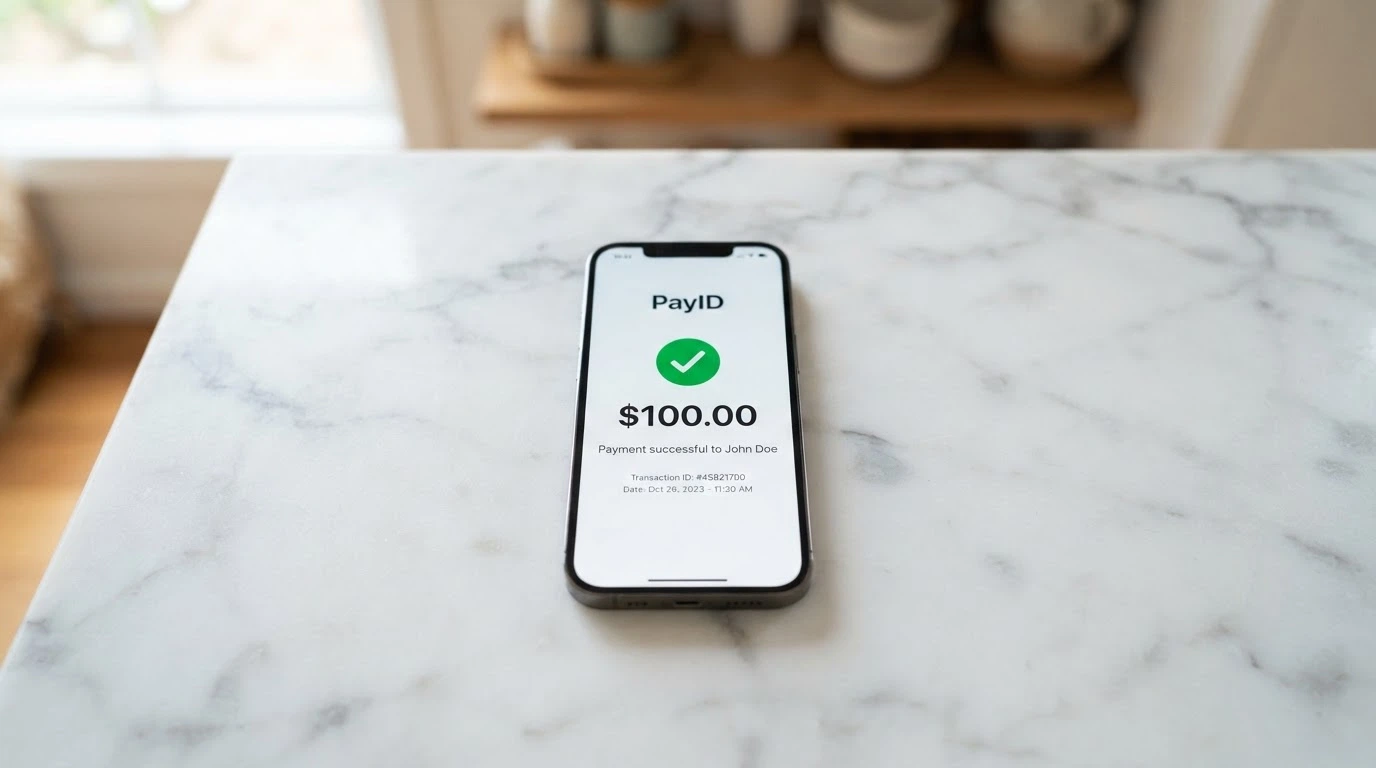
PayID is the Australian instant-payment rail that runs over the Osko network, allowing near-instant settlement between Australian bank accounts using a recognised identifier — typically a mobile number, email address, or ABN — instead of a BSB and account number. For Australian players funding an offshore casino account, PayID is the fastest legal deposit route available, settling in seconds rather than days, and free at the point of use.
PayID is not a casino payment method by design. It is a general-purpose Australian instant-payment system that any Australian business or individual can register for. Offshore casinos that accept PayID are accepting it because Australian players can pay through it using their own Australian bank accounts — the casino receives the funds as an Osko payment from an Australian bank, often routed through a payment processor that aggregates deposits for the operator. The speed is the same as for any domestic PayID transfer: the funds settle in seconds. The deposit threshold varies by operator but commonly sits at $10 to $30 minimum, with maximum caps set per transaction. A $100 deposit — the figure often used in these offers — sits comfortably within the standard range.
The fact that an offshore casino accepts PayID does not mean it is licensed in Australia. It means the operator has integrated an Australian payment rail to receive deposits from Australian bank accounts. The legal status of the operator is unchanged: it is an offshore operator offering a prohibited product to Australian players. PayID is a payment rail. It does not confer a licence, and it does not extend Australian consumer protection to a deposit made through it.
Beyond PayID — Debit Cards, Bank Transfers and What’s Banned
The remaining payment options for Australian players at offshore casinos cover the legal-to-banned spectrum. Debit card deposits are widely accepted at offshore casinos and settle instantly, though card-issuing banks may apply merchant category restrictions on gambling transactions and decline them at their discretion — a friction the player feels as a declined deposit rather than as a regulatory enforcement action. Bank transfers settle in one to three business days, are fully traceable through the Australian banking system, and carry the lowest decline risk because the transfer is initiated from the player’s own bank. BPAY operates as a bill-payment system, with settlement in one to two business days and no instant reversal once initiated.
Credit cards and cryptocurrency sit on the other side of the line. Both have been banned as payment methods for online wagering in Australia since 11 June 2024, under the Interactive Gambling Amendment (Credit and Other Measures) Act 2023. An Australian-licensed operator that accepts a credit-card or crypto deposit commits an offence and faces penalties of up to $247,500. The offshore operator is not bound by the ban, but the Australian player making the deposit is operating outside the payment-method rules that apply to Australian wagering. The payment method is itself a tell: if a gambling site asks for a credit card or a crypto wallet, the operator on the other end is outside Australian rules. The deposit may go through. The protection that would normally accompany an Australian-licensed deposit does not.
From 1 January 2027, the regime tightens further. Banks and payment providers receive specific authority to stop these transactions to illegal gambling operators, meaning a PayID or debit-card deposit to an offshore casino that has been tagged by the bank as an illegal gambling operator may be declined at the bank’s discretion rather than the casino’s. The player will see a declined transaction rather than a successful deposit. The offshore route is already friction-heavy; the 2027 reforms add friction at the Australian banking layer rather than the offshore operator’s. The legal position does not change. The practical friction does.
The Law Is Clear — Online Casino Is Prohibited in Australia
The legal position is not ambiguous. The Interactive Gambling Act 2001 prohibits the provision of online casino games, online pokies and in-play sports betting to people in Australia, and the Interactive Gambling Amendment Act 2017 closed the offshore loopholes that operators had used to deliver those products to Australian players. The 2017 amendments also gave the Australian Communications and Media Authority its enforcement powers, including the ability to direct Australian internet service providers to block illegal gambling websites at the DNS level. There is no Australian licence for online casino because the product is banned. No state or territory issues one. No operator can lawfully offer online casino games to an Australian player from inside or outside Australia.
What is permitted and licensable is narrower. Australians can lawfully place wagers on races and sporting events before they begin, through operators licensed by a state or territory — typically the Northern Territory Racing and Wagering Commission, which is the de facto national licensor for online bookmakers and which was reformed in 2026 after criticism of its earlier structure. Lotteries and keno are licensable through state-based operators. Land-based casinos (Crown, The Star and others) are state-licensed, but their licences cover physical premises and are not online casino licences. The minimum age for all commercial gambling in Australia is 18.
The IGA targets the provider, not the player. An Australian who claims a $100 no-deposit bonus at an offshore casino is not prosecuted under the Act — section 15 of the IGA and the practical enforcement record both point at the operator. But the absence of prosecution is not the same as the presence of protection. No Australian consumer protection covers the deposit. No Australian regulator can compel a withdrawal. No Australian self-exclusion register covers the play. The legal position is clear, and the practical consequences for the player are clear. The two are not the same thing, and a reader should not confuse one for the other.
The Interactive Gambling Act — What It Prohibits and What It Doesn’t
The IGA’s scope is narrower than its name suggests. It does not prohibit all gambling — it prohibits the supply of interactive gambling services that consist of, or relate to, online casino games, online pokies and in-play sports betting. It does not prohibit wagering on sporting events or races placed before the event begins. It does not prohibit lotteries or keno. The licensed wagering market in Australia operates at the intersection of state and territory licensing regimes, with the Northern Territory acting as the de facto national licensor for online bookmakers. The NT regime was reformed in 2026, with Licensing NT now administering the framework through the NTRWC.
What the IGA does prohibit is the supply of the prohibited services — and that supply includes offering them to Australians from offshore. An offshore operator that takes Australian customers for online casino games is supplying a prohibited service, and the IGA’s prohibition reaches that supply regardless of where the operator is incorporated. The 2017 amendments made this explicit and gave the ACMA the enforcement tools to act on it. The Act draws a clear line. Online casino is on the prohibited side. Land-based casinos are state-licensed and operate as physical premises — Crown, The Star and others — but their state licences do not extend to online casino, and presenting a land-based casino’s state licence as the licence for an online product is a category error.
Inducements for wagering — sign-up offers, deposit bonuses, referral bonuses — are prohibited or tightly limited by several Australian states under their existing licence conditions. The rules differ by jurisdiction, and there is no single national inducement rule until the 2027 reforms commence. An offshore casino offering a $100 no-deposit bonus to an Australian player is not bound by the inducement rules at all — it is not bound by any Australian rule, because the product is prohibited from the start.
ACMA Enforcement — Blocking, Fines and the Coming Reform Wave
The Australian Communications and Media Authority has real enforcement teeth, and it has used them. Since November 2019, the ACMA has directed Australian ISPs to block 1,564 illegal gambling and affiliate websites. More than 225 illegal services have withdrawn from the Australian market since 2017, partly in response to ACMA action and partly in response to the broader closure of the offshore loopholes that the 2017 amendments effected. The blocking is DNS-level — the operator’s domain becomes inaccessible through Australian internet connections — which is not presented as unbeatable but is the enforcement approach the ACMA uses.
The reform wave sits one step ahead. The Interactive Gambling Amendment (Gambling Reform) Bill 2026 passed Parliament on 19 August 2026, and its measures commence on 1 January 2027. From that date, the wagering advertising regime tightens: no more than three wagering ads per hour between 6:00 am and 8:30 pm, with a live-sport blackout from 15 minutes before a live sporting event until 5 minutes after it ends; athletes, celebrities and influencers are barred from promoting wagering products; and broadcasting sporting odds is banned outright. Direct marketing of inducements is prohibited for 14 days after a customer signs up, for three months after a person deregisters from BetStop, and indefinitely for customers identified as at risk of gambling-related harm. Banks and payment providers gain express authority to block transactions to illegal gambling operators.
The 2027 reforms bind Australian-licensed operators. They do not bind the offshore casino offering a $100 no-deposit bonus to an Australian player. What the reforms do for an Australian player considering one of these offers is change the friction around the deposit route — PayID and debit-card transactions to illegal operators become more likely to be declined at the bank — and extend the marketing restrictions that already apply to licensed operators. The offshore casino continues to operate outside Australian rules. The Australian player’s experience of the offshore route becomes harder.
Staying Safe When the Safety Net Wasn’t Built for Offshore Play
Australia has a real player-protection system for licensed wagering. BetStop, the National Self-Exclusion Register, has been live since August 2023. As at 31 July 2026, 67,480 people had registered with BetStop, of whom 41,290 exclusions were still active — more than 60% of everyone who ever signed up. 78% of registrants were under 40, and 38% chose lifetime exclusion. One BetStop registration excludes the person from every Australian-licensed online and phone wagering service. The National Gambling Helpline (1800 858 858) is free, confidential and staffed 24 hours a day, seven days a week, with online chat and counselling through Gambling Help Online at gamblinghelponline.org.au.
The problem is the word “licensed”. Every protection listed above binds Australian-licensed operators. BetStop binds Australian-licensed wagering services only. An offshore casino is not licensed in Australia, is not connected to BetStop, and will keep accepting a self-excluded person’s money. The activity statements and customer-set deposit limits that licensed wagering operators offer under state and territory conditions do not exist at an offshore casino, because the conditions that require them do not apply. About 2.1% of Australian adults — roughly 430,000 people — experience problem gambling, according to the Australian Institute of Health and Welfare, with high-risk gambling at 1.8% in 2022. The safety net is built for the licensed market. The offshore casino sits outside it.

Self-Exclusion Tools and Why BetStop Can’t Protect You Offshore
BetStop is the strongest self-exclusion tool Australia has — one registration, one exclusion period, every Australian-licensed wagering service covered. The scale of its use is real: 67,480 registrations in three years of operation, 41,290 active at the end of July 2026. 38% of those registrants chose lifetime exclusion, which is the strongest option on the register. The tool works exactly as designed for the licensed market.
It does not work for the offshore casino. BetStop binds Australian-licensed wagering services only. An offshore casino is not licensed in Australia, is not connected to the register, and will keep accepting deposits and wagers from a self-excluded person. The offshore gap is the most concrete harm of the offshore route for someone who has decided — or been advised — to stop. A BetStop-registered person who turns to an offshore casino because the licensed market is closed to them has stepped out of the protection they registered for. The offshore casino’s terms may offer their own self-exclusion, but they are not under any obligation to honour it, and there is no Australian regulator to enforce it if they do not.
The 2027 reforms add a partial backstop. Direct marketing of inducements is prohibited for three months after a person deregisters from BetStop — meaning an Australian-licensed operator cannot email or message a person who has recently come off the register. That rule binds the licensed operator. It does not reach the offshore casino. The offshore casino has no record of the BetStop registration and no obligation under the new rule. The protection gap is the same after the 2027 reforms as it was before.
Deposit Limits, Support Services and Where to Get Help
Australian-licensed wagering operators offer customer-set deposit limits and activity statements under their state or territory conditions. A player can set a daily, weekly or monthly deposit ceiling on their account, and the operator will not allow deposits above it without a cooling-off period. Activity statements — periodic summaries of deposits, withdrawals and net position — are a harm-minimisation tool built into the licensed product. Both are conditions of the licence. Neither exists at an offshore casino, because the licence conditions that require them do not apply.
The help services do exist for anyone who wants them, regardless of where they gamble. The National Gambling Helpline (1800 858 858) is free, confidential, and staffed 24 hours a day, seven days a week. Gambling Help Online, at gamblinghelponline.org.au, offers online chat and counselling. Both are federal-funded services available to any Australian, including one who has been playing at an offshore casino. About 2.1% of Australian adults — roughly 430,000 people — experience problem gambling, and high-risk gambling sits at 1.8% (AIHW, 2022). The numbers are not a warning aimed at offshore players specifically; they are the context for why the safety net matters in the first place.
There is no federal deposit, loss or stake ceiling for online gambling in Australia — because the product those ceilings would govern is banned outright. That fact is sometimes read as Australia having no limits on online gambling. The correct reading is the opposite: Australia has the strictest possible limit, which is to prohibit the product. The offshore casino does not honour the prohibition, and it does not honour the limits a player might set for themselves either. A player who wants to stay in control of an offshore casino account has to do it without the operator’s help.
How We Selected and Ranked These Operators
The ten operators in the ranking above are ranked by AU market share among offshore casinos reaching Australian players, drawn from estimated industry data for AU-facing offshore casinos. The market-share and revenue figures are what they measure: share of the AU online gambling market attributed to each operator, and AU-derived revenue flowing through each operator in the relevant period. The ranking reflects market presence, not bonus quality — there is no judgement in this list about which $100 no-deposit offer is the best, because the specific bonus terms (wagering multipliers, max-cashout caps, eligible game lists) for each operator were not independently verified for this ranking at the time of writing. The headline $100 figure represents the common offer amount. The wagering and cap figures behind it vary by operator.
Every operator in the ranking is offshore. None holds an Australian casino licence, because no such licence exists for the product they offer — online casino is prohibited under the Interactive Gambling Act 2001. The legal-status check was uniform across the ten. The bonus-terms check was not, which is why the operator write-ups above treat the offer profile qualitatively and direct readers to verify current terms on the operator’s own pages before relying on any figure. The ranking is a market-presence ranking, and a market-presence ranking is not a recommendation — it is a description of where Australian players are currently sending their money and to whom.
So Should You Claim a $100 No-Deposit Bonus as an Australian?
The honest answer is that this page does not make that call. The reader has to weigh the free bonus against the legal reality, the consumer-protection gap, and the practical odds of converting the bonus into withdrawable cash. The arithmetic, the law, and the protection system all push in one direction; the marketing pitch and the size of the offshore market push in the other.
The arithmetic is the easiest part. A $100 no-deposit bonus with a 40x wagering multiplier requires $4,000 in turnover before winnings convert, which at a 4% house edge produces an expected loss of around $160 — and a max-cashout cap of 5x to 10x the bonus amount limits how much of any winning streak can actually be withdrawn. The player who claims the bonus, plays through the wagering, and clears it has, on average, lost $160 to extract the right to withdraw whatever winnings were generated. The expected loss is the bonus’s real cost. The arithmetic is the same at every operator in the ranking.

The legal position is also clear. The operator offering the bonus is breaking the Interactive Gambling Act 2001 by supplying a prohibited interactive gambling service to an Australian. The player is not prosecuted for claiming the bonus. But the absence of prosecution is not the same as the presence of protection. The ACMA can direct Australian ISPs to block the operator’s website at any time, which has happened to 1,564 sites since November 2019 — meaning the bonus and any unwithdrawn balance can become inaccessible to an Australian player overnight. From 1 January 2027, banks and payment providers gain express authority to block transactions to illegal gambling operators, which means deposits can also be declined at the bank. The legal regime is tightening around the offshore route.
The protection gap is the most concrete cost. Offshore casinos are not connected to BetStop, the National Self-Exclusion Register. A person who has registered with BetStop to stop gambling can still deposit and play at any of the ten operators above. The deposit limits and activity statements that bind Australian-licensed wagering operators do not exist at an offshore casino. A dispute over a refused withdrawal goes to the operator’s own process, and if that fails, to the licence-issuing jurisdiction — not to an Australian regulator. No Australian authority can compel an offshore operator to pay out a balance.
What a reader should check before signing up is straightforward. Read the wagering multiplier on the specific offer, not the headline. Read the max-cashout cap. Read the validity window and the game weighting. Treat the bonus as costing the expected loss the arithmetic produces, not the $100 the marketing names. Understand that the operator is offshore and outside Australian protection. Understand that the site can be blocked and the balance can go with it. And if gambling is causing harm, contact the National Gambling Helpline on 1800 858 858 or Gambling Help Online at gamblinghelponline.org.au. The help is real, free, confidential, and available 24 hours a day.
Frequently Asked Questions
What are the wagering requirements for a $100 no deposit bonus in Australia?
Offshore casinos typically apply a wagering multiplier, meaning a set amount of cumulative bets before winnings convert to withdrawable cash. The exact multiplier varies by operator and offer, and the terms page on the operator’s own site is the only place to confirm it before claiming. The wagering requirement is the single number that decides whether the bonus is worth the time.
Can I win real money with a $100 no deposit bonus from an Australian casino?
Yes, but the path from bonus credit to withdrawable cash is narrow. Bonus credit is not the same as a real-money balance — wagering requirements must be cleared first, and a max-cashout cap typically limits withdrawable winnings to 5x to 10x the bonus amount. Most players do not clear the bonus because the house edge over thousands of spins of required turnover exceeds any bonus-derived gains on average. The player is not breaking Australian law by claiming the bonus.
What is the maximum cashout from a $100 no deposit bonus?
Most offshore no-deposit bonuses carry a maximum cashout cap, restricting withdrawable winnings to a multiple of the bonus amount. The cap is applied regardless of how much the player wins during the wagering period — winnings above the cap are forfeit. The cap matters more than the headline bonus figure because it is the number that decides the upper bound of what can actually be withdrawn.
What payment methods can I use to deposit at online casinos that accept Australian players?
PayID/Osko, debit card, bank transfer and BPAY are the legal deposit routes for Australian-licensed wagering, and offshore casinos accept some or all of them. Credit cards and cryptocurrency have been banned as payment for online wagering in Australia since 11 June 2024. An Australian who is asked for a credit card or a crypto deposit by a gambling site is being served by an operator outside Australian rules — the payment method itself signals the offshore status. From 1 January 2027, banks can also block transactions to illegal gambling operators.
What happens to my money if an offshore casino site is blocked in Australia?
The ACMA directs Australian ISPs to block illegal gambling sites at the DNS level, which has happened to 1,564 sites since November 2019. Once a site is blocked, it becomes inaccessible through Australian internet connections, and any unwithdrawn balance on the site may become unreachable from Australia as well. There is no Australian authority that can recover funds from an offshore operator. The player is not prosecuted for having played at the site, but there is also no recourse if the balance is held when the block lands.
Are online casino winnings taxable in Australia?
No, not for ordinary punters. Section 6-5 of the ITAA 1997 excludes betting and gambling winnings from assessable income, and section 8-1 disallows gambling losses as a deduction — unless the person is carrying on a business of betting or gambling, which an ordinary recreational player is not. No Australian case has held an ordinary punter’s winnings assessable as income. Winnings from an offshore casino are not taxable to the Australian player; the prohibition on the product and the absence of consumer protection are separate issues from the tax treatment of any winnings.
Created by the ”Welcome Bonus Casinos AU” editorial team.